
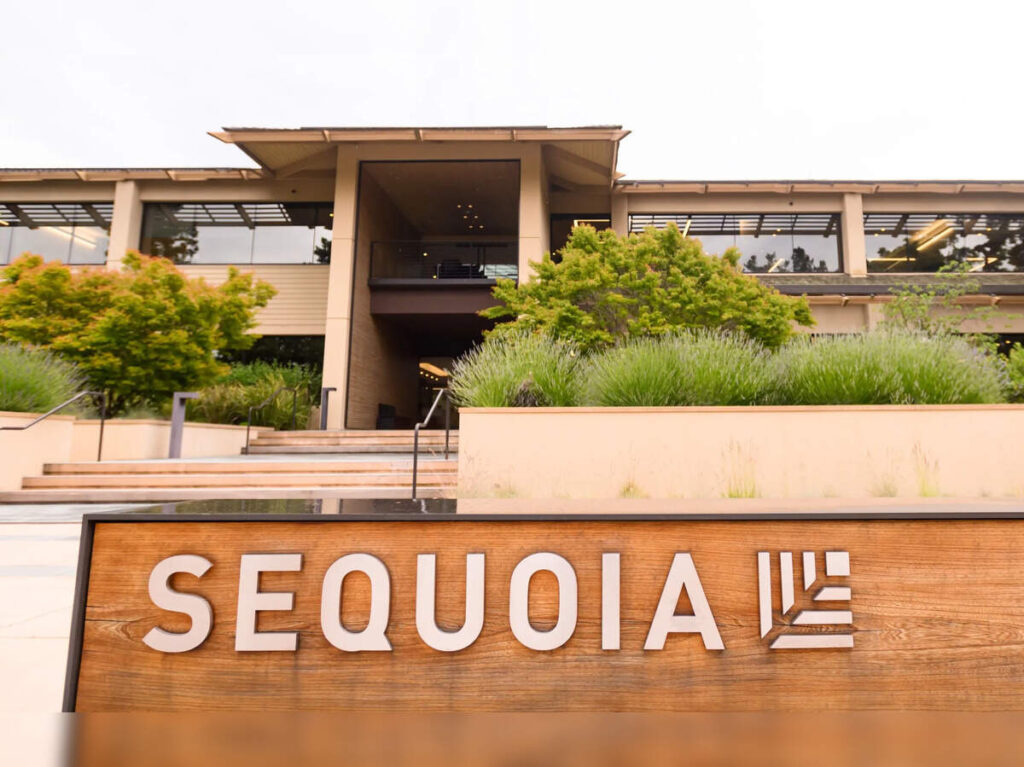
The rapidly evolving landscape of artificial intelligence (AI) is marked by substantial investments and intense competition among leading firms. One recent example is Sequoia Capital’s notable investment in Anthropic, valuing the AI startup at an astonishing $350 billion. This funding round is particularly significant as it deviates from traditional venture capital practices, where investment firms typically choose a singular winner within a sector to avoid conflicts of interest. Sequoia’s engagement with Anthropic, alongside its existing investments in competitors, such as OpenAI and xAI, raises essential questions about competitive strategy, investment ethics, and market dynamics in the AI sector.
The current funding round for Anthropic is being spearheaded by the Singaporean sovereign wealth fund GIC and the U.S. investment firm Coatue, both committing $1.5 billion each toward a broader initiative targeting at least $25 billion. This substantial influx of capital is expected to double Anthropic’s valuation from its previous funding round in September, where the valuation was placed at $183 billion. The ramifications of increased funding are twofold: Anthropic can enhance its research capabilities and accelerate market entry, while also raising barriers for competitors scrambling for market share.
Investors in this domain must assess the strengths and weaknesses of the different AI platforms in light of emerging funding dynamics. For instance, when comparing OpenAI and Anthropic, one must consider explicit delineations in their approaches. OpenAI has established itself through high-performance models and a strong commitment to responsible AI usage. However, it has also instituted restrictions for investors to prevent cross-contamination of proprietary information, a strategic maneuver intended to safeguard its competitive edge. Conversely, Anthropic is positioning itself to capture a considerable share of the market with an alternative model that emphasizes safety and alignment in AI development. Their promise of robust technology underpinned by ethical considerations presents a unique value proposition for businesses seeking to leverage AI responsibly.
From a cost perspective, businesses must evaluate the expenses associated with various platforms. While tools like Zapier and Make offer automation solutions beneficial primarily for streamlining workflows, the foundational capabilities of AI like those provided by OpenAI or Anthropic may yield higher returns on investment (ROI) through transformative business solutions. In practice, for small to medium-sized businesses (SMBs) looking to implement these technologies, the choice between high-level AI capabilities and cost-effective automation tools can be pivotal.
Zapier, with its user-friendly interface, is ideal for non-technical users seeking to automate routine tasks across various applications. However, the limitations of such automation platforms become apparent when dealing with complex workflows that require robust AI insights for decision-making. Make can offer a more flexible and powerful automation solution tailored to sophisticated needs, but its learning curve is steeper and may necessitate greater initial investment. In contrast, AI solutions provide deeper analytical insights and learning capabilities, allowing businesses to not only automate processes but also optimize their operations through data-driven decision-making capabilities.
Taking into account scalability, the distinctions among these platforms grow more pronounced. OpenAI’s offerings, particularly with newer advancements in AI, present scalable solutions that can grow with business demands, thereby maximizing ROI over the long term. The investments being made in the AI sector signal a commitment to not just scalability but also continual improvement as technology evolves, posing a challenge for organizations to stay agile. Anthropic’s growing footprint, with recent commitments from tech giants like Microsoft and Nvidia, exemplifies how partnerships can extend the capabilities of AI solutions, thus improving their scalability across different business applications.
Moreover, the unfolding partnerships and investments signify an industry trend towards consolidation. Companies must now consider their positions within a shifting narrative where technological alliances could dictate future market leaders. The appointment of industry veterans, like Irina Ghose as Anthropic’s India Managing Director, indicates strategic expansion and a focus on diversifying capabilities across geographies. The anticipated opening of a headquarters in India and participation in government-led AI initiatives point toward a tactical move to tap into emerging markets that promise long-term growth prospects.
In summary, SMB leaders and automation specialists must carefully consider the evolving competitive landscape when selecting AI and automation platforms. The decision between investing in emerging AI firms versus established automation solutions holds significant implications for operational efficiency and long-term growth. While platforms like Anthropic and OpenAI provide cutting-edge AI capabilities with extensive scalability, automation tools like Make and Zapier offer necessary functions for streamlining workflows, albeit with limitations regarding complex decision-making tasks. Stakeholders should not only focus on immediate costs but also on the projected ROI and long-term strategic fit of their technology investments.
FlowMind AI Insight: As the AI landscape continues to evolve, businesses should adopt a balanced approach that acknowledges the importance of both innovative AI solutions and effective automation tools. Strategic investments can unlock transformative capabilities that drive efficiency and growth, enabling organizations to navigate a fiercely competitive environment.
Original article: Read here
2026-01-19 07:50:00