
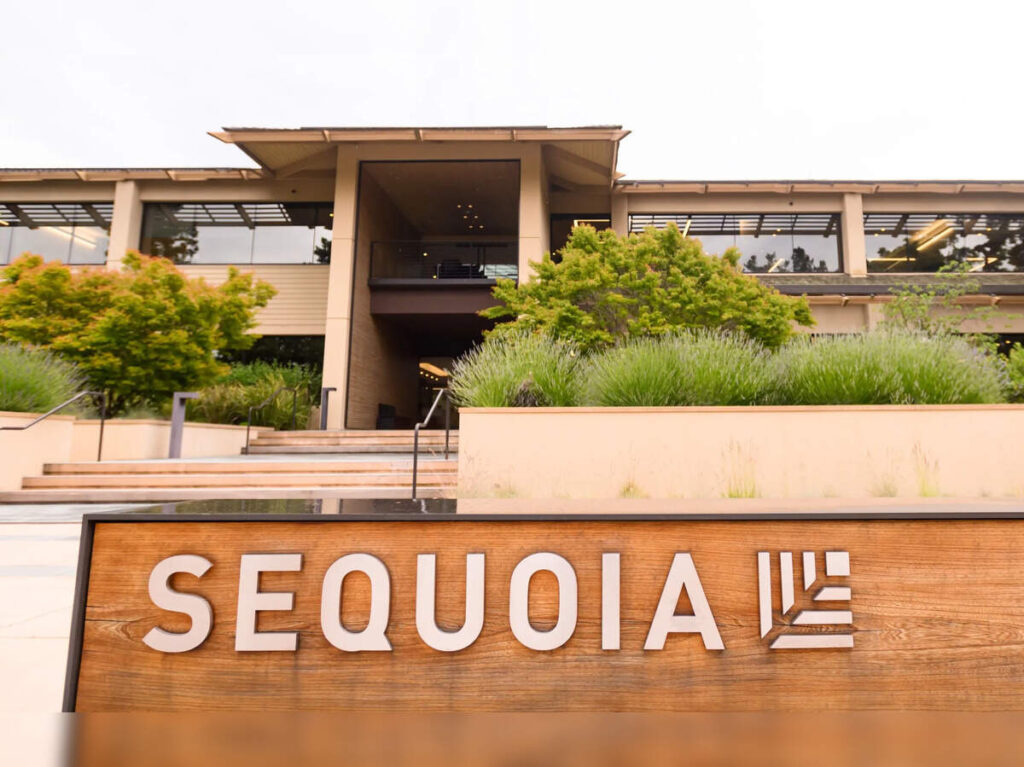
In recent developments within the artificial intelligence (AI) landscape, Sequoia Capital’s decision to invest in the AI startup Anthropic highlights a shift in the traditional investment strategies typically adopted by venture capital firms. Sequoia, an investor already associated with key players in AI like OpenAI and xAI, is straying from its historical preference to back a single winner within a sector. This move not only suggests growing competition among AI innovators but also raises questions about managing conflicts of interest in the rapidly expanding AI marketplace.
Anthropic’s latest funding round, which has captured attention for targeting a valuation of $350 billion, is led by Singapore’s sovereign wealth fund GIC and US-based investor Coatue, both of which are set to contribute significant capital. With a goal of raising at least $25 billion, this round could double the valuation that Anthropic achieved in its previous Series F funding. Such aggressive capital acquisition indicates not only investor confidence in Anthropic’s potential but also illustrates the growing urgency within the AI sector to scale rapidly.
Historically, venture capital funds like Sequoia have favored exclusivity within their portfolios. This trend is evidenced by prior decisions, such as Sequoia’s relinquishment of a $21 million investment in fintech app Finix due to potential conflicts with its portfolio company Stripe. As in past scenarios, investors are often cautious about participating in competing entities to protect their investments. However, Sequoia’s recent pivot underscores a broader trend in the investment landscape where multiple players are now seen as collaborators fighting against a common set of challenges, rather than strictly competing entities.
Such diversification in investment strategies does give rise to potential drawbacks. For Sequoia, investing in Anthropic while maintaining stakes in OpenAI could lead to challenges in information management. Sam Altman, CEO of OpenAI, has previously noted that investors with significant stakes in competing firms may lose access to sensitive information necessary for transparent operations within the company. This implies that while Sequoia is broadening its investment approach, risks concerning proprietary information and strategic alignment may heighten.
When comparing AI platforms such as OpenAI and Anthropic, one must assess their relative strengths, weaknesses, and costs. OpenAI has established a credible reputation in the AI space, backed by significant funding from Microsoft and its leading-edge capabilities. The company’s existing integrations and user-friendly interfaces offer robust ROI for businesses looking to incorporate AI-driven solutions. However, OpenAI’s cost structures can be prohibitive, particularly for SMBs with tight budgets.
On the other hand, Anthropic is working to carve out a niche with its product “Claude.” The platform is designed to prioritize AI alignment with user values and intention, providing an appealing alternative for organizations seeking ethical and responsible AI usage. That said, the lack of mature platforms and extensive case studies similar to those of OpenAI might indicate additional risks for companies contemplating investment in or transition to Anthropic.
Considering automation platforms, a comparative analysis between tools such as Make and Zapier is also pertinent. Make offers a visually intuitive interface that allows for dynamic automation workflows, advantageous for teams needing customized solutions. However, it may create a steeper learning curve for users unfamiliar with complex operational diagrams. Conversely, Zapier’s user-friendly plug-and-play model makes it inviting for beginners and small businesses aiming for swift automation without a steep commitment. Nevertheless, Zapier often falls short in terms of scalability for extensive operational needs.
Ultimately, questions of scaling need to align with business initiatives. For SMB leaders, the choice of platform must be deeply assessed based on specific operational goals, available resources, and anticipated ROI. The landscapes of AI and automation are evolving rapidly, and organizations must weigh both immediate and long-term benefits against potential drawbacks of engaging with these platforms.
For SMBs contemplating entry into the AI realm or looking to enhance their automation strategies, it’s crucial to remain cognizant of developments in the investment landscape that signal changing competitive dynamics. The rise of Anthropic alongside established players like OpenAI may indicate that we are entering an age where multiple approaches to AI and automation can coexist rather than compete, which may ultimately benefit the end-user experience.
FlowMind AI Insight: As the AI sector continues to evolve, SMB leaders must remain agile in their strategies, carefully evaluating the trade-offs between competing platforms. By aligning investments with organizational values and operational needs, businesses can better position themselves to leverage AI’s capabilities for sustainable growth.
Original article: Read here
2026-01-19 07:50:00