
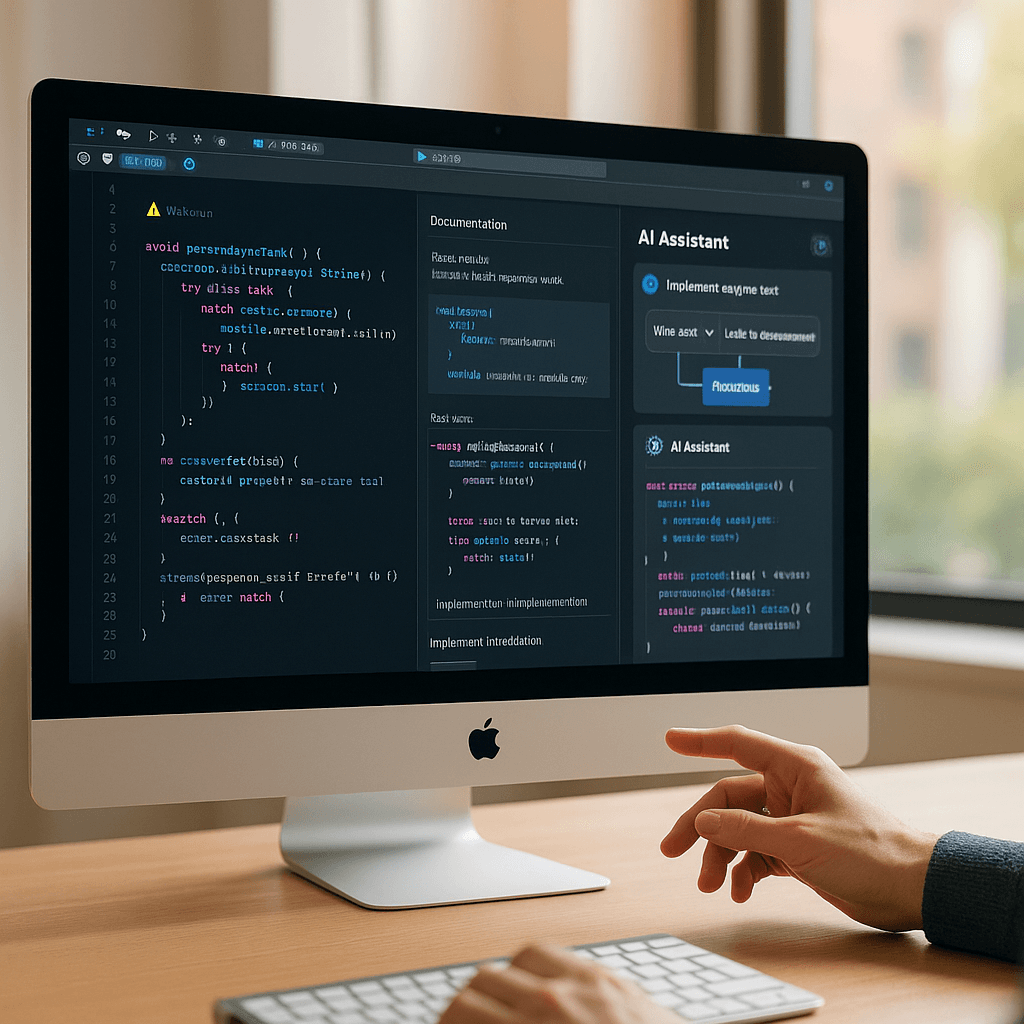
Apple’s recent release of Xcode 26.3 has fundamentally altered the landscape of software development by integrating AI capabilities directly into its development environment. With the incorporation of Anthropic’s Claude Agent and OpenAI’s Codex, Apple is positioning itself as a leader in AI-powered coding tools. This incorporation is not simply an enhancement to existing functionalities; it represents a paradigm shift where AI agents now operate as autonomous coding assistants capable of engaging in complex tasks without continuous oversight. This article aims to explore the strengths and weaknesses of Apple’s new tools in comparison with other automation platforms while offering insights relevant to SMB leaders and automation specialists.
One of the primary strengths of Xcode 26.3 lies in its ability to facilitate a more seamless coding experience. By enabling AI agents to autonomously explore project structures and manage dependencies, it significantly reduces the cognitive load on developers. They can focus on higher-level aspects of projects while the agents handle mundane tasks such as debugging or writing code. This capability offers a compelling ROI for not just development teams but entire organizations that rely on swift and efficient app development cycles. Time savings can translate into cost reductions, enabling organizations to allocate resources more effectively toward innovation and strategic initiatives.
In contrast, platforms like Zapier and Make (formerly Integromat) focus primarily on automating workflows through integrations and task automations across multiple applications. While these platforms excel at streamlining repetitive tasks such as data transfer between web apps, they do not replicate the robust coding and debugging features introduced by Xcode 26.3. The coding agents possess a deeper understanding of coding syntax, logic, and debugging processes, allowing for more complex projects to be managed autonomously. However, Zapier and Make require less specialized knowledge and can be more easily adopted by teams without extensive coding expertise, broadening their applicability among SMBs.
Another key point of consideration is the cost associated with different platforms. While Xcode is available to all registered Apple developers, costs for utilizing AI capabilities, such as backend server requirements for hosting AI models, can be significant depending on the scale of development. On the other hand, both Zapier and Make offer tiered pricing structures that cater to different organization sizes—from individual startups to larger SMBs. Therefore, while Apple’s Xcode 26.3 represents powerful technology potentially driving substantial ROI, the initial and ongoing costs may not be practical for all organizations, particularly smaller startups with limited budgets.
Scalability is another critical metric to consider. As organizations grow, their needs evolve, and the tools they utilize must accommodate this growth. Xcode’s agents are deeply integrated into Apple’s ecosystem, making them particularly effective for teams focused on developing for iOS and macOS. However, this specialization can limit broad-spectrum applicability compared to more agnostic tools like Zapier and Make, which can link disparate applications and services across various platforms. The limitation may be a detriment for larger teams that are already ingrained with multiple software ecosystems, necessitating a more universal integration tool to handle multifaceted operations.
Data-driven evaluations further elucidate the implications of adopting these AI platforms. Companies that have adopted automation strategies report productivity gains of anywhere between 30% to 40% after extensive implementation. Furthermore, software that employs AI can lead to faster cycle times, increased accuracy in programming, and better compliance with best practices, as evidenced by a 2022 report by McKinsey. Yet, the success of these integrations heavily relies on change management and the readiness of teams to adapt to new methodologies.
A major concern that remains prevalent is the ongoing evolution of AI ethics and governance. The introduction of autonomous coding agents presents potential risks, such as unintentional biases in code generation and questions surrounding accountability for AI-generated outputs. Organizations will need to consider these ethical dimensions seriously when implementing such advanced technology, as regulatory scrutiny and public perception may affect their adoption and reputation.
In summary, the release of Xcode 26.3 signifies a strategic leap into AI-powered development, offering substantial advantages over traditional automation solutions by integrating advanced coding capabilities. However, its suitability for adoption will depend on the specific needs, resources, and strategic objectives of organizations. Platforms like Zapier and Make continue to hold their ground in providing accessible automation solutions that cater to a broader range of applications, but they lack the depth found in Apple’s offering for coding specifics. Therefore, leaders must weigh the trade-offs between specialized coding tools and general automation platforms carefully to make informed investment decisions.
FlowMind AI Insight: The trajectory of AI in software development is rapidly evolving, and companies must stay ahead of the curve by adopting tools that not only enhance productivity but also align with their strategic goals. The challenge lies in finding the right balance between specialized capabilities and broad applicability to ensure long-term growth and competitive advantage.
Original article: Read here
2026-02-03 18:18:00