
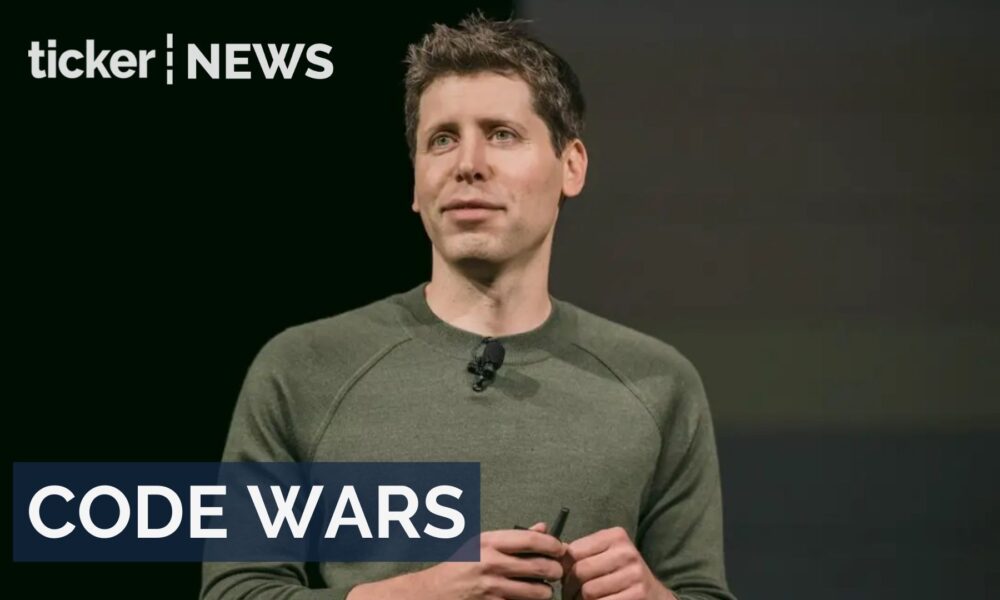
OpenAI and Anthropic have recently introduced new AI coding models that signal a noteworthy evolution in enterprise software development. As both companies strive to enhance their offerings, it is imperative for small and medium-sized business (SMB) leaders and automation specialists to understand how these advancements compare, what their implications are, and how they can leverage them for their operations.
OpenAI’s latest model, GPT-5.3 Codex, is reported to operate 25% faster than its predecessor. This efficiency is not merely a matter of speed; it allows the model to manage more complex tasks while adhering to real-time directives, all while retaining contextual integrity. This enhanced performance could significantly reduce development time, enabling companies to deploy updates or new features more swiftly, thus potentially improving their overall time-to-market. The implications of this performance leap extend beyond mere coding efficiency; it suggests a path towards more agile development practices.
Conversely, Anthropic has introduced Claude Opus 4.6, which features an innovative concept referred to as “agent teams.” This allows multiple AI agents to concurrently work on tasks, thereby facilitating parallel problem-solving approaches. The inclusion of a one-million-token context window further amplifies this capability by enabling the processing of extensive data inputs in a single prompt. For SMBs, this could lead to heightened productivity and less redundancy in task completion, as agents can tackle different elements of a project without needing to synchronize after each step. The potential for streamlined workflows here is significant—SMBs can deploy these tools to enhance collaboration and minimize bottlenecks.
When comparing the two offerings, one must also consider the integration capabilities and user experience. GitHub’s recent acceptance of multiple coding agents presents an interesting avenue for development teams. By allowing developers to juxtapose different AI approaches to similar problems, it cultivates an environment of experimentation and learning. SMBs may find this aspect particularly valuable, as it empowers teams to identify the most efficient methodologies through a direct comparison of AI-generated outputs. While cost structures remain to be fully defined for both offerings, the apparent potential for improved return on investment (ROI) cannot be overlooked.
In analyzing the broader market position of these AI tools, the key differentiators between OpenAI and Anthropic come into focus. OpenAI’s historical partnership with GitHub has given it a head start in developer adoption; however, Anthropic’s focus on innovative capabilities, such as agent teams, represents a compelling alternative that could attract users eager for enhanced collaborative tools. Furthermore, sustainability concerns are increasingly shaping purchasing decisions. Both companies must address how their models operate resource-wise, as excessive compute demands could deter adoption or provoke scrutiny regarding carbon footprints.
The potential scalability of these platforms also merits examination. OpenAI’s models are designed to support varied workloads, making them suitable for a range of applications from startups to enterprise-level deployments. Conversely, Anthropic’s unique architecture could cater specifically to environments that favor multitasking and collaborative AI. For SMBs, this distinction could influence their choice based on immediate needs versus long-term strategic goals. Implementing a tool that fits well with existing workflows is essential for maximizing ROI, as misalignment may lead to wasted resources or suboptimal performance.
In conclusion, while both OpenAI and Anthropic offer advancements that could benefit enterprise software development, the choice between these platforms will depend significantly on specific business requirements. SMB leaders should weigh factors such as tool performance, integration capabilities, user experience, and scalability against their strategic business objectives. Cleary defining goals and understanding how these tools can serve those objectives is imperative for achieving successful outcomes.
FlowMind AI Insight: As the competition between AI coding platforms intensifies, SMB leaders must adopt a proactive approach, carefully assessing tool capabilities in tandem with their unique operational needs. Leveraging the latest advances in AI not only streamlines software development but also sets the foundation for sustaining competitive advantages in an increasingly digital marketplace.
Original article: Read here
2026-02-06 01:05:00