
As artificial intelligence (AI) and automation technologies evolve, businesses face a pivotal decision: which platform will best meet their operational needs while providing a competitive edge? This analysis focuses on two prominent players in the AI realm—OpenAI and Anthropic. We will dissect their strengths, weaknesses, costs, return on investment (ROI), and scalability. Additionally, we will compare automation platforms such as Make and Zapier, examining how these tools enhance workflow efficiency and productivity.
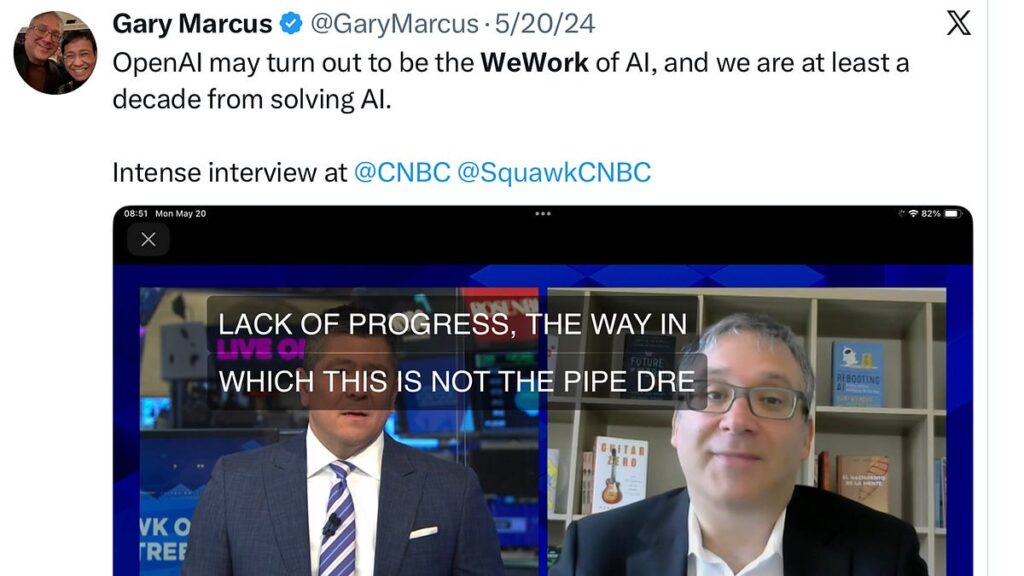
To begin, OpenAI has established itself as a vanguard in the AI sector. With its powerful language models and extensive capabilities, it has become synonymous with innovation. However, the emergence of competitors like Anthropic presents significant challenges. OpenAI’s strengths include a robust ecosystem, a strong developer community, and vast datasets for training its models. These elements drive the platform’s efficacy in natural language processing tasks. Conversely, OpenAI’s weaknesses are becoming increasingly evident, particularly in light of its current financial struggles and diminishing market share. Analysts note that OpenAI has been operating at a loss, revealing that its path to profitability may take years and posing potential risks in maintaining talent retention amid a tightening budget.
Anthropic, on the other hand, has garnered attention for its focus on safety and ethical dimensions in AI. The company’s approach centers on creating more explainable and reliable AI systems. While OpenAI is revered for its raw performance, Anthropic aims to build a foundation of trustworthiness and sociability in AI applications. This unique positioning could resonate well with SMBs and automation specialists who prioritize ethical considerations in technology adoption. Nevertheless, Anthropic’s appeal is still limited by its nascent stage compared to OpenAI’s established presence. Market leaders need to consider these dynamics when determining which platform aligns with their organizational principles and operational goals.
Cost is another defining factor in this landscape. OpenAI’s current pricing structure, influenced by its substantial deployment and operational costs, creates a barrier for small to mid-sized businesses (SMBs). Contrarily, Anthropic’s pricing remains competitive and designed to cater to a broader audience, though both platforms require substantial investment in API usage and integration. A calculation of estimated total cost of ownership for these platforms indicates that while OpenAI might deliver superior performance, the associated costs might outweigh the benefits for businesses with limited budgets.
In terms of ROI, it’s crucial to consider not only immediate output but also long-term sustainability. OpenAI’s technology may yield remarkable results in the short term, but concerns about its financial viability and competitive positioning could undermine long-term value. Alternatively, if Anthropic can follow through on its commitment to safety and transparency, it could establish a loyal customer base that appreciates its potential for reliability and trust. Ultimately, businesses must evaluate not just the capabilities of these platforms, but their capacity to remain operational and innovative in the face of evolving market demands.
Scalability is essential for any tool in the automation and AI sector. OpenAI’s established infrastructure allows for rapid scaling across diverse applications, which SMBs can leverage to enhance productivity and efficiency. That said, the question of sustainability arises, especially if investor confidence continues to wane. Anthropic, while still growing, offers a framework designed with scalability in mind; however, its relative infancy means it lacks the extensive deployment examples that OpenAI enjoys.
Turning to the realm of automation, Make and Zapier serve as excellent case studies for comparison. Make, formerly known as Integromat, emphasizes a visual interface that allows users to design complex workflows with ease. Its capabilities extend to handling various data formats and integrating multiple services seamlessly. However, its learning curve can be steep for new users, potentially leading to inefficiencies in initial setup.
Zapier, in contrast, is known for its user-friendly experience, enabling businesses to automate repetitive tasks without extensive technical knowledge. Its vast library of integrations covers numerous applications, making it a go-to choice for many SMBs. However, while Zapier’s simplicity appeals to immediate user needs, its flexibility is somewhat limited compared to Make’s capabilities in handling complex workflows.
Analyzing costs associated with both platforms reveals that Zapier operates on a subscription model that can become costly with scale due to its tier-based pricing. Make, while also subscription-based, can provide a more cost-effective solution for businesses that require intricate workflows, thus potentially offering greater ROI.
In conclusion, as AI and automation technologies rapidly change, leaders must make informed decisions about which platforms best align with their operational needs and financial capacities. OpenAI and Anthropic each present unique strengths and weaknesses that must be carefully weighed against the backdrop of costs and sustainability. Similarly, Make and Zapier continue to provide vital automation tools, each suiting different organizational demands.
As we look towards the future of AI and automation, understanding the unique challenges and opportunities presented by each platform is essential for developing a strategic approach that enhances operational capacity while ensuring long-term innovation.
FlowMind AI Insight: Selecting the right AI and automation tools is not merely a technical decision—it is a strategic imperative. Leaders must assess both the immediate utility and long-term sustainability of these platforms to secure a competitive position in a rapidly evolving market landscape. Prioritizing ethical considerations and adaptive scalability will also be crucial as organizations navigate their digital transformation journeys.
Original article: Read here
2026-02-13 00:38:00