
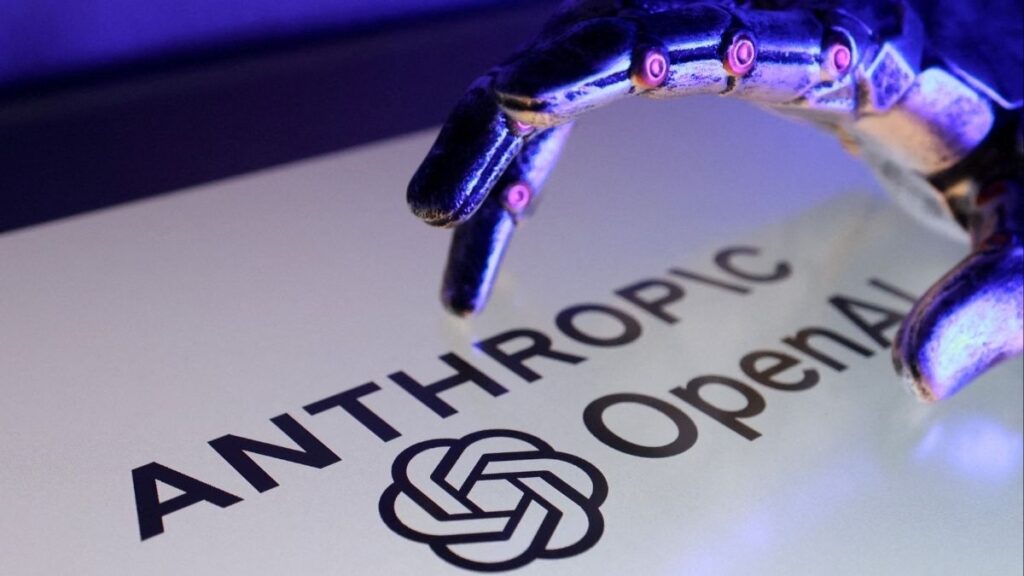
The recent $30 billion funding round for Anthropic, valuing the company at $380 billion, underscores a significant juncture in the AI sector that SMB leaders and automation specialists should take note of. This leap in valuation is particularly telling not only of Anthropic’s rising influence but also of the broader competition between AI giants such as OpenAI and Anthropic, which could shape SMBs’ automation strategies in upcoming years.
Anthropic’s latest funding round emphasizes the company’s aggressive growth trajectory, especially when viewed in the context of its previous valuation of $183 billion just months prior. A successful funding strategy involving well-known investors such as Microsoft, Nvidia, and Amazon hints at the robust confidence these major players have in Anthropic’s capabilities. This growth enables considerable investments in AI training runs and infrastructure—both essential elements for SMBs looking to optimize their operational efficiencies via automation.
A crucial aspect to consider is Anthropic’s flagship offerings, particularly the Claude family of models. The significant revenue generated—reportedly around $14 billion annually—demonstrates its evolving market relevance, particularly within enterprise settings. With business subscriptions to Claude Code quadrupling in just a year, it is evident that companies are actively seeking sophisticated AI tools for their internal operations. This trend presents an opportunity for SMB leaders exploring AI platforms to weigh the merits of Claude versus competitors like OpenAI.
When contrasting Anthropic’s Claude with OpenAI’s tools, one should look into strengths and weaknesses, costs, ROI, and scalability. Both platforms offer powerful AI capabilities, but there are nuanced differences that influence budgeting and operational decisions. OpenAI has a well-established ecosystem with massive training data and a broad array of use cases, while Anthropic’s Claude emphasizes safety and intentionality in AI outputs, promising a more controlled user experience. For SMBs, security concerns cannot be overlooked, making Claude’s safety-first approach appealing, especially in data-sensitive sectors like finance and healthcare.
From a cost perspective, the varied pricing structures for both platforms demand careful analysis. OpenAI’s pricing is typically based on token usage, which can be cost-effective for smaller tasks but may spiral when scaled for larger operations. In contrast, Anthropic’s model for Claude Code allows for predictable revenue contribution with an impressive growth rate. SMB leaders might find that despite higher upfront costs or subscription fees, these AI tools can lead to greater long-term savings through increased efficiency and reduced labor costs.
In terms of return on investment, the potential for automation can lead to revenue uplift and reduction of customer service challenges. For example, Anthropic’s introduction of Claude Cowork for knowledge work automation illustrates how AI can fulfill tasks traditionally done by multiple software tools, such as file reading/editing and process automation. This represents a significant opportunity for SMBs, particularly when considering that an increasing portion of enterprise revenue is captured through software solutions that streamline mission-critical functions.
Looking at market dynamics, Anthropic’s growth has caused ripples across the tech landscape, contributing to declines in traditional software stocks as their relevance comes into question. SMB leaders must therefore contemplate not just which AI or automation platform to adopt but also whether their existing software stack is at risk of obsolescence sooner than anticipated. The notion of leveraging AI-driven agents to minimize expenditures on specialized Software as a Service tools could force many to reconsider their vendor relationships or even how they define operational efficiency.
Furthermore, the political undertone of Anthropic’s pledges for stronger AI regulations contrasts sharply with the current orthodoxy among many tech giants that resist such measures. This positions Anthropic uniquely for SMB leaders who value ethical considerations when implementing AI solutions. The appeal of aligning with an enterprise committed to responsible AI could serve as a differentiating factor in vendor selection.
In conclusion, as Anthropic continues to challenge OpenAI in both capabilities and market presence, SMB leaders must engage in comprehensive evaluations of available AI tools. Understanding the nuances—strengths, weaknesses, costs, ROI, and scalability—will be paramount for effective decision-making in a rapidly evolving technological landscape.
FlowMind AI Insight: The race among AI giants signifies a transformational shift in business operations. For SMBs, the intelligent choice of platforms like Claude or OpenAI should hinge on a blend of performance metrics and ethical alignment, ensuring that automation strategies not only drive efficiency but also uphold responsible AI practices.
Original article: Read here
2026-02-13 06:47:00