
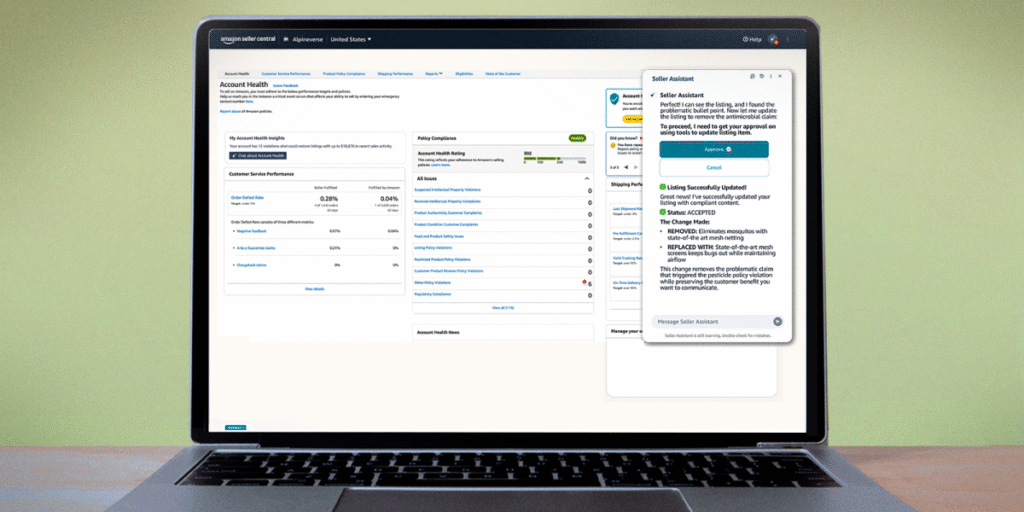
In an era where technology is revolutionizing small to medium-sized businesses (SMBs), the need for effective AI tools has never been more critical. Within this landscape, Seller Assistant and similar automation tools offer various features, reliability, pricing structures, and integrations that cater specifically to SMBs. Understanding the unique benefits and challenges of these toolsets is essential for businesses looking to enhance operational efficiencies.
Seller Assistant stands out as a compelling solution for sellers concerned about account health. When a seller inquires, “How’s my account health?” the software responds with a comprehensive summary of their situation. It highlights urgent issues that must be addressed, explains what triggered these concerns, and recommends actionable steps. For instance, if a product description inadvertently suggests that an item functions as a pesticide, Seller Assistant provides an alert detailing the potential regulatory risks, the need for additional documentation, and options for resolution. This proactive feature not only mitigates issues but also saves sellers from future complications.
In contrast, another popular tool, such as Shopify’s automation features, focuses on streamlining e-commerce operations. While it lacks Seller Assistant’s specific focus on account health, it excels in automating sales processes, such as order fulfillment and inventory management. Shopify offers a user-friendly interface that integrates seamlessly with various apps, allowing businesses to manage everything from customer communications to payment processing in one place. However, its reliance on ecosystem apps might introduce costs that can stack up.
When comparing the pricing of these tools, there are notable differences. Seller Assistant typically uses a subscription-based model, which may vary depending on the business size and transaction volume. Shopify also employs a subscription model, but with tiered pricing that depends on the features selected. This tiering can sometimes lead to increased costs for businesses that require more advanced functionalities, including additional integrations and customer support services.
Reliability is another critical factor. Seller Assistant has proven reliable for immediate alerts regarding account health, directly addressing issues as they arise. On the other hand, Shopify has built a reputation for uptime and consistent performance, but its automated processes may not catch nuanced compliance issues as effectively as Seller Assistant does.
Integration capabilities are equally important when considering these tools. Seller Assistant integrates well within established e-commerce frameworks, enhancing the seller’s ability to maintain compliance. Shopify, while allowing for robust integrations with third-party applications, especially shines in environments that need a comprehensive e-commerce solution with broader functionality.
Let’s also consider support. Seller Assistant offers dedicated customer support, focusing specifically on seller compliance and issue resolution. In contrast, Shopify provides a broader range of customer support options, including community forums, which are helpful but may sometimes lead to less personalized assistance on specific regulatory issues.
When choosing between these tools, the decision primarily hinges on business needs. If regulatory compliance and account health are paramount, Seller Assistant is the better choice. However, for businesses focused on overall e-commerce operations rather than compliance specifics, Shopify is more appropriate due to its diverse automation options and broader feature set.
As businesses migrate to these platforms, careful planning is essential to ensure a smooth transition. For Seller Assistant, the migration process involves linking existing accounts, training staff on how to interpret compliance alerts, and testing the system with a sample product line. Conducting a low-risk pilot with a few key products can help gauge effectiveness before full-scale implementation. Anyone opting for Shopify must focus on data migration from existing e-commerce systems, ensuring product listings, customer databases, and payment integrations are correctly set up. A similar pilot approach can mitigate risks associated with switching platforms.
When considering the total cost of ownership and expected ROI over a three to six-month period, businesses should weigh upfront costs against potential savings from avoided regulatory penalties or lost sales due to compliance shortcomings. Seller Assistant, with its proactive alerts, could lead to significant savings by preventing compliance issues. On the other side, Shopify’s efficiency in streamlining operations may yield higher sales through better order management and customer engagement strategies.
FlowMind AI Insight: Advancing your business with the right AI tool is not just about immediate outcomes; it’s about long-term sustainability. Evaluating each platform’s features in the context of specific business needs will provide a clearer path to improved efficiencies and profitability. Invest time in understanding these tools, as the insights derived will guide your decision-making process.
Original article: Read here
2025-09-17 13:05:00