
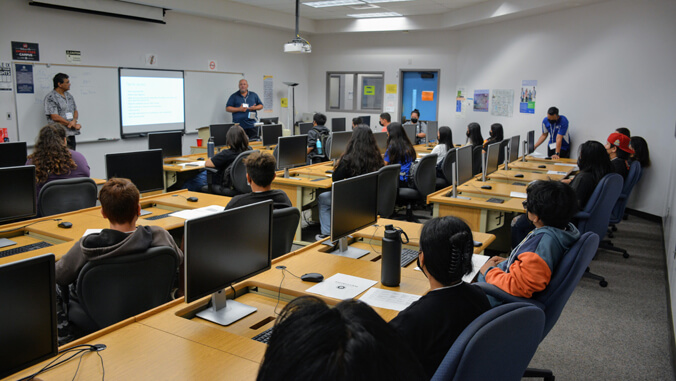
As the business landscape evolves, the integration of artificial intelligence (AI) and automation technologies has become increasingly essential for small and medium-sized businesses (SMBs) seeking to maintain a competitive edge. The recent cybersecurity clinic hosted by the University of Hawai‘i Maui College exemplifies the growing recognition of generative AI as a pivotal resource for enhancing security measures. The event aims to educate SMB leaders on leveraging these technologies effectively, particularly in the realm of cybersecurity. Understanding the relative strengths, weaknesses, costs, return on investment (ROI), and scalability of various AI and automation platforms is crucial for making informed decisions in this context.
Generative AI platforms, such as OpenAI’s ChatGPT and Anthropic’s Claude, offer substantial capabilities in natural language processing, assisting businesses in mitigating threats with predictive analyses. However, their applications in cybersecurity are both beneficial and fraught with challenges. For example, tools like ChatGPT can identify anomalous activity based on extensive data sets, helping businesses detect potential vulnerabilities that may evade traditional methods. Through sophisticated pattern recognition, generative AI can provide insights that are critical for proactive threat management.
Nevertheless, the benefits of generative AI must be weighed against inherent weaknesses. The technologies can generate responses that lack reliability, manifest biases present in their training data, and even produce misleading information—often termed “hallucinations.” These risks highlight the importance of integrating human oversight and ensuring that organizations readily understand the limitations of these tools. Therefore, while the upfront investment in generative AI tools may seem substantial, the potential for mitigating risks presents a compelling case for their adoption, given the increasing frequency of cyber threats.
In comparison, automation platforms such as Make and Zapier also offer valuable functionalities for streamlining operations within SMBs. Both platforms excel in integrating various applications to automate repetitive tasks, yet they adopt different approaches and serve varying needs. Make is particularly advantageous for more complex workflows that require visual programming and a highly customizable approach. Although this flexibility may lead to a steeper learning curve, it is ideal for organizations that require a tailored solution suited to specific operational demands.
Conversely, Zapier provides a user-friendly interface that facilitates quicker setup and onboarding. This aspect makes it an attractive option for SMBs seeking to implement automation without a significant investment in training or development. While both platforms feature a tiered pricing structure that scales according to usage, the ROI from either platform largely depends on the volume of transactions and the complexity of tasks involved. For businesses that prioritize efficiency but have straightforward automation needs, Zapier may represent a more cost-effective route.
When assessing the scalability of these platforms, several considerations come into play. For generative AI tools, the scalability depends significantly on the amount of data available and the sophistication of the algorithms in place. As organizations grow and the volume of data increases, businesses may require a shift to more advanced AI frameworks, which can escalate costs but ultimately result in enhanced predictive capabilities over time.
In terms of automation platforms, both Make and Zapier offer scalability options that can accommodate growth, yet they differ in execution. Make’s model supports enhanced functionalities as operations expand, while Zapier provides a more straightforward tier increase as usage rises. Decision-makers should consider their operational complexity and potential growth trajectory when choosing the most suitable platform.
The final layer of analysis involves considering how these technologies can interplay within an organization’s overarching cybersecurity strategy. Generative AI holds promise in identifying risks and defending against sophisticated threats, making it a valuable ally for cybersecurity efforts. On the other hand, automation platforms streamline business processes and enhance efficiency, reinforcing overall operational resilience.
In conclusion, the integration of generative AI and automation tools presents SMBs with a multifaceted set of opportunities and challenges. Business leaders must undertake a systematic evaluation of the various platforms available, analyzing their potential impacts on cybersecurity, operational efficiency, and overall business growth. By understanding strengths and weaknesses, organizations can forge a strategic path forward that capitalizes on these transformative technologies. This analytical approach, coupled with informed decision-making, will help SMB leaders navigate the evolving digital landscape effectively.
FlowMind AI Insight: As SMBs increasingly recognize the significance of cybersecurity and operational efficiency, the confluence of generative AI and automation platforms offers tremendous potential for innovation. A careful examination of tools’ capabilities and their applications in a business context can serve to enhance both security and productivity, ultimately driving sustainable growth.
Original article: Read here
2026-02-04 08:00:00