
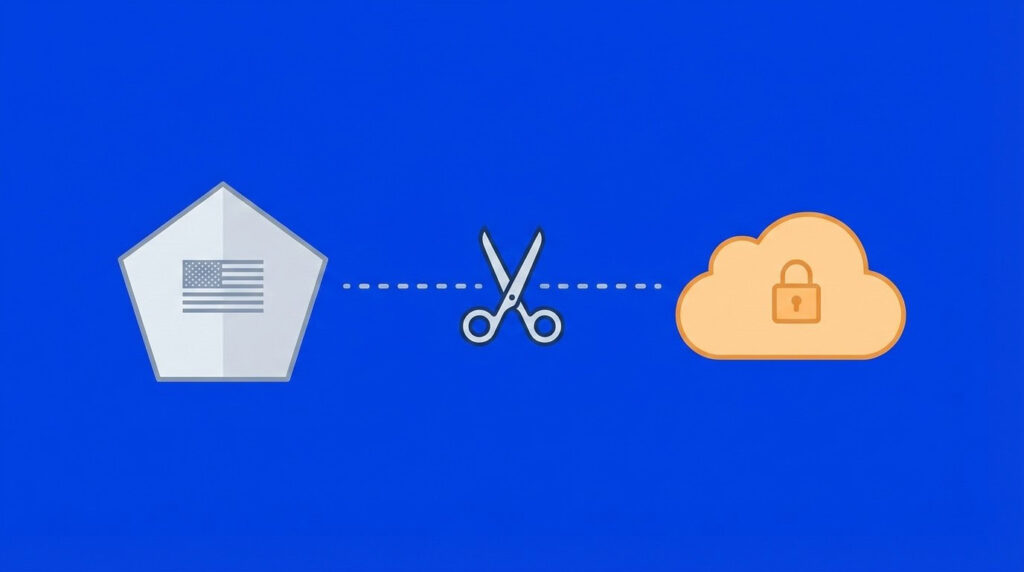
The ongoing relationship between artificial intelligence companies and the U.S. military is at a pivotal juncture, highlighted by recent controversies involving the San Francisco-based startup Anthropic. This company, which characterizes itself as an advocate for “AI safety,” is embroiled in a contentious dialogue with the Pentagon surrounding the scope of its technology’s application, particularly in military contexts. The situation is compounded by a significant ultimatum from the Department of Defense (DoD) threatening to terminate its $200 million partnership with Anthropic over fundamental disagreements regarding the control and governance of AI technologies.
At the heart of this dispute is a broader conversation among the DoD and major AI players, including OpenAI, Google, and xAI, about how AI models can be employed for “all lawful purposes.” This approach essentially seeks to remove existing limitations that protect sensitive areas such as weapons development and intelligence gathering from AI-driven solutions. While competitors like OpenAI and Google have demonstrated a level of flexibility in these discussions, Anthropic remains steadfast in its stance against using its AI models for mass surveillance and the creation of fully autonomous systems.
This resistance became particularly highlighted through a recent operational context involving the U.S. military’s raid to capture the former president of Venezuela, Nicolás Maduro. Reports indicate that Anthropic’s Claude model was utilized during this mission in collaboration with Palantir. The ensuing questions about the extent of Claude’s involvement raised eyebrows at Anthropic, leading to considerable internal debate around ethical and operational boundaries. Such inquiries have ignited frustrations within the Pentagon, which perceives these checks as impractical during active military operations. The crux of the matter hinges on the perceived clash of operational urgency and the ethical frameworks guiding AI development.
This culture clash is indicative of broader tensions in military and corporate collaborations. Military officials have described Anthropic as the most “ideological” among AI laboratories, governed by stringent internal policies that have sparked concerns even among its engineers regarding any military applications. Conversely, the Pentagon faces the unsettling reality that, despite these frictions, Claude appears more advanced than its competitors in delivering specialized government applications. This puts the military in a tough position: balancing ethical considerations with the imperative to utilize cutting-edge technology that can enhance operational efficacy.
If the parties cannot align on acceptable terms, the Pentagon is poised to label Anthropic as a “supply chain risk,” which could prompt a search for alternative solutions. Notably, Anthropic has made claims of a commitment to national security and has been proactive in deploying its models into classified networks. This assertion, however, stands in stark contrast to the pressing uncertainties under which agreements and partnerships are crafted in military settings. Mutual understanding appears essential for the survival of this partnership.
When examining the comparative landscape of AI and automation platforms, a more strategic lens can be applied. Platforms like OpenAI and Anthropic serve different needs and offer varying advantages based on capability, ethical considerations, and market positioning. OpenAI’s offerings, for example, showcase a broader prevalence across various applications due to their willingness to engage with government entities and allow a greater latitude of use, albeit with some regulatory checks in place.
Anthropic’s value proposition, on the other hand, hinges on its commitment to ethical AI standards, which while admirable can also translate to limitations in operational deployment. The additional scrutiny on its AI models may yield higher compliance costs as well as potential limitations in real-time responsiveness—critical aspects for military operations that require immediacy and flexibility.
In terms of costs and ROI, OpenAI potentially provides a more scalable model due to fewer constraints on usability. For businesses and organizations—or in this case, military applications—having an adaptable tool can significantly extend its utility and speed of implementation, translating into enhanced returns on investment in critical scenarios. However, Anthropic may achieve a different kind of ROI through customer relationships fostered on trust and ethical commitment, which may appeal to organizations prioritizing ethical considerations over immediate practicality.
As organizations investigate AI solutions for various implementations, the comparison of platforms underscores not just the technological readiness of AI tools but also illuminates the philosophical and ethical frameworks governing their use. Those leading SMBs and automating processes must be aware of these dynamics, carefully considering the implications of their chosen tools.
In conclusion, the evolving relationship between AI companies and military partnerships serves as a case study on the balance between technological advancement and ethical governance. Strategic investment decisions should be informed by both the capabilities of the tools and the socio-political contexts in which they operate, ensuring that the chosen platforms align with the organization’s values and operational goals.
FlowMind AI Insight: As the landscape of AI continues to evolve rapidly, leaders must sharpen their focus on the alignment of technological capabilities with ethical standards. Strategic selections today can yield dividends in operational effectiveness and organizational integrity, paving the way for both innovation and accountability in critical applications.
Original article: Read here
2026-02-18 01:29:00