
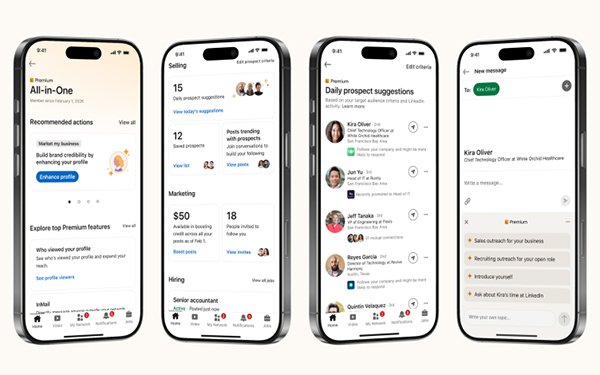
In the rapidly evolving landscape of tools designed to aid small and medium-sized businesses (SMBs), a shift toward integrated, AI-driven automation platforms has emerged as an essential strategy for growth and efficiency. With the rise of new offerings such as LinkedIn’s “Premium All-in-One” SMB hub, it becomes imperative for SMB leaders and automation specialists to dissect the capabilities of these tools systematically. A comparative analysis of leading platforms, including Make and Zapier, alongside AI engines such as OpenAI and Anthropic, can provide invaluable insights into optimizing operational strategies.
Make and Zapier stand as two prominent players in the automation space, each with distinct strengths and weaknesses. Zapier, with its user-friendly interface and extensive library of app integrations, simplifies the automation process for users lacking technical proficiency. However, it may fall short in complexity and customization options, limiting its appeal for companies with more intricate workflows. Conversely, Make offers robust capabilities for advanced users seeking substantial customization. Its visual automation builder allows for greater design flexibility, making it an ideal choice for complex workflows. Yet, Make’s advanced interface can pose challenges for less tech-savvy users, particularly those in SMBs who may prioritize simplicity over complexity.
From a cost perspective, Zapier operates on a subscription model ranging from a free tier to $599 per month, depending on usage levels, while Make provides equally tiered pricing with plans from $9 to $299 per month. An SMB’s choice between the two often hinges on the volume of automation required and the complexity of tasks. A critical evaluation of return on investment (ROI) reveals that for companies with straightforward requirements, Zapier may yield a higher ROI due to its quick adoption and ease of use. In contrast, for organizations with intricate automation needs, the investment in Make could lead to long-term efficiency gains, justifying the additional complexity.
A similar analysis can be applied to the AI tools landscape, particularly when considering OpenAI and Anthropic. OpenAI’s offerings, including the widely adopted GPT models, have paved the way for businesses looking to enhance customer engagement and streamline operations. Equipped with natural language processing capabilities, OpenAI supports a broad spectrum of applications, from chatbots to content generation. However, the challenge lies in its accessibility; organizations must invest time and resources in training and implementation to fully capitalize on its capabilities.
In contrast, Anthropic emphasizes alignment and responsibility, focusing on safer AI applications. Its Claude language model aims to enhance user trust, particularly relevant for SMBs engaging with sensitive data or needing to maintain compliance with regulations. While this safety-first approach is commendable, it might limit Anthropic’s flexibility compared to OpenAI, which offers versatility in deployment. The costs associated with both platforms vary, with OpenAI generally providing scalable pricing that aligns with usage, while Anthropic’s pricing models may add complexity based on the level of safety features desired.
As businesses contemplate the scalability of these platforms, the implications of their choices become clear. Make and OpenAI’s respective advantages in flexibility and application breadth make them preferable for SMBs anticipating growth and evolving needs. Their investments in developing robust capabilities can facilitate swift adaptations as market conditions change. Conversely, Zapier’s and Anthropic’s approaches cater to organizations seeking short-term solutions but may necessitate reevaluation as their businesses scale.
The management of these platforms also warrants consideration, particularly in terms of team integration and data management. As organizations deploy automation tools, effective training becomes crucial. Establishing a culture that embraces automation involves equipping staff with the necessary skills and knowledge. LinkedIn’s integration of AI tools within its SMB hub suggests a trend where platforms are not only focusing on functionality but also on user experience and empowerment. This strategic alignment indicates that tools designed to save time and enhance productivity can ultimately lead to stronger business outcomes.
In conclusion, the landscape of automation and AI tools offers a diverse array of options for SMBs, each with unique capabilities and challenges. A careful evaluation of these platforms reveals that businesses must consider their specific needs, whether that be simplicity or customization, immediate gains versus long-term efficiency, or flexibility compared to safety. The commitment to adopting the right tool directly influences the narrative of growth and success in the SMB sector, thereby necessitating a well-informed approach to selection.
FlowMind AI Insight: As the automation and AI landscape continues to transform, SMBs must align technology choices with their strategic objectives. A thorough understanding of tools like Make and OpenAI can lead to more informed decisions that enhance operational efficiency and drive sustainable growth. Emphasizing adaptability and user empowerment will ultimately determine the efficacy of these investments in a competitive marketplace.
Original article: Read here
2026-02-15 22:25:00