
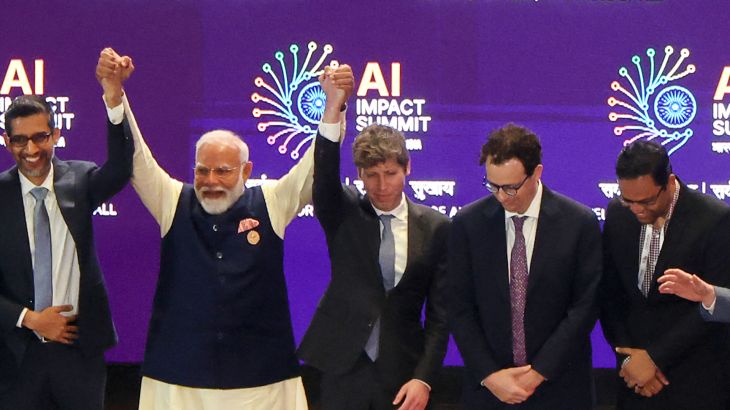
The recent interaction—or lack thereof—between Sam Altman, CEO of OpenAI, and Dario Amodei, head of Anthropic, at the AI Impact Summit in India signals the tension underlying the competitive dynamics in the artificial intelligence space. Their refusal to participate in a group photo gesture that featured other leaders linking arms highlights a growing rivalry that is increasingly visible to the public. This contention between two leading AI firms points to broader implications regarding the competitive landscape for automation and AI solutions in various sectors, particularly for small to medium-sized business (SMB) leaders and automation specialists.
In analyzing the competitive positioning of OpenAI and Anthropic, it’s crucial to delve into the strengths and weaknesses that each brings to the table. OpenAI has established a reputation for delivering advanced generative models, such as ChatGPT, which offer versatile applications ranging from customer service to content creation. OpenAI also benefits from substantial funding and a strong reputation, positioning itself as a leader in the AI market. On the other hand, Anthropic is carving out its niche through a focus on safety and ethical considerations in AI, which could provide it with a differentiating factor that resonates with businesses concerned about the implications of AI technologies.
When it comes to pricing and cost structures, OpenAI typically operates on a subscription-based model, giving users access to robust APIs that facilitate seamless integration into business workflows. While this can lead to a high cost of adoption for small organizations, the scalability of OpenAI’s solutions often justifies the initial investment, especially for businesses looking to enhance their operational efficiencies quickly. In contrast, Anthropic, which has gained notoriety for its critical advertisements during high-profile events such as the Super Bowl, may offer different pricing tiers that could appeal to various segments of the market. However, specific pricing details often remain opaque, creating a barrier for companies attempting to budget effectively for AI solutions.
The analysis around ROI for these platforms must bring into consideration the specific needs and capacities of SMBs. For example, businesses that leverage OpenAI’s advanced models can generate significant efficiencies that lead to cost savings over time. Companies utilizing AI for tasks ranging from data entry to predictive analytics can expect to see an uptick in productivity, thus enhancing their overall profitability. Conversely, while Anthropic’s emphasis on ethical AI may come with slight increases in implementation costs, it could resonate with consumers and business stakeholders who prioritize ethical considerations, potentially shielding companies from reputational damage in the long run.
Scalability is another critical factor. OpenAI’s platform has showcased an ability to scale effectively with large volumes of data, allowing businesses to expand their operations without necessitating comparable increases in headcount or operational costs. Anthropic’s focus on algorithmic safety and robustness also supports scalability but may be more tempered compared to OpenAI, especially if it sidesteps aggressive scaling in favor of responsible growth. For SMB leaders, this presents a trade-off: choosing the high scalability of OpenAI vs. the potentially more ethical but slower path offered by Anthropic.
In contrasting both platforms, automation tools like Make and Zapier emerge as relevant analogs, which further elucidate the trade-offs SMB leaders face. Make excels in its capabilities for complex workflows and detailed automations, often appealing to businesses requiring customized processes. Conversely, Zapier serves as user-friendly, offering less complexity but also less configurability than Make. These platforms also demonstrate scalability and cost considerations, with pricing structures that cater to varying levels of business needs.
Given the data-driven insights presented herein, SMB leaders must weigh the importance of advanced capabilities, ethical considerations, cost structures, and scalability when selecting between AI platforms. Those who prioritize rapid growth and advanced features might favor OpenAI, while businesses focused on responsible AI applications may find value in Anthropic. A balanced analysis is equally important when considering automation tools; where Make might serve more niche cases, Zapier delivers broader accessibility for less complex tasks.
In conclusion, the competitive dynamics represented by Altman and Amodei serve as a microcosm of the broader landscape for AI and automation platforms. Leaders must carefully assess their unique business needs against the strengths and weaknesses of each tool to align with their strategic objectives effectively. Making informed decisions around these technologies can position SMBs not just for immediate ROI, but also for sustainable growth in an increasingly automated world.
FlowMind AI Insight: The ongoing rivalry between OpenAI and Anthropic underscores the need for SMB leaders to strategically assess their technology choices. By doing so, they can harness advanced capabilities while maintaining ethical standards, ultimately leading to sustained success in an evolving digital landscape.
Original article: Read here
2026-02-19 10:56:00