
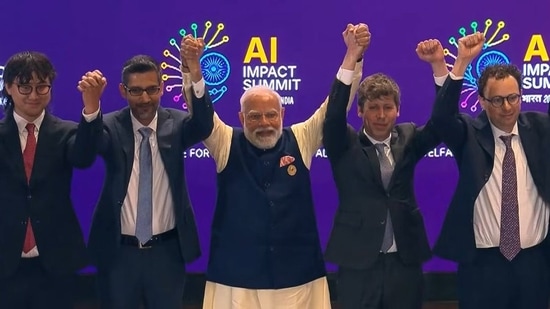
Recent events at the India AI Impact Summit have highlighted the competitive dynamics in the artificial intelligence sector, particularly between prominent firms such as OpenAI and Anthropic. The incident occurred during a group photograph session that featured notable tech leaders, including OpenAI’s CEO Sam Altman and Anthropic’s CEO Dario Amodei. Their refusal to hold hands for the photograph, catalyzed by political and personal tensions stemming from Amodei’s departure from OpenAI in 2021, became a trending topic on social media. This moment serves as a metaphor for the broader rivalry and differing philosophies that characterize these leading AI organizations.
Understanding the distinctions between OpenAI and Anthropic can provide valuable insights for leaders and specialists looking to implement AI solutions within their enterprises. OpenAI has gained recognition for its rapid development and deployment of transformative tools like ChatGPT, which businesses have leveraged for a variety of applications ranging from customer service to content generation. The platform’s primary strength lies in its ability to quickly scale and deliver sophisticated models, making it an accessible choice for small-to-medium businesses (SMBs) that seek immediate benefits from AI functionality. However, many observers have raised concerns about the ethical considerations surrounding OpenAI’s models, particularly regarding biases that may be inherent in the training data or algorithms.
Conversely, Anthropic seeks to differentiate itself through a focus on safety and alignment features. Founded by former OpenAI researchers who prioritized ethical deployments, Anthropic invests heavily in developing AI systems like their flagship Claude chatbot that promise increased reliability and safer interaction paradigms. For SMB leaders, this emphasis on ethics may translate to a lower risk of reputational damage and regulatory scrutiny, making Anthropic an attractive option despite potentially higher upfront development costs. The firm advocates for a meticulous approach to model design, ensuring that companies can trust the underlying technology. However, this slower, more cautious development pace could result in less immediate ROI compared to OpenAI’s more aggressive strategy.
From a financial perspective, both platforms offer subscription models that can accommodate various business sizes and needs. OpenAI’s pay-per-use structure allows businesses to scale their investment based on real-time needs, appealing particularly to companies that may hesitate to commit significant resources upfront. On the other hand, Anthropic’s comprehensive subscription packages may seem costlier initially but offer additional layers of support and consultation that could ultimately enhance long-term value through superior implementation.
Considering scalability, OpenAI provides a model that promotes rapid integration into existing systems, facilitating easier and faster adaptation for organizations looking to harness AI tools without extensive reconfiguration. Its API allows for seamless embedding into applications, making it an excellent choice for businesses seeking quick deployment. Anthropic’s approach, while potentially more complex, offers a roadmap for ensuring that models are not just scalable but also aligned with ethical considerations. This can be a critical factor for organizations aiming to foster responsible AI development and usage.
For leaders navigating the AI landscape, the rivalry between OpenAI and Anthropic underscores the need for a strategic approach when choosing a platform. Key decision-making criteria should encompass not only functionality and pricing but also the foundational philosophies driving each organization. Factors such as data security, ethical considerations, and long-term alignment with company values should be taken into account.
As organizations contemplate investments in AI and automation technologies, the operational dynamics between OpenAI and Anthropic may serve as a cautionary tale about prioritizing speed versus safety. Ensuring alignment with ethical practices while achieving technological advancements should be a guiding principle. Companies that commit to robust frameworks for responsible AI usage will likely reap the benefits while avoiding the pitfalls associated with technological haste.
FlowMind AI Insight: The AI landscape is continually evolving, with competition driving rapid advancements. Leaders must weigh both the risks and rewards of each platform carefully. By aligning AI solutions with ethical standards and business objectives, SMBs can position themselves not only for immediate technological gains but also for sustainable growth and reputation management in the long term.
Original article: Read here
2026-02-19 06:54:00