
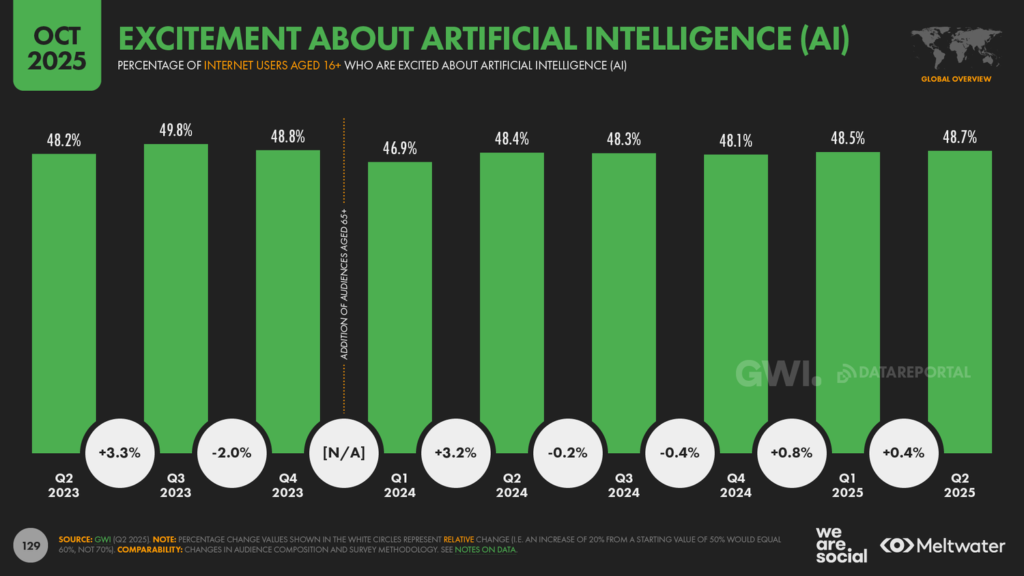
As the artificial intelligence (AI) landscape continues to evolve, the divergence of sentiment between investors and the general public raises important questions regarding the sustainability and scalability of AI technologies. Early October 2025 marked a pivotal moment when AI-related stocks accounted for an astounding 75 percent of S&P 500 returns, according to J.P. Morgan’s Michael Cembalest. With such remarkable figures, the apparent excitement in the investment community breeds skepticism as analysts speculate whether we are on the verge of an “AI bubble.” These discussions, though nuanced, necessitate a closer examination of how AI and automation platforms, such as OpenAI and Anthropic or automation tools like Make and Zapier, fulfill diverse business needs.
In considering AI models, clarity around revenue sources is paramount. Companies might eventually derive income through subscription fees, ad-supported models, or a combination of both. This uncertainty speaks volumes about the current stage of AI monetization strategies. Notably, geographic dependencies of revenue illustrate significant disparity in AI traction across various markets. For instance, Netflix drew roughly 76 percent of its Q2 2025 revenue from North America and Europe. Similarly, giants like Alphabet and Meta rely dominantly on revenues from these economically developed regions, showcasing a stark reliance that not only shapes their financial viability but also affects their growth strategies.
This geographical skew is particularly relevant when examining user engagement and revenue generation models of AI tools. A recent Reuters analysis highlights that less than 2 percent of the 800 million or so users of ChatGPT pay for their subscription, primarily skewed toward low-income countries. Nonetheless, OpenAI has noted significant growth in user adoption within these regions, indicating that affordability plays a crucial role in the application of AI technologies. OpenAI’s initiative to offer a low-cost subscription in India reflects a strategic move to increase market penetration in regions where payment capabilities diverge sharply from wealthier economies. Here, customer segmentation based on economic factors emerges as a vital aspect for companies strategizing their pricing structures.
Turning our focus to specific tools in the automation space, a comparative analysis between platforms like Make and Zapier reveals distinct strengths, weaknesses, and scalability. Make offers a graph-based interface that enhances visualization and allows users to develop intricate workflows intuitively, potentially reducing the learning curve for new users, particularly in complex automation scenarios. However, its slightly steeper pricing model may deter small to medium-sized businesses seeking budget-friendly alternatives.
On the other hand, Zapier excels in its user-friendly interface and extensive integration capabilities, making it an attractive choice for SMBs looking to quickly implement automation. Yet, as pricing scales with usage, particularly with increased task volumes, it may not always deliver the cost efficiency that growing businesses require in the long run. Thus, while Zapier caters effectively to diverse automation needs, businesses in search of expansion might find that its costs may accumulate unpredictably, raising questions about ROI in the long term.
When tackling the nuances between AI giants such as OpenAI and Anthropic, strengths and weaknesses manifest distinctly. OpenAI’s ChatGPT has gained widespread recognition for its conversational capabilities; however, the increasing sophistication of Anthropic’s Claude model poses a competitive challenge, particularly with its emphasis on ethical AI. While OpenAI has taken significant strides toward monetization, questions around data privacy and model transparency continue to shadow its user adoption rates and expansion efforts. For stakeholders, aligning with a platform that strikes a balance between efficiency and ethical standards becomes increasingly critical in establishing long-term relationships with customers.
Ultimately, the decision regarding which platforms to adopt is contingent upon specific operational goals and financial considerations. Businesses should contemplate how often automation will be utilized, the complexity of tasks, and the anticipated growth trajectory. Startups and SMBs, grappling with budget constraints and operational effectiveness, could benefit from piloting multiple solutions before committing fully, balancing functionality with cost.
In summary, the current landscape surrounding AI and automation platforms reveals a critical interplay of investor enthusiasm, geographic revenue disparities, and the intricacies of tool usability. As companies navigate these trends, proactive evaluation of functionalities, costs, and market positioning will be essential for informed investments and strategic partnerships. Those who take the time to assess these platforms thoroughly will likely cultivate greater ROI and scalability in their operations.
FlowMind AI Insight: Businesses must remain vigilant in assessing the long-term implications of their AI and automation investments by prioritizing cost efficiency, usability, and ethical considerations, thus ensuring that their technological choices align with both immediate operational needs and future growth aspirations.
Original article: Read here
2025-10-15 07:00:00