
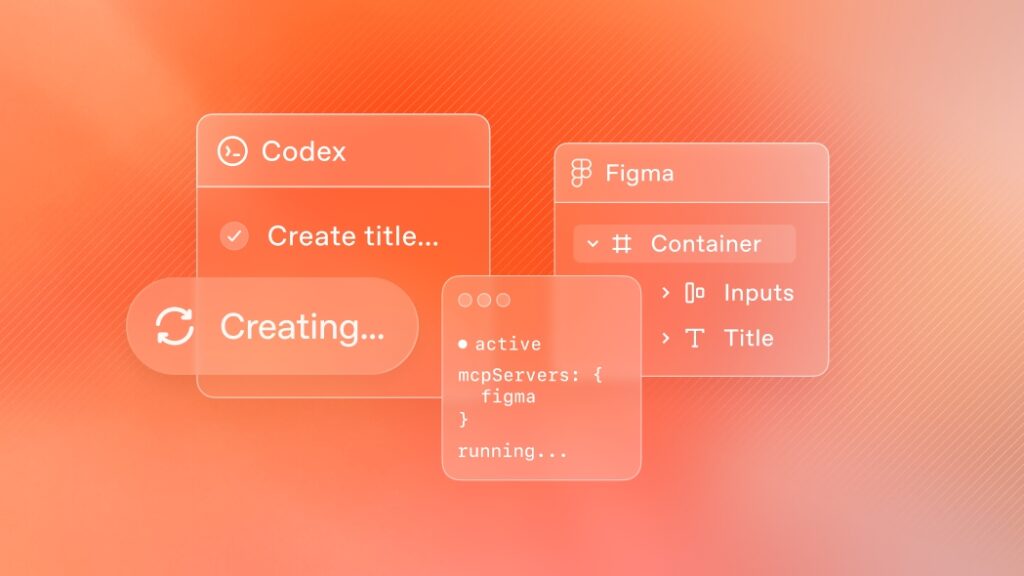
Figma has recently integrated OpenAI’s Codex into its platform, allowing users to create and adjust designs seamlessly from their coding environments. This integration follows a notable partnership with Anthropic to incorporate Claude Code. As businesses increasingly seek to streamline design and development workflows, it is essential to analyze the implications of these advances in automation and artificial intelligence tools.
Figma’s integration with Codex reflects the growing trend of synthesizing design and coding environments. Users now have the option to transition fluidly between Figma and Codex using the Model Context Protocol (MCP) server, which enhances operational efficiency and fosters a more cohesive workflow. Previously, users could only leverage Figma files in Codex for code-based projects, but the new integration takes this a step further by ensuring that designers and engineers can collaborate more effectively. Figma’s Chief Design Officer, Loredan Crisan, emphasizes that this integration empowers teams to build on their ideas in a more iterative fashion, thus maximizing the potential for creativity and innovation.
Analyzing the competitive landscape, both OpenAI and Anthropic provide distinct advantages through their respective tools. OpenAI’s Codex, initially introduced as a command-line coding assistant, has gained a reputation for ease of use and versatility. It is now embedded within ChatGPT and available in dedicated applications, which have reportedly attracted over one million downloads in just one week post-launch. The system’s capacity to learn from user interactions positions it as a potent ally for coders looking for quick, intuitive solutions.
On the other hand, Anthropic’s Claude Code is gaining traction for its robust natural language processing capabilities, making it particularly attractive for developers who prioritize understanding and context in their coding environments. By fostering a more natural interaction with coding language, Claude Code can simplify complex coding tasks, potentially reducing the learning curve for less experienced developers. However, the comparative costs and long-term return on investment for both tools warrant close examination.
When weighing the financial implications of these AI tools, businesses must consider the subscription models and operational costs associated with each platform. OpenAI generally offers competitive pricing with pay-as-you-go models, allowing organizations to scale their usage according to specific project needs. In contrast, Anthropic’s pricing remains less transparent, which could present challenges for SMB leaders aiming for predictable spending.
The return on investment (ROI) also varies significantly between these platforms. Codex’s integration into existing workflows has shown potential for rapid deployment and significant cost-saving through reduced development time. According to recent reports, organizations leveraging Codex have witnessed improvements in developer productivity exceeding 30%. In contrast, while Claude Code excels in comprehension and context, the adoption may require more training and adaptation, which can delay realization of ROI, especially in SMB settings where resources are often limited.
Scalability presents another critical factor. Codex’s established presence within platforms such as ChatGPT, coupled with its proactive updates and model improvements, positions it strongly for future scaling. The MacOS application’s impressive download numbers indicate a high demand that can translate into extensive usage across diverse teams. Alternatively, while Claude Code can be beneficial in certain scenarios, its broader scalability might be hindered by potential resource constraints and the necessity for increased user training, which could complicate rapid implementation in fast-paced environments.
A key recommendation for SMB leaders and automation specialists is to adopt a dual approach when integrating these AI tools into their operations. By assessing the specific needs of design and development teams, businesses can optimize workflows through a mix of tools that complement each other. For instance, leveraging Figma with Codex may provide an advantage for teams seeking efficient design-to-code transitions, while Claude Code can be beneficial when contextual understanding is paramount.
In terms of long-term success, companies must remain attentive to developments in both platforms and the broader AI and automation landscape. Market dynamics can shift rapidly, and vendor alignment regarding support and feature development will be fundamental to sustaining competitive edge.
FlowMind AI Insight: With rapid advancements in AI and automation platforms, businesses must leverage these tools thoughtfully to enhance productivity and foster collaboration. The integration of platforms like OpenAI’s Codex into established workflows such as Figma can unlock new avenues for innovation, but leaders should remain mindful of long-term scalability and ROI to ensure sustainable growth.
Original article: Read here
2026-02-26 14:00:00