
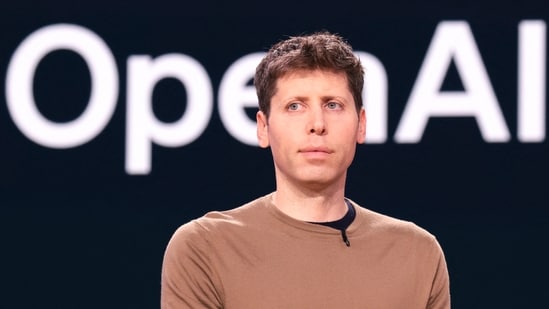
Recent developments in the artificial intelligence sector highlight the complexities that arise as companies navigate partnerships with government entities. OpenAI’s recent agreement with the US Department of War represents a significant move in the ongoing competition among AI firms, particularly against the backdrop of conflicts with other players like Anthropic AI. While OpenAI’s collaboration suggests a pathway toward integrating AI into national security frameworks, it also raises questions regarding ethics, safety, and the balance of power between tech companies and governmental mandates.
OpenAI’s CEO Sam Altman announced that the company is set to deploy its AI models within the classified network of the Department of War, an addition that is expected to include stringent technical safeguards aimed at ensuring the reliability of its AI systems. Altman’s articulation of the prevailing principles that prohibit mass surveillance and underscore human accountability reflects an understanding of the ethical dimensions embedded within defense-related AI applications. Industry leaders must take heed: as AI technology becomes increasingly integrated within national security outlines, the discourse around ethical usage is becoming paramount.
In contrast, Anthropic AI, founded by former OpenAI research head Dario Amodei, has encountered significant friction with the US government, notably due to its refusal to permit unrestricted use of its AI technologies for military applications. This disagreement has not only led to Anthropic being labeled a “supply chain risk” by the Pentagon but has also ignited a wider conversation about the responsibilities of AI companies in the defense sector. Anthropic’s stance aims to uphold democratic values; however, this has also resulted in a critical standoff with government stakeholders who argue that once technology is acquired, the terms of its use cannot be dictated by the developers.
The salient characteristics of these two companies reveal varying philosophies in approaching AI-based solutions. OpenAI’s broad adoption within military applications can be seen as both a strength in securing lucrative contracts and a strategic alignment with governmental goals for enhanced operational capabilities. Conversely, Anthropic’s commitment to ethical guidelines manifests as a strength in cultivating public trust yet presents significant risks regarding its commercial viability and ability to engage with lucrative government contracts.
When evaluating automation platforms like OpenAI and Anthropic, leaders in small and medium-sized enterprises (SMBs) must consider dimensions like cost, scalability, strength, and weaknesses. The immediate costs of deploying sophisticated AI systems can be high; however, the return on investment (ROI) potential can be substantial once the systems are in place. OpenAI’s partnership with government entities could provide a solid precedent for ROI in high-stakes applications, whereas Anthropic’s restrictive approach might limit its commercial expansion despite ensuring ethical adherence.
To further contextualize these assessments, comparing other automation platforms such as Make and Zapier illustrates different business models and operational capacities. Make offers flexibility with more complex workflows at seemingly lower costs, while Zapier shines in simplicity and ease of integration with broader applications. This dichotomy highlights how firms must align their choices with their strategic objectives and operational needs, thereby weighing the trade-offs between cost-effective solutions and broader, more impactful but potentially more complex platforms.
As discussions regarding AI ethics continue to evolve alongside technological advancements, the lessons learned from OpenAI and Anthropic create a framework through which SMB leaders can assess their own capabilities and philosophies. The underlying tenets of both companies provide critical insights into establishing partnerships that not only focus on profitability but also consider social responsibility and sustainability.
In conclusion, the ongoing developments in AI partnerships with government entities exemplify the intricate balance between commercial success, ethical considerations, and operational effectiveness. Leaders in automation and AI domains must therefore embrace a multi-faceted approach that evaluates technology not solely on financial metrics but also on their broader impact on society and democratic values.
FlowMind AI Insight: As the landscape of AI partnerships continues to shift, companies must proactively align their technological choices with ethical governance frameworks. This alignment can bolster public trust and operational integrity while driving sustainable growth in a competitive market.
Original article: Read here
2026-02-28 03:19:00