
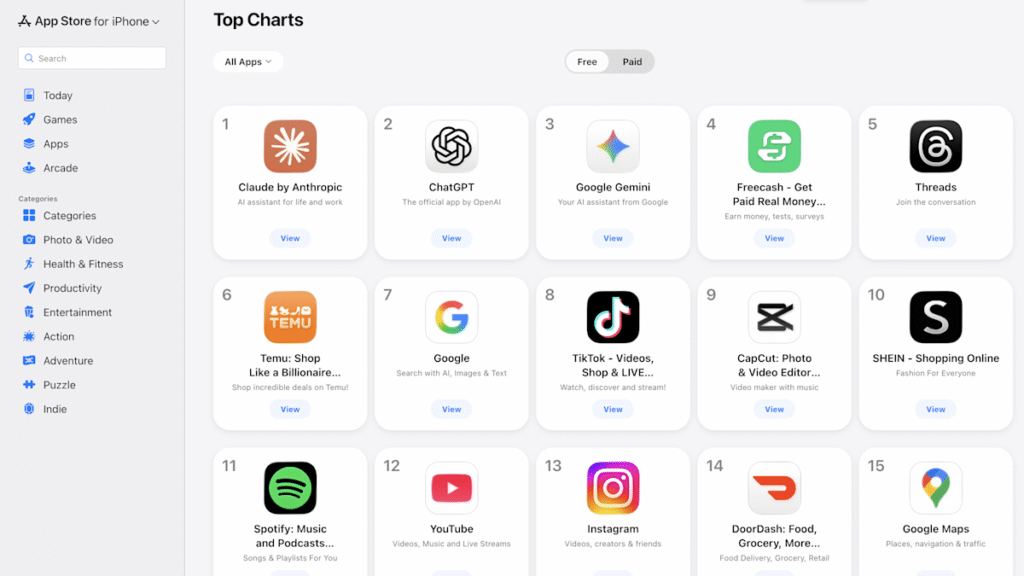
The recent transformation in the AI landscape has sparked significant conversation regarding competition and ethical use in advanced technologies. A noteworthy case is Anthropic’s AI platform, Claude, which recently rose to prominence by becoming the most downloaded free app on the App Store, surpassing established leaders such as OpenAI’s ChatGPT and Google’s Gemini. This spike in popularity coincided with a contentious interaction between Anthropic and the U.S. government that has broader implications for businesses considering AI solutions.
Anthropic’s decision to prioritize ethical boundaries—specifically, resisting using its AI models for mass domestic surveillance and autonomous weapons—reflects a growing industry emphasis on responsible AI development. Despite losing out on potential contracts with federal agencies due to these principles, the public’s positive reception of Claude demonstrates a robust consumer demand for ethical AI. The decision not to bow to governmental pressure has resonated with users concerned about privacy and ethical practices, thereby positioning Anthropic as a strong alternative to existing platforms.
Comparatively, OpenAI’s recent collaborations with the Department of Defense highlight differing ethical stances that can influence user choice. While OpenAI’s partnership can yield immediate business opportunities and revenue streams, it raises questions about long-term brand loyalty and public perception. Businesses looking at AI solutions must weigh these elements carefully, as the perceived moral compass of a platform can significantly impact customer trust and acceptance.
From a technical standpoint, both platforms present distinct strengths and weaknesses. Claude has garnered praise for its conversational capabilities and alignment with user ethical standards, which can translate into increased customer engagement—an essential metric for SMB leaders considering cost-effectiveness and return on investment. In contrast, OpenAI’s comprehensive toolset includes diverse functionalities that facilitate extensive integrations, enhancing operational efficiency. This versatility may appeal to automation specialists focused on scalability and multi-dimensional use cases.
Cost is another critical component in evaluating these platforms. OpenAI and Anthropic’s pricing structures reflect their respective strategies—OpenAI often operates on a subscription basis for access to its APIs, providing straightforward cost management for businesses. Meanwhile, Anthropic’s growing ecosystem is still evolving, and as a relatively new entrant, it may offer competitive pricing to entice users from established platforms. Businesses must analyze the total cost of ownership, including initial setup, ongoing maintenance, and potential scaling as user bases grow.
Moreover, the return on investment (ROI) should be carefully assessed. For companies skeptical about implementing AI at scale, a risk-based analysis would be prudent. Using tools like Claude, firms that prioritize ethical considerations may find themselves tapping into a new market of socially-conscious consumers, enhancing brand value over time. Conversely, OpenAI’s existing partnerships and object-oriented design could yield a quicker ROI for companies willing to leverage its tools for immediate sales and efficiency gains.
Scalability is an essential criterion for SMB leaders navigating automation platforms. OpenAI’s robust infrastructure facilitates seamless scaling, accommodating increased user demand without compromising performance. Anthropic’s Claude, while less tested on a large scale, could appeal to businesses with niche ethical mandates or those prioritizing sustainable practices, ultimately promoting brand loyalty and future market positioning.
In the current climate, discerning the appropriate AI partner is crucial. For businesses, the considerations go beyond mere functionality; they extend into realms of ethical engagement, brand alignment, and societal implications. Leaders at SMBs and automation specialists must take a comprehensive view of the platforms they choose to adopt, embracing the nuances of each offering to ensure alignment with their operational goals and ethical guidelines.
While the tech industry grapples with rapid transformations, the contentious exchange between Anthropic and the U.S. government serves as a microcosm of larger ethical discussions at play. Observers are keenly watching how companies navigate their partnerships and principles, which ultimately shapes the evolving narrative of AI.
In conclusion, the rise of Claude poses both an opportunity and a challenge for established leaders in the AI sector. Businesses must consider not only the immediate benefits of these technologies but also the long-term implications for ethical business stewardship. Decisions taken today could define the very landscape of AI development and consumer engagement in the future.
FlowMind AI Insight: The recent developments highlight the importance of ethical considerations in AI technology; businesses should evaluate not only the functionality and costs but also how these choices align with their values to build trust and enhance brand reputation. Navigating this complex landscape requires a strategic approach to ensure sustainable growth and competitive advantage.
Original article: Read here
2026-03-01 19:36:00