
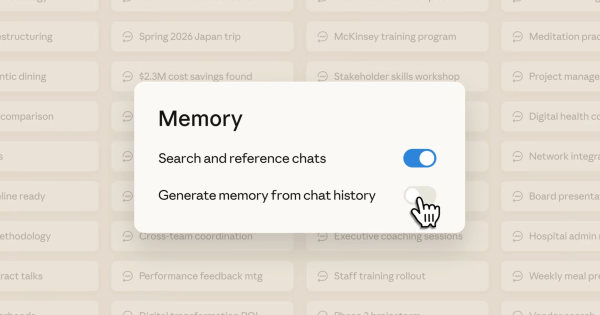
In the rapidly evolving landscape of artificial intelligence (AI) and automation platforms, two prominent players have recently shifted their strategies to attract users and bolster their market positions: Anthropic and OpenAI. A significant development precipitating this shift is Anthropic’s promotion of its memory import feature for its answer engine, Claude. This feature allows users to migrate their chat histories from other AI chatbots seamlessly. Launched initially in October last year, the new promotional push is particularly noteworthy as it is now available for free to all users, a strategy aimed at increasing market penetration amid growing competition.
The timing of this initiative is strategic. Following an intense fallout with the U.S. Department of Defense (DoD), which involved the refusal of Anthropic’s CEO, Dario Amodei, to comply with directives that could lead to potential misuse of AI for surveillance or weaponization, Claude garnered significant attention. This refusal sparked a surge in user interest in Claude, with the answer engine recently ranking first in the U.S. app store for free applications. In contrast, OpenAI has faced criticism for its dealings with the DoD, which have included securing contracts that some observers allege compromise ethical standards within AI deployment. The sharp division in the marketplace — where users find themselves torn between the ethical ramifications of using OpenAI’s technologies and the appeal of Claude’s user-friendly features — illustrates the challenges faced by both companies.
From a tool comparison perspective, Claude’s memory import functionality highlights its usability and focus on user experience. By allowing seamless transitions for users switching from other platforms, Claude positions itself as an ideal option for those who prioritize consistent dialogue history and context continuity. Furthermore, the introduction of a dedicated landing page with demos and straightforward instructions significantly reduces friction for new users, potentially leading to increased engagement and retention. Despite the fact that this feature was initially exclusive to paid subscribers, its expansion to all users indicates an adaptive pricing strategy aimed at enhancing user acquisition.
On the other hand, OpenAI’s current stigma amid backlash could detract from its value proposition, even as the company promotes robust guardrails for ethical AI use. OpenAI’s pricing model and integrations may also lead to confusion with the introduction of advertising into the user experience, which diverges from the ad-free interface promised by Anthropic. The potential for user dissatisfaction in response to ads could negatively affect user growth and retention rates, crucial metrics for any SaaS platform.
When considering usability from a business perspective, it becomes essential to evaluate the return on investment (ROI) associated with both platforms. Claude’s memory tool enhances user engagement for minimal cost, aligning with a broader trend in software where customer retention is significantly more economical than customer acquisition. Evidence of this shift can be seen in the 60% increase in free active users and quadrupled daily sign-ups Anthropic has reported since the beginning of the year. In stark contrast, OpenAI’s user base may experience stagnation as ethical concerns haunt its brand image, resulting in potential loss of current customers and challenges in attracting new ones.
Scalability also plays a critical role in the long-term viability of a platform. Anthropic’s focus on enhancing user experience through innovative features like memory imports and ad-free engagement aligns well with strategies for businesses requiring scalable solutions in a fast-paced market. Companies looking to invest in a chatbot or automation solution must consider both current usability and future growth potential. Claude’s design fosters rapid scaling through user-friendly integrations, making it a formidable competitor against established platforms like OpenAI which, despite its extensive functionalities, faces convoluted customer journeys brought about by its pricing model and recent controversies.
However, it is important to note that both platforms are not without scrutiny. Anthropic’s partnerships, particularly its work with Palantir in defense, have drawn criticism that could pose risks to its long-term appeal among ethically-conscious consumers. Brands need to gauge not only the technological maturity of their selected solutions but also the reputational sustainability of their chosen vendors.
In conclusion, SMB leaders and automation specialists seeking AI solutions should analyze both Anthropic’s Claude and OpenAI’s offerings through multiple lenses: usability, ROI, and scalability. Claude’s focus on user experience and value adds promises a quick pathway to customer retention and growth, yet the ethical implications associated with both companies must also be carefully weighed.
FlowMind AI Insight: In a landscape rife with ethical dilemmas and competitive maneuvering, businesses that prioritize user experience and ethical transparency will likely emerge as front-runners in the AI and automation sector. Organizations should carefully review not only the functionalities of AI solutions but also the broader implications of aligning with specific technological frameworks.
Original article: Read here
2026-03-02 21:46:00