
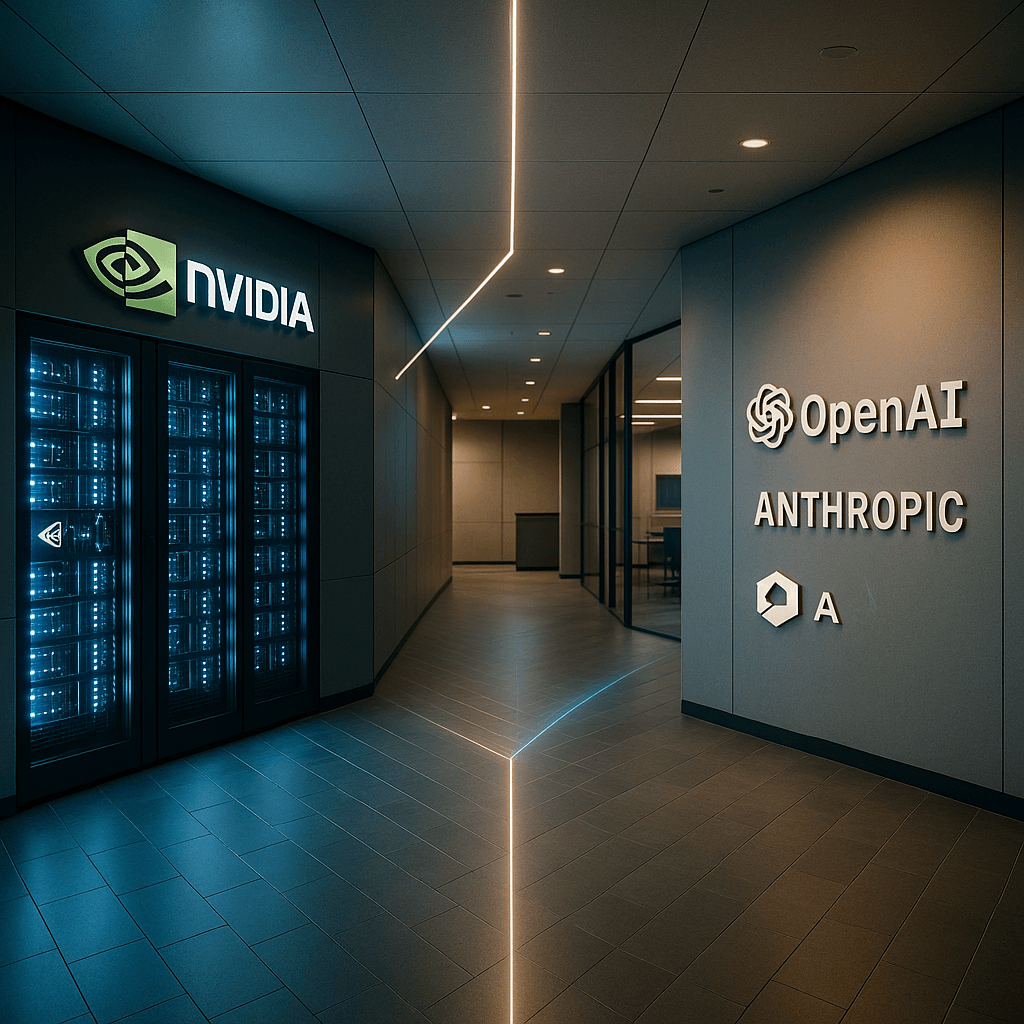
In a significant shift within the AI investment landscape, Jensen Huang, CEO of Nvidia, announced that the company will no longer make direct investments in prominent AI labs, specifically OpenAI and Anthropic. This announcement has sent ripples through the sector, particularly as Nvidia has long stood as the backbone of the generative AI boom, largely due to its powerful GPUs that fuel foundational technologies, including models like ChatGPT and Claude. The strategic retrenchment raises important questions about Nvidia’s motivations, potential conflicts of interest, and the broader implications for AI startups reliant on Nvidia’s hardware.
Nvidia has positioned itself as a leading actor in AI by supplying critical hardware that drives machine learning applications. The company’s GPUs, especially the H100 and A100 models, have become indispensable in training advanced models. However, Huang’s declaration not only marks a retreat from equity stakes in these key laboratories but also raises eyebrows about Nvidia’s future in the venture capital space. The retreat poses questions about the company’s long-term strategies, particularly given that OpenAI and Anthropic represent significant revenue streams for Nvidia through GPU sales.
One possible factor contributing to Nvidia’s pullback is the emerging conflict of interest as the company builds competing products and services. As Nvidia expands into cloud AI services and enterprise AI platforms, retaining equity in competing startups creates inherent tensions. From a business perspective, the challenge lies in balancing partnership dynamics with competitive interests while ensuring sustainable growth. The transparency around these strategic decisions has been notably lacking, with Huang offering limited insight into why Nvidia would abandon lucrative propositions in a thriving market.
Furthermore, this decision signals potential ramifications for other AI startups that have relied on Nvidia’s backing. Important funding dynamics could shift as companies may need to seek alternative investment avenues, which could complicate their ability to scale rapidly. Amid growing data-driven demands for automation, the venture landscape is turning increasingly competitive, and finding reliable partners for scaling has never been more pressing.
A closer examination of competing platforms, specifically OpenAI and Anthropic, highlights their varied approaches and respective strengths. OpenAI, backed by a soaring valuation, has aggressively expanded its deployment of language models and related technologies. Its ability to leverage vast datasets and advanced training methodologies has positioned it as an industry leader. However, its dependency on Nvidia’s hardware could pose challenges should Nvidia decide to pivot its strategy or collaborations.
Conversely, Anthropic has emerged as a significant player but is still gaining traction in a market dominated by OpenAI. Its focus on safety and alignment in AI models differentiates it but may also slow its pace of innovation compared to competitors. The operational costs of both companies can be high, especially in the relentless pursuit of advanced capabilities, and this financial burden underscores the necessity for clear ROI metrics. Leaders in SMBs looking to engage with AI platforms will find each company’s pricing structures and service offerings essential to understand before committing significant resources.
When evaluating the landscape of automation platforms, particularly tools like Make and Zapier, it becomes vital to assess their respective strengths and weaknesses. Make offers critical flexibility and scalability but may overwhelm new users with its diverse functionalities. Zapier, known for its user-friendly interface, provides a more streamlined approach, ideal for leaders seeking quick implementations but may limit functionality for more complex automation tasks.
The cost structures differ significantly between these platforms depending on usage and integrations needed. While Zapier operates on a tiered pricing model that can escalate quickly with higher usage, Make offers more cost-effective solutions for extensive automation needs. For SMB leaders, initial investments in automation platforms should yield returns by decreasing operational inefficiencies, but a focus on ongoing costs versus immediate benefits is crucial.
The scalability of these platforms also varies, with both Make and Zapier able to adapt to a growing volume of tasks; however, the underlying technology infrastructures differ vastly. Companies willing to invest time in exploring the potential of both platforms might find that testing and evaluation could lead to the identification of a platform that aligns best with their long-term business goals.
In conclusion, the landscape of AI and automation is rapidly evolving, with Nvidia’s recent strategic shifts potentially setting the tone for funding dynamics in AI startups. For SMB leaders and automation specialists, aligning with the right AI tools and platforms is essential. A careful evaluation of the strengths, weaknesses, costs, ROI, and scalability of automation tools will determine successful integration into their operational strategies.
FlowMind AI Insight: As AI continues to reshape business paradigms, staying aligned with technological advancements, including those in hardware and software, becomes vital for SMB growth strategies. Regular evaluations of partnerships and autonomous platforms will enhance adaptability in an increasingly competitive marketplace.
Original article: Read here
2026-03-05 01:42:00