
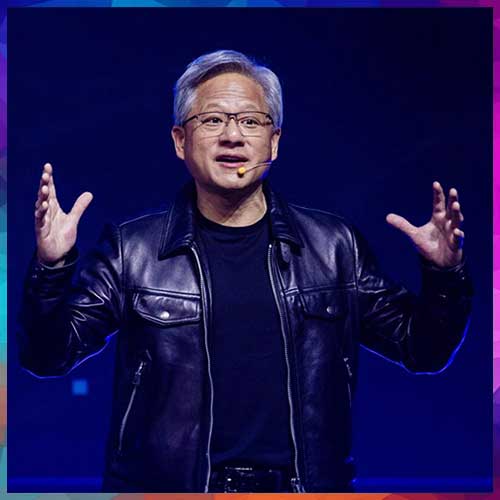
The recent moves by Nvidia CEO Jensen Huang have significant implications for the future dynamics of artificial intelligence (AI) and automation platforms. Huang indicated at the Morgan Stanley Technology, Media and Telecom Conference that Nvidia’s investments in AI startups like OpenAI and Anthropic might be its last major entries before these companies transition to public offerings. This strategic decision demands an analysis of the broader implications for SMB leaders and automation specialists who rely on AI tools for operational efficiencies.
Investing in established AI entities such as OpenAI and Anthropic underscores Nvidia’s commitment to integrating advanced AI capabilities into its processing units, which are crucial for large-scale AI deployments. While Nvidia has historically backed companies that are also major consumers of its chips, the shift toward IPOs looms large. With OpenAI preparing for an IPO that could potentially value the company at $1 trillion, the landscape for technology investments appears both promising and perilous for established players like Nvidia looking for favorable returns.
In the context of AI and automation tools, comparisons between platforms such as OpenAI and Anthropic and traditional automation tools like Make and Zapier are instructive. OpenAI’s ChatGPT and Anthropic’s Claude are advanced models known for their capabilities in natural language processing, providing businesses with innovative AI-driven solutions. ChatGPT’s strength lies in its extensive training across diverse datasets, making it adept at generating human-like text interactions. However, users may encounter limitations in context retention and long conversational threads, which could impact customer service applications.
Conversely, Anthropic emphasizes safety and ethical considerations in AI deployment. While its models are robust, concerns over AI alignment may present complexities for SMB leaders looking for quick, scalable solutions. Both OpenAI and Anthropic command higher costs, reflective of their advanced capabilities—potentially leading SMBs to evaluate their return on investment carefully.
Automation platforms like Make and Zapier are designed to streamline workflows and improve productivity through user-friendly interfaces that require minimal technical expertise. Make, known for its advanced visual interface, offers greater customization and flexibility, making it suitable for intricate automation scenarios. However, its complexity can intimidate new users. On the other hand, Zapier’s simplicity and extensive integration capabilities make it a favorite among SMBs looking for quick deployment and broader compatibility with various web applications.
When assessing costs, Make often necessitates a premium subscription for advanced features compared to Zapier’s tier-based pricing structure. Therefore, SMBs must weigh the financial implications against their specific functional requirements. In terms of scalability, both platforms have advantages. Zapier’s extensive library of integrations positions it as a go-to for immediate needs, while Make’s scalability shines in more complex operations requiring custom solutions.
The ROI for each of these tools depends significantly on the nature and scale of the business operations they seek to optimize. For example, businesses that rely heavily on analytics and require personalization may find returns from OpenAI’s base model substantial if they integrate it correctly into their customer engagement strategies. In contrast, using Anthropic may be more appropriate for ai applications where ethical considerations and AI safety are paramount.
As Huang articulated the challenges surrounding Nvidia’s investment strategies, it highlights a critical junction for SMB leaders and automation specialists. With anticipated IPO transitions for both OpenAI and Anthropic, businesses will need to innovate continuously, leveraging existing tools while exploring new potential partnerships. This juncture presents a unique opportunity for organizations to reassess their AI infrastructures and consider how emerging tech investments may shape their future landscape.
The recent developments reflect nuanced shifts in AI, driving home the importance of strategic alignment in tool selection. Leaders in SMBs must engage in rigorous assessments of their current automation and AI frameworks, ensuring their solutions remain economically viable while adapting to a rapidly evolving technological environment.
FlowMind AI Insight: As the AI and automation landscape evolves, SMB leaders should prioritize tools that not only meet immediate operational needs but also align with long-term strategic goals. This balance will be crucial in navigating the increasingly competitive environment shaped by upcoming IPOs of key AI players like OpenAI and Anthropic. By investing wisely and fostering innovation, organizations can position themselves for sustainable growth in an AI-driven future.
Original article: Read here
2026-03-05 09:51:00