
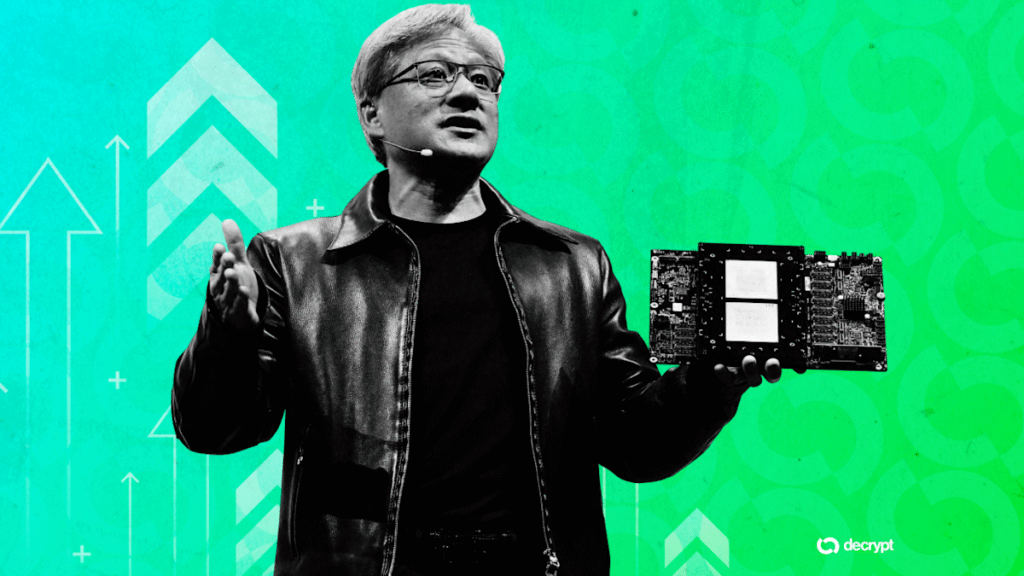
At the recent Morgan Stanley Technology, Media, and Telecom conference in San Francisco, Jensen Huang, the CEO of Nvidia, indicated that the company is likely concluding its investment phase in leading AI organizations such as OpenAI and Anthropic. The recent finalization of a $30 billion investment in OpenAI represents a notable shift from a previously announced $100 billion commitment. Similarly, the $10 billion investment in Anthropic made last November is also expected to mark the end of Nvidia’s financial involvement with both companies. The stated rationale for this strategic pivot hinges on the fact that both entities are on the brink of initial public offerings (IPOs), which often curtail private funding opportunities. This framing, however, may obscure deeper underlying shifts within the AI landscape.
It is crucial to recognize that Nvidia’s substantial investments are not merely transactional; they reside at the intersection of competitive dynamics, market sentiment, and regulatory scrutiny. Nvidia now holds stakes in two companies engaged in a high-stakes battle, each attempting to assert their dominance amid growing tensions with the U.S. government. Following directives from former President Donald Trump, federal agencies were instructed to cease collaborations with Anthropic due to its ethical stance against enabling military applications. This promptly prompted OpenAI to announce its own Pentagon partnerships, which Anthropic characterized as disingenuous. Such a backdrop creates an intricate web of competition and collaboration, placing Nvidia in a precarious position as an investor.
The escalating rivalry between OpenAI and Anthropic has resonated deeply with the public, demonstrating how consumer behavior can subsequently influence market dynamics. Following the aggressive public relations clash, Anthropic’s AI assistant, Claude, overtook OpenAI’s ChatGPT in the U.S. App Store rankings, underscoring a rapid shift in user preference. Reports indicate that Anthropic experienced a surge in signups post-announcement, which further destabilized Nvidia’s position as an impartial investor.
As the broader climate around AI investment becomes more contentious, Nvidia faces the challenge of balancing its roles as a supplier of technology and a major investor in rival firms. This situation raises questions about the sustainability of Nvidia’s investment strategy, particularly given the increasing interdependence between software developers and hardware providers. OpenAI’s operational expenditures, particularly in purchasing Nvidia’s GPUs, create a cyclical relationship that some analysts have likened to a financial bubble.
Furthermore, Nvidia’s recent investments underscore the inherent complexities within the automation and AI sector. While both OpenAI and Anthropic offer powerful AI capabilities, they embody distinct strategic focuses. OpenAI largely concentrates on developing general-purpose AI systems with expansive applications, facilitated by extensive data access and integration capabilities. Conversely, Anthropic adopts a more cautious approach, prioritizing ethical AI development and safety guidelines alongside robust product offerings. This dichotomy in operational philosophies means that SMB leaders must carefully consider their choices between these platforms based on their values and objectives.
Cost considerations also play a significant role in the selection of AI tools. The pricing models for using OpenAI’s services typically involve tiered structures depending on usage levels, which could lead to variable costs for SMBs. In contrast, Anthropic, with its focus on specialized applications, may offer more predictable pricing but could limit certain advanced capabilities. Here, ROI metrics must account for the respective business models and operational requirements of individual organizations.
Robust scalability is another factor that SMB leaders should weigh when evaluating these solutions. OpenAI’s architecture enables extensive scalability, facilitating usage across a multitude of sectors from customer service to logistics. This adaptability can be especially beneficial for growing organizations looking to leverage AI for diverse applications. On the other hand, Anthropic, with its commitment to safety, may attract companies that require assurances regarding ethical usage, albeit with some limitations in scalability if their growth needs exceed current offerings.
In navigating this complex landscape, business leaders should adopt a multidimensional approach to evaluating AI and automation tools. It is advisable to critically assess not just the technology itself, but also the organizational ethos of the providers, market positioning, and the regulatory environment. As companies like Nvidia step back from investments, it intensifies the urgency for SMBs to make informed choices amid competing narratives in the AI sector.
In conclusion, the evolving situation between Nvidia, OpenAI, and Anthropic reveals the intricate balance between technology provision and competitive positioning. SMB leaders must remain vigilant to the shifts in the AI landscape, weighing strategic investments and partnerships carefully to ensure alignment with organizational goals.
FlowMind AI Insight: As the AI landscape continues to evolve, SMB leaders should prioritize sustainability, ethical considerations, and scalability in their technological choices to future-proof their operations against the volatile dynamics of investment and competition.
Original article: Read here
2026-03-05 22:46:00