
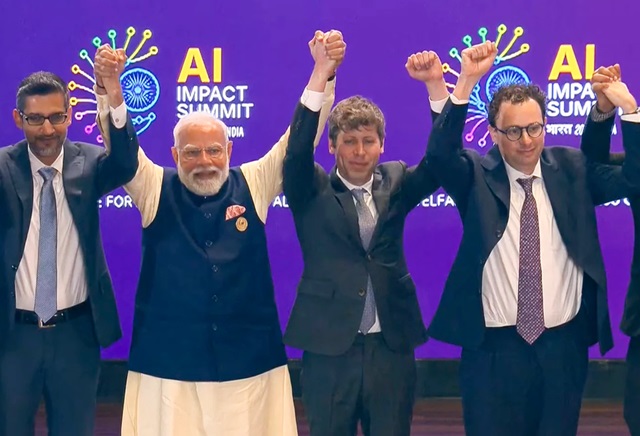
The ongoing rivalry between leading AI firms OpenAI and Anthropic has garnered significant attention, particularly with recent public interactions between their CEOs, Sam Altman and Dario Amodei. Their contrasting approaches and philosophies not only reflect a deeper ideological schism but also illustrate differing strategies in a rapidly evolving marketplace. As both companies gear up for potential initial public offerings (IPOs), they face challenges in talent acquisition, user engagement, and securing investor interest. This competitive landscape is accentuated by each company’s diverging dealings with government entities, particularly the Pentagon.
At its core, the feud stems from varying philosophical foundations regarding the ethical deployment of artificial intelligence. Amodei’s perspective, cultivated during his tenure at OpenAI and solidified with the founding of Anthropic in 2021, stresses caution and ethical considerations. He emphasizes avoiding risks associated with AI development, such as job displacement and the ethical implications of technology used in warfare or surveillance. In contrast, Altman’s approach is characterized by an aggressive push towards rapid growth, leveraging AI’s transformative potential despite recognizing its hazards. This divergence not only manifests in the firms’ operational strategies but also in their public narratives and marketing campaigns, where both are keen to position themselves as bastions of responsible AI use.
The contention has been particularly palpable in the context of their dealings with the U.S. government. Anthropic’s refusal to compromise on its redlines concerning mass surveillance and autonomous weapons has led to significant repercussions, including being categorized as a “supply-chain risk,” jeopardizing critical government contracts. On the other hand, OpenAI has successfully secured a new partnership with the Pentagon, raising criticisms of opportunism. This dynamic reflects broader themes in the tech industry, where ethical considerations often clash with business imperatives. Notably, Amodei’s subsequent internal memo criticizing OpenAI’s strategy underscores the tension, though he later moderated his stance. Altman’s response, emphasizing the necessity of government oversight over private interests in AI, further illustrates the stakes involved.
Analyzing the strengths and weaknesses of OpenAI and Anthropic reveals important insights for leaders in small to medium-sized businesses (SMBs) and automation specialists. OpenAI has established itself as a dominant player, with tools like GPT-3 and DALL-E showcasing groundbreaking capabilities in text and image generation. These tools have been leveraged by organizations for applications ranging from content creation to customer service automation. However, this broad utility is accompanied by questions regarding risks and ethical usage—challenges that OpenAI is actively addressing through ongoing dialogues with regulatory bodies.
Anthropic, by contrast, has focused on a more principled approach to AI deployment. The company’s commitment to safety and ethical standards offers a different set of strengths, particularly for organizations keen on minimizing reputational risks associated with AI use. However, this principled stance may come at a cost, with potential limitations in the flexibility and speed of deployment compared to OpenAI’s tools. Given the competitive pressures in the market, both companies are under relentless scrutiny as they vie for market share among SMBs looking to adopt AI and automation technologies.
Considering the return on investment (ROI) for adopting these platforms, SMB leaders must weigh several factors. OpenAI’s well-documented capabilities can lead to significant efficiency improvements; however, the potential for misuse and the company’s rapid growth trajectory necessitate a careful evaluation of how such tools align with organizational values and ethical frameworks. Conversely, Anthropic’s tools may provide a more environmentally conscious choice with an emphasis on safety but could require more extensive integration efforts due to their principled limitations.
Scalability is another critical factor in this analysis. OpenAI has demonstrated a robust capacity for scaling its offerings across various sectors, enabling organizations to integrate AI solutions swiftly. Meanwhile, Anthropic’s cautious approach may result in slower initial deployment but could yield long-term benefits for companies prioritizing ethical considerations. Companies exploring these platforms should assess their specific needs against these scalability parameters to make informed decisions.
In conclusion, the juxtaposition of OpenAI and Anthropic’s approaches to AI development serves as a microcosm of the broader ethical debates shaping the technology landscape. Leaders in SMBs must navigate these complexities thoughtfully, considering not just the immediate benefits of adopting advanced automation technology, but also the long-term reputational and ethical implications. The demand for responsible AI is likely to increase, urging companies to adopt solutions that align not just with business objectives but also with societal values.
FlowMind AI Insight: As AI continues to redefine operational landscapes, developers must recognize the interplay between ethical practices and business growth. Balancing a commitment to responsible AI with the drive for innovation will be essential for sustainable success in this dynamic sector.
Original article: Read here
2026-03-08 06:38:00