
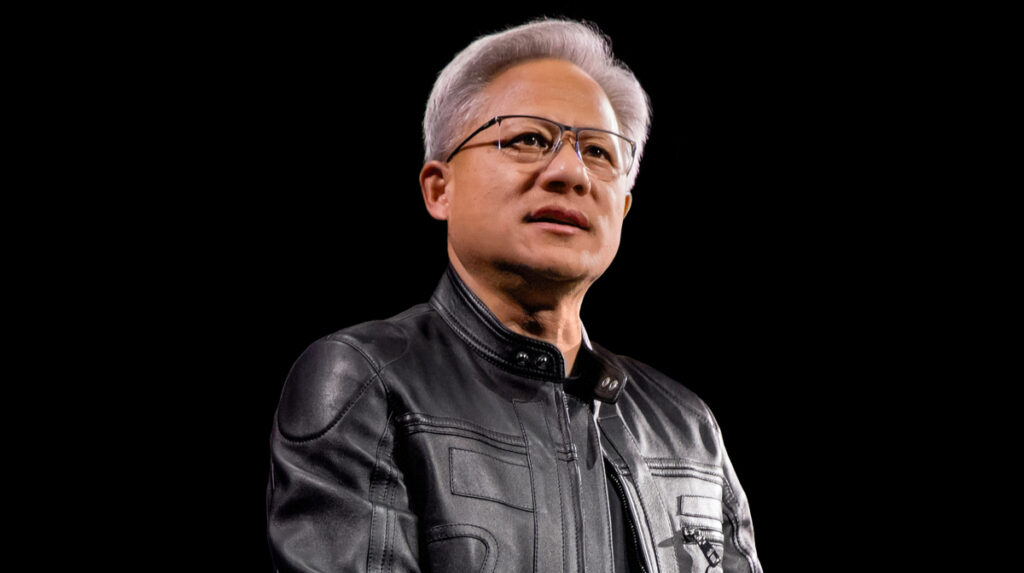
NVIDIA, a dominant player in the artificial intelligence (AI) sector, is reevaluating its investment strategy concerning OpenAI and Anthropic. During the recent Morgan Stanley Technology, Media, and Telecom Conference in San Francisco, CEO Jensen Huang stated that the company is unlikely to invest in either enterprise following their public offerings. This pivot appears strategic, focusing on reinforcing NVIDIA’s foundational business of chip sales while shaping the AI ecosystem collaboratively with these firms.
NVIDIA’s historical investments in OpenAI and Anthropic were primarily driven by the desire to develop the foundational technology needed to sustain and expand the AI ecosystem. Huang emphasized the necessity of such financial commitments to enlarge the ecosystem’s outreach and deepen its impact. The revenue generated from chip sales remains significant, with NVIDIA providing critical hardware that enables both OpenAI and Anthropic to train and deploy their AI models effectively. This mutually beneficial relationship has evolved within a complex landscape where the dynamics of investments and partnerships must be navigated carefully.
The relationship between NVIDIA and OpenAI has caught considerable attention due to the interplay of interdependence and investment magnitude. For instance, NVIDIA previously committed to investing up to $100 billion in OpenAI, anticipating reciprocal capital in the form of substantial chip purchases. The collaboration culminated in NVIDIA’s $30 billion participation in OpenAI’s $110 billion funding round last year, illustrating a conviction in the AI sector’s long-term potential.
Conversely, NVIDIA’s dealings with Anthropic portray a more contentious narrative. After a $10 billion investment last November, conflicts erupted when Anthropic’s CEO Dario Amodei vocally criticized NVIDIA’s sale of high-performance AI chips to Chinese clients at a forum in Davos, framing it as analogous to “selling nuclear weapons to North Korea.” This critical stance highlights the ethical dilemmas intertwined within international AI technology sales, particularly as relationships between nations evolve and become more fractious.
The stakes were heightened as Donald Trump’s administration took actions that led to Anthropic being blacklisted from using its technology for federal agencies and military contractors. The company’s conviction to not allow its technologies to be utilized for mass surveillance or autonomous weaponry showcases its commitment to ethical AI. This commitment contrasts sharply with OpenAI, which recently formed a partnership with the Pentagon, eliciting public dissension from Anthropic. Such divergences reflect a growing need for AI companies to articulate their ethical stances as they maneuver through a politically charged landscape.
For SMB leaders and automation specialists, the implications of NVIDIA’s shifting focus and investment strategy are profound. When comparing automation platforms, such as Make and Zapier, it is essential to consider their strengths and weaknesses relative to the specific needs of an organization. Make emphasizes flexibility and a user-friendly interface, enabling users to create complex workflows with ease. In contrast, Zapier boasts extensive integrations across a wide range of applications, making it highly suitable for businesses seeking an immediate solution for automation without the need for complex setup procedures.
The costs associated with these platforms are also worth analyzing. While both options employ tiered pricing models based on usage and features, the ROI can differ markedly depending on how the tools align with organizational needs. Users of Make may find greater value in its customization capabilities if they need intricate workflows tailored to specific business processes. On the other hand, Zapier’s extensive library of integrations allows for rapid deployment and efficient task automation, which can provide more immediate ROI for organizations looking for quick wins.
When examining AI platforms like OpenAI and Anthropic, professionals must also weigh scalability against costs and ethical considerations. OpenAI, with its well-established track record and partnership ecosystem, typically presents a more scalable option for organizations aiming to incorporate AI into their workflows at a large scale. However, its pricing can be a concern for smaller businesses, potentially complicating budgetary constraints.
Anthropic, on the other hand, with its focus on ethical AI, presents a unique opportunity for organizations prioritizing responsible AI use. However, the limitations faced in agency partnerships might hinder fast deployment in environments where such technologies are required.
In making decisions for integrating automation and AI, SMB leaders should consider their business objectives, ethical stances, and the broader implications of their chosen platforms. Data-driven assessments, including cost analysis and ROI projections, will also be instrumental in guiding investment decisions.
It is critical that leaders not only understand the strengths and weaknesses of these platforms but also actively engage with the ethical implications surrounding their use. As the AI landscape continues to evolve, fostering partnerships with organizations that align closely with their values and objectives will be essential.
FlowMind AI Insight: As businesses integrate automation and AI technologies, a strategic focus on both ethical implications and ROI will be pivotal in achieving sustainability and scalability. Leaders should prioritize collaborations that resonate with their values while ensuring a robust return on investment through diligent analysis and strategic planning.
Original article: Read here
2026-03-05 15:57:00