
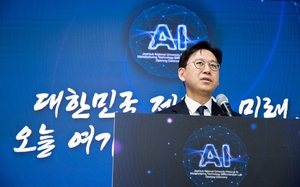
The recent engagement between South Korea and Anthropic, a prominent player in the artificial intelligence sector, highlights a significant trend in the evolving landscape of AI technologies. With Deputy Prime Minister and Science Minister Bae Kyung-hoon initiating discussions with Anthropic CEO Dario Amodei, the focus is not merely on technological advancement but also on strategic collaboration that could bolster South Korea’s position in the global AI market.
As organizations grapple with the integration of AI into their operations, they face the crucial task of choosing the right platforms. In particular, the comparison between established giants such as OpenAI—known for its GPT models—and emerging contenders like Anthropic, which markets its Claude model, provides insightful perspectives on their strengths and weaknesses. The ongoing dialogue with Anthropic may signal a shift in preferences for South Korean companies, especially as they seek adaptable solutions that meet both performance and regulatory requirements.
OpenAI offers a highly refined set of APIs that cater to diverse functionalities, including natural language processing, coding assistance, and workflow automation. Its user base reflects a significant return on investment (ROI), propelled by a strong community and a multitude of integrations across various platforms. The scalability of OpenAI is well-acknowledged; organizations can easily ramp up their usage as demand grows, with its pricing model allowing for flexibility that suits varied business sizes. However, the trade-off lies in its operational opacity, which can be a concern for firms dealing with sensitive data or stringent compliance requirements.
On the other hand, Anthropic is strategically positioning itself as a safety-first AI developer, an approach that resonates well in industries governed by strict regulations, such as healthcare and finance. Current discussions between it and the South Korean government reflect a shared interest in leveraging AI to enhance public services while addressing policy concerns. The nascent nature of Claude’s offerings does come with limitations, primarily in the breadth of available applications compared to its more established competitors. However, Anthropic’s focus on user safety and explainability positions it as an ideal choice for businesses prioritizing ethical considerations.
In terms of costs, both platforms offer tiered pricing models that can accommodate small and medium-sized businesses (SMBs). OpenAI’s offerings, while robust, can become costly with high usage, particularly for complex tasks that require extensive computational resources. Meanwhile, Anthropic’s pricing strategy remains less transparent, but it is designed to appeal to enterprises looking for scalable solutions with safety assurances.
When it comes to ROI, the metrics differ significantly based on the use case. Organizations that plan to leverage AI primarily for coding or customer engagement may find OpenAI’s solutions to be more expedient and broadly applicable. Conversely, businesses focusing on compliance or safety in AI applications might realize a more substantial ROI by investing in Anthropic’s Claude model, as it aligns closely with ethical standards.
Scalability plays a pivotal role in the decision-making process for SMB leaders. OpenAI’s established infrastructure enables rapid scaling capabilities, making it easy for companies to adapt as their needs evolve. Anthropic, with its growing capabilities, seeks to establish a presence that can cater to local markets, positioning itself to accommodate future growth. The recent establishment of a hiring office in Seoul epitomizes its strategy to build a footprint aligned with local demands.
In an era where AI is becoming increasingly central to business operations, decision-makers must approach technology selection with an analytical mindset. The dialogue between South Korea and Anthropic serves as an illustration of the strategic partnerships that can influence technology adoption. Organizations should prioritize their values when selecting AI platforms, weighing the ethical implications and operational transparency against the immediate technological advantages.
Clearly defined takeaways emerge from this comparative analysis. First, companies should consider their primary objectives—whether efficiency, safety, or a combination of both takes precedence. They must also evaluate their growth trajectories and the scalability of their chosen platforms. Lastly, awareness of the regulatory landscape can guide firms toward platforms that prioritize compliance and data integrity.
As the AI marketplace continues to expand, so too must companies’ approaches to these sophisticated technologies. Strategic partnerships and investments in robust, compliant AI systems are likely to distinguish leaders from laggards in the increasingly competitive digital economy.
FlowMind AI Insight: The evolution of AI platforms offers SMBs a wealth of options beyond conventional choices. Exploring emerging technologies like Anthropic’s Claude may not only provide operational advantages but also align organizational values with ethical AI practices, fostering a more responsible approach to automation.
Original article: Read here
2026-03-15 05:45:00