
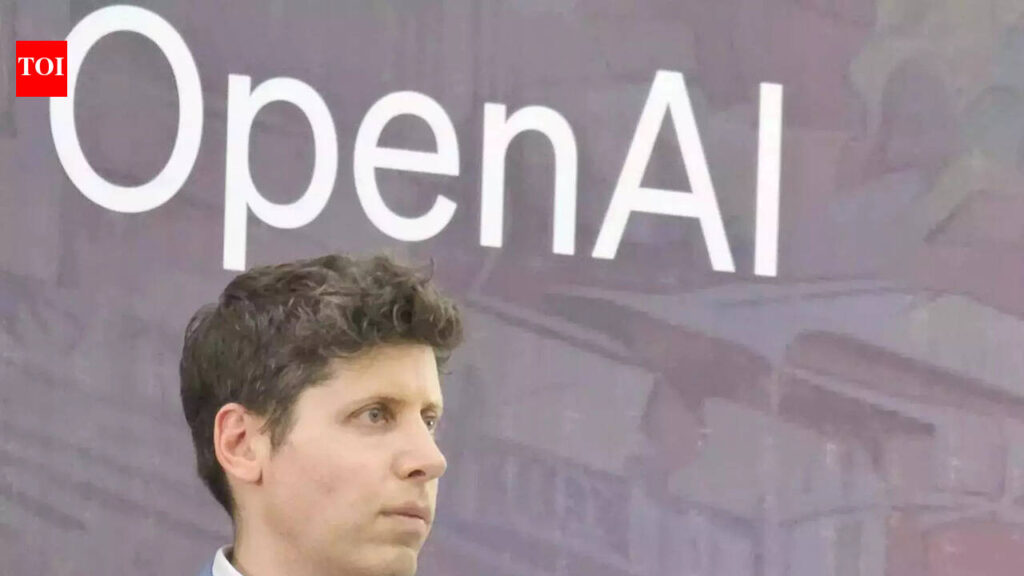
OpenAI is gearing up for significant growth, planning to escalate its workforce from approximately 4,500 to around 8,000 employees by year-end. This aggressive hiring strategy aims to bolster product development, engineering, research, and sales in response to elevated competition from firms like Anthropic and Google. As these traditional technology giants intensify their AI and automation offerings, the imperative for OpenAI to solidify its market position is more pronounced than ever.
A critical focus of the upcoming recruitment drive is the introduction of “technical ambassadors,” specialists dedicated to assisting businesses in extracting maximum value from OpenAI’s suite of tools. This aligns with the broader trend in AI companies striving to establish robust relationships with enterprise customers. The objective is not merely to drive adoption but to create long-term partnerships that yield sustainable revenue streams. The noteworthy edge that OpenAI possesses over Anthropic lies in its extensive ecosystem, drawn from the vast usage of ChatGPT, which is becoming a cornerstone for developers seeking to integrate AI into their applications.
However, the competitive landscape is increasingly complicated. Data from Ramp, a payments startup, suggests that new business customers are gravitating toward Anthropic at three times the rate of OpenAI. This trend signals potential vulnerabilities for OpenAI, especially considering its recent emphasis on refocusing efforts surrounding its flagship product. As heightened scrutiny arises regarding adoption rates and customer retention, OpenAI’s internal communication signifying a “code red” points to growing concern over its competitive stance.
The key differentiator between OpenAI and Anthropic lies in their approaches to the respective markets. OpenAI’s historical strength has been its vast developer community and the extensive datasets that inform its models. In contrast, Anthropic has sought to embed its technology deeply within business operations. OpenAI’s commitment to deploying technical ambassadors reflects an acknowledgment of the need for a more hands-on approach to enterprise integration, particularly in high-stakes industries where the ROI from AI tools must be clearly demonstrated. The scalability of each platform also varies; OpenAI’s technology has proven adaptable across diverse applications, though it may require customization for optimal enterprise integration. This positions it well for expansion, even if the ongoing hiring wave complicates organizational dynamics.
Cost considerations also play a pivotal role in platform selection. OpenAI has historically commanded higher service fees, particularly for its API access, which may deter smaller businesses. In contrast, Anthropic’s pricing strategy, though still in development, appears more accessible for startups and smaller firms. As SMB leaders navigate these financial implications, the immediate ROI will be a paramount concern. OpenAI’s recent initiatives to showcase tangible benefits through detailed case studies could sway potential clients during the decision-making process. Nonetheless, companies must also factor in long-term scalability; incorporating a more adaptable solution may prove more beneficial than settling for short-term cost advantages.
As OpenAI presses forward, it must address the apparent dichotomy of its product focus. The emphasis on ChatGPT, coupled with a call to concentrate staffing efforts on its coding model Codex, emphasizes a more streamlined product offering tailored to maximize utility. Conversely, Anthropic’s strategy centers on cultivating bespoke solutions for enterprise clients, enhancing its value proposition. The flexibility and reliability of these platforms will ultimately guide SMB leaders as they evaluate each tool’s potential for integration into their operational frameworks.
Moreover, the potential risks for OpenAI are accentuated by the prominent competition from Google, which continually updates its offerings to capture everyday chatbot users. The landscape increasingly shifts toward a dual paradigm where companies must discern the right blend of innovative features, user engagement, and operational support. Failure to strike this balance could result in OpenAI’s marginalization within either segment of the market.
In conclusion, the competition between OpenAI and Anthropic reflects broader trends in the AI and automation sectors. SMB leaders evaluating AI tools must consider multiple factors—strengths and weaknesses of each platform, initial and ongoing costs, anticipated ROI, and scalability. As both companies continue to evolve, strategically deployed resources and tailored product offerings will be critical to establishing long-lasting relationships with clients. The journey toward maximizing AI’s potential is just beginning.
FlowMind AI Insight: As the landscape of AI tools becomes overcrowded, organizations must prioritize understanding their unique needs and the corresponding strengths of available solutions. OpenAI and Anthropic each present distinct advantages; dissecting these attributes can guide SMB leaders toward informed decisions that align with their operational goals.
Original article: Read here
2026-03-22 06:09:00