
The landscape of artificial intelligence continues to evolve at a breathtaking pace, particularly with the emergence of platforms like OpenClaw, which has recently drawn significant attention following its acquisition by OpenAI. This acquisition has not only solidified OpenClaw’s position as a leading agent platform but has also triggered a wave of innovation and competition among key industry players. The race is marked by various tactical responses from entities like Nvidia and Anthropic, each seeking to carve out its niche while reacting to the competitive pressures shaped by OpenClaw’s success.
Nvidia has swiftly positioned itself within this landscape by announcing NemoClaw, a security-enhanced version of OpenClaw that emphasizes a fortified approach to user data protection. This focus on security addresses a critical requirement for businesses increasingly concerned about data integrity and compliance amidst growing regulatory scrutiny. The architecture of NemoClaw showcases Nvidia’s commitment to bridging powerful AI capabilities with a secure operational framework, appealing primarily to SMBs and larger enterprises that prioritize data security alongside functionality.
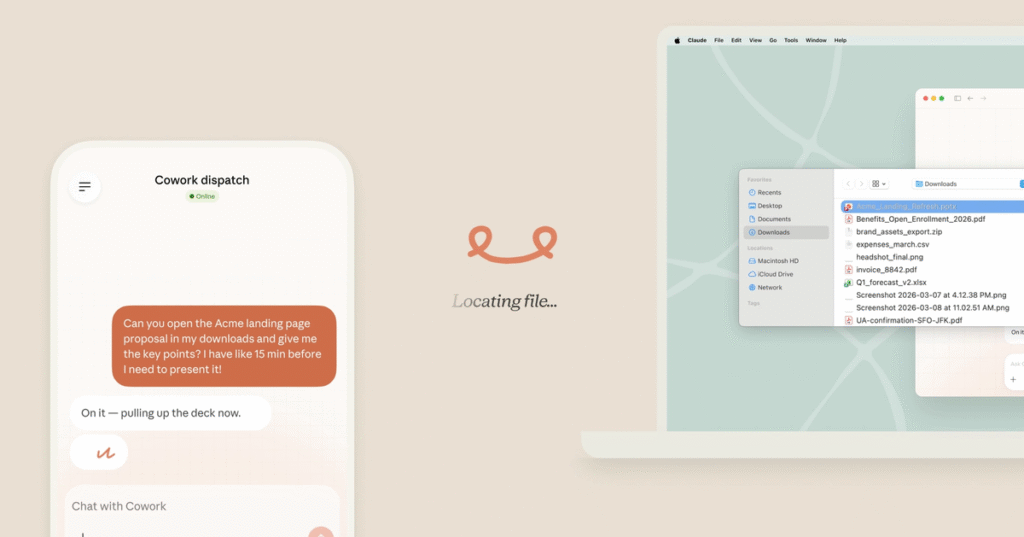
On the other hand, Anthropic has responded to the competitive stimuli by enhancing its product offerings through Claude Cowork, also known as Dispatch. This innovation allows users to communicate with the AI from mobile devices while simultaneously working on desktops. The convenience offered by such an integrated system enhances productivity and provides users with the flexibility to manage their workflows more effectively. By empowering users to supervise multiple agents remotely, Claude Cowork increases operational efficiency — an attractive proposition for businesses that rely heavily on multitasking and remote collaboration.
Despite these advancements, there remains a divergence in how quickly companies can adapt to these rapidly evolving tools. Anthropic’s Chief Commercial Officer, Paul Smith, aptly encapsulates this challenge with a vivid analogy: introducing AI solutions to an employee base resembles placing a Peloton bike in every household; simply having the tools does not guarantee widespread proficiency or adoption. Such insights remind organizations that the integration of AI technologies hinges not only on their capabilities but also on the readiness of an organization’s culture to embrace and adapt to these innovations.
Considering the trajectory of these developments, a comparative analysis of OpenAI and Anthropic reveals a critical examination of strengths and weaknesses that can influence purchasing decisions for SMBs. On one hand, OpenAI’s OpenClaw provides a robust and user-friendly interface that excels in its adaptability across various business functions. It has a strong community of developers which enhances its constant evolution, offering deep integrations that can significantly streamline operational workflows. However, the cost associated with licensing and scaling OpenClaw can be a concern for budget-constrained SMBs.
In comparison, while Anthropic’s Claude Cowork offers a more integrated and mobile-friendly experience, its scalability may pose challenges. The platform’s architecture and reliance on advanced algorithms result in impressive ROI potential, yet the implementation may require a steeper learning curve for employees unaccustomed to leveraging artificial intelligence for everyday tasks. Additionally, with features likely to evolve rapidly, there’s a possibility of increased costs and resource expenditures related to constant training and system updates.
Nvidia’s NemoClaw, however, uniquely targets the critical need for security without sacrificing functionality. For SMBs mindful of both operational efficiency and data protection, this can represent a compelling choice. The trade-off may lie in the learning curve or support requirements necessary to fully leverage this platform’s capabilities. Enabling organizations to manage their data risks while harnessing the potential of AI represents a strong value proposition, particularly in a world where cybersecurity is paramount.
In assessing costs and potential ROI, it’s imperative for SMB leaders and automation specialists to factor in not only initial investment but also ongoing maintenance and skill acquisition. Transitioning to any of these platforms requires careful consideration of internal capabilities and readiness, as well as potential disruptions to ongoing operations. Therefore, taking a phased approach to implementation — perhaps piloting a solution with a smaller user group before a company-wide rollout — could mitigate risks associated with disruption while allowing organizations to measure impact incrementally.
Ultimately, leaders need to weigh the specific needs of their organizations against the capabilities and constraints of these tools. SMBs must engage in a thorough analysis of potential platforms, assessing not just technical specifications but the strategic fit with the organizational culture and operational structure. This ensures that the chosen AI solution is not only capable but also embraced by the teams tasked with utilizing it.
As the race in AI innovation intensifies, strategic foresight will be essential for businesses hoping to leverage these technologies effectively. By adopting a tailored, data-informed approach to AI platform selection, organizations can navigate the complexities of this evolving landscape, maximizing impact and sustaining competitive advantage.
FlowMind AI Insight: The pace of AI development calls for agility and foresight among SMBs. By prioritizing security, usability, and scalability in their selection of automation platforms, businesses can enhance their operational efficiencies while safeguarding their invaluable data assets. Embracing continuous learning and adaptation will be key to thriving in this rapidly shifting terrain.
Original article: Read here
2026-04-03 20:45:00