
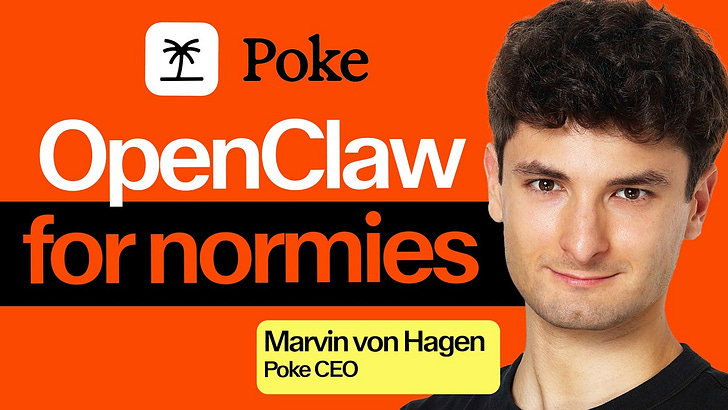
In today’s rapidly evolving technological landscape, small and medium-sized business (SMB) leaders and automation specialists are increasingly challenged to select the most appropriate AI and automation tools. The rise of platforms like Poke, an emerging personal assistant integrated into messaging, highlights the competitive environment among automation solutions such as Make versus Zapier, as well as leading AI providers like OpenAI and Anthropic. Each of these tools comes with distinct strengths, weaknesses, costs, return on investment (ROI), and scalability considerations that SMBs must navigate.
Poke exemplifies a new wave of personal assistants designed to transcend conventional chatbots by offering a more human-like interaction. Unlike traditional solutions, Poke operates entirely within text message interfaces, making the user experience feel less like a transaction and more akin to conversing with a peer. This unique approach to interfacing may resonate particularly well with younger demographics or users accustomed to common texting applications, setting Poke apart from more rigid AI platforms.
Cost structures for AIs and automation platforms vary considerably, influencing a business’s decision-making process. Poke’s innovative pricing model, where the fee scales based on user engagement and perceived value, can lead to unprecedented expenditures; its flagship case reportedly involves a billionaire being charged $136,000 monthly. While this may seem excessive, it invites critical questions for SMBs evaluating automation: Does the tool uniquely address specific operational needs, justifying its expense? In contrast, platforms like Zapier and Make adopt a subscription-based pricing model, which tends to be more predictable and manageable within small business budgets. However, this can lead to challenges in determining exactly what features will be most useful without the tangible experience of using the platform initially. As businesses scale their automation efforts, they also must consider the cost efficiency of their chosen platforms relative to expected growth.
Furthermore, diverse provider offerings will appeal to different segments of the market based on use cases. For instance, Make excels in enabling users to create sophisticated workflows with visual building blocks, accommodating complex integrations across various applications. An SMB with extensive operational tasks requiring advanced coordination might find Make’s flexibility indispensable. Alternatively, Zapier shines with its extensive library of integrations and simplicity in setup, making it a suitable choice for SMBs with straightforward automation needs. The decision between Make and Zapier often hinges on how intricate the operations are; businesses prioritizing straightforward task automation may find Zapier cost-effective and fitting, while those aiming for advanced, tailored workflows may lean toward Make despite a potentially steeper learning curve.
The comparison extends to AI providers like OpenAI and Anthropic as well. OpenAI, with its robust capabilities across generative text creation, offers extensive use cases in content creation, data analysis, and customer interaction. Its versatility can yield high ROI for companies needing diverse applications of AI. In contrast, Anthropic specializes in safety and compliance, often addressing concerns around the ethical implications of AI deployment. This ideological split may dictate which provider an SMB chooses based on its industry, regulatory requirements, and internal policies regarding AI ethics.
In terms of scalability, both the automation platforms and AI providers must support businesses as they grow. Tools that provide a seamless transition from one usage capacity to another without exorbitant additional costs are preferable. For example, if an SMB initially adopts Zapier for basic workflows and subsequently finds demands increase as they scale, they must evaluate if Zapier can meet those needs alongside ensure a cost-effective growth trajectory. Poke’s recent $10 million financing round underscores the increasing belief among investors that proactive AI personal assistants represent a scalable solution. The key concern for SMB leaders, however, remains whether such innovation can be promptly applied, whether it genuinely creates value, and how operationally resilient it remains against fluctuating user demands.
In summary, SMB leaders face a labyrinthine choice of tools in the AI and automation landscape. The characteristics of any given platform — such as interaction style, pricing structure, complexity, and scalability — will significantly affect their overall operational efficiency. Understanding these factors allows businesses to make informed decisions tailored to their unique needs, balancing initial investments against anticipated returns.
In conclusion, to navigate this intricate landscape, SMB leaders should approach their tool selection with a targeted strategy, mapping specific operational needs to the distinct capabilities of each platform. A data-driven focus on user engagement, cost analysis, and potential growth avenues is essential. With careful consideration, businesses can leverage the appropriate combination of tools to stay competitive and accelerate their automation journey.
FlowMind AI Insight: In a marketplace brimming with innovative automation tools and AI solutions, the must-haves for successful technology adoption remain clarity of operational needs and ongoing assessment of cost versus value. Strategic alignment with the right tools not only enhances efficiency but also provides a foundation for sustainable business growth in an increasingly automated future.
Original article: Read here
2026-04-10 04:10:00