
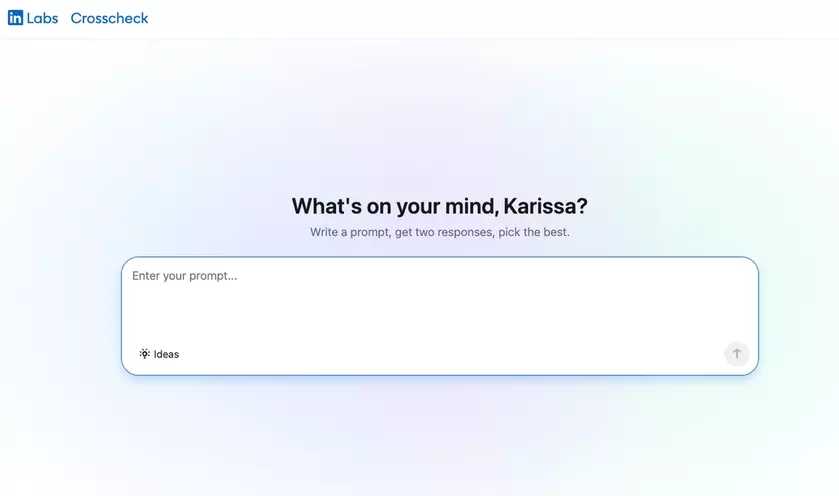
LinkedIn has long been recognized as a platform for professional networking and engagement. With the introduction of the Crosscheck feature for Premium subscribers, LinkedIn is rapidly redefining how professionals can leverage artificial intelligence in their workflows. This innovative tool enables users to compare the performance of various AI models in a blind test format, thereby facilitating informed decision-making about the technology they choose to employ.
At its core, Crosscheck allows users to input a text query and receive outputs from AI models developed by industry giants including OpenAI, Anthropic, Google, and Microsoft. This approach aims to provide a clear direct comparison, with a mechanism that only reveals the model responsible for the output after the user has made a selection. This feature is indicative of a broader trend in the AI landscape, where companies are increasingly recognizing the need for transparency and user-centric design in AI applications.
One of the primary advantages of Crosscheck is its ability to democratize access to different AI models without requiring users to subscribe to multiple services. Users can submit unlimited queries without additional costs, eliminating potential barriers to entry for businesses, particularly small and medium-sized enterprises (SMBs). This model significantly enhances the exploratory capabilities of users as they seek to understand which solution best fits their operational needs.
From a competitive analysis perspective, Crosscheck effectively positions LinkedIn in a marketplace that includes established platforms like OpenAI’s ChatGPT and Anthropic’s Claude. OpenAI is often heralded for its general capabilities in natural language processing but may also require more computational resources, potentially leading to higher operational costs for SMBs. Anthropomorphic models excel in nuanced conversations but can suffer from slower response times depending on complexity. Google’s offerings, such as BERT and LaMDA, provide robust solutions tailored to search-related queries, though they may not universally apply to diverse business contexts.
Moreover, the Crosscheck feature is designed to compile usage data anonymously, allowing developers to refine their models based on user preferences in distinct professional fields. This continuous feedback loop can accelerate the evolution of AI solutions, although it raises questions about data privacy and the ethical use of anonymized information. Users need to weigh the benefits of state-of-the-art AI capabilities against the risks posed by data handling and model bias.
Scalability is another critical factor when evaluating these platforms. Solutions like Zapier and Make (formerly Integromat) provide complementary automation capabilities that link different applications, streamlining workflows in a manner that can enhance the utility of AI models. While both tools excel at integrating various software, interoperability with AI solutions differs. Zapier, for instance, offers a more user-friendly interface, making it ideal for those less technically inclined, while Make provides advanced scripting capabilities, thus catering to more complex integration needs.
Understanding the costs associated with these technologies is equally essential. While Crosscheck is currently available at no extra cost to Premium users, other AI solutions often come with a tiered pricing structure. Costs can accumulate rapidly, especially when scaling usage across multiple functions. Given these variables, calculating return on investment (ROI) should be a focal point for decision-makers in SMBs.
The decision-making process regarding which technology to adopt should also consider the long-term strategic vision of the business. Companies may find that investing in a specific AI model is more beneficial if it aligns with their objectives and enhances productivity across departments. For example, organizations primarily engaged in content creation may significantly benefit from OpenAI’s models, while those involved in customer service might find greater utility in Anthropic’s offerings.
As organizations navigate through varying capabilities and complexities in the AI ecosystem, one of the key takeaways is to focus not solely on the technology but on aligning these tools with strategic business objectives. The comparative metrics of performance, cost, scalability, and usability must guide the selection process of these platforms. A thorough analysis of existing workflows and a clear understanding of the end goal can serve to minimize wasted resources and optimize operational efficiency.
Incorporating such technologies effectively boils down to an understanding of what needs to be achieved and which tools will facilitate those outcomes. As features like LinkedIn’s Crosscheck foster more informed choices, it signals a future where businesses will increasingly rely on nuanced AI assessments rather than high-level generalizations about technology capabilities.
FlowMind AI Insight: The ability to critically assess and compare AI models, as demonstrated in LinkedIn’s Crosscheck, can empower SMB leaders to make informed decisions about their AI integration strategy. By leveraging tools that prioritize transparency and usability, organizations can effectively harness AI’s potential to drive operational success, ultimately transforming their business landscape.
Original article: Read here
2026-04-21 01:12:00