
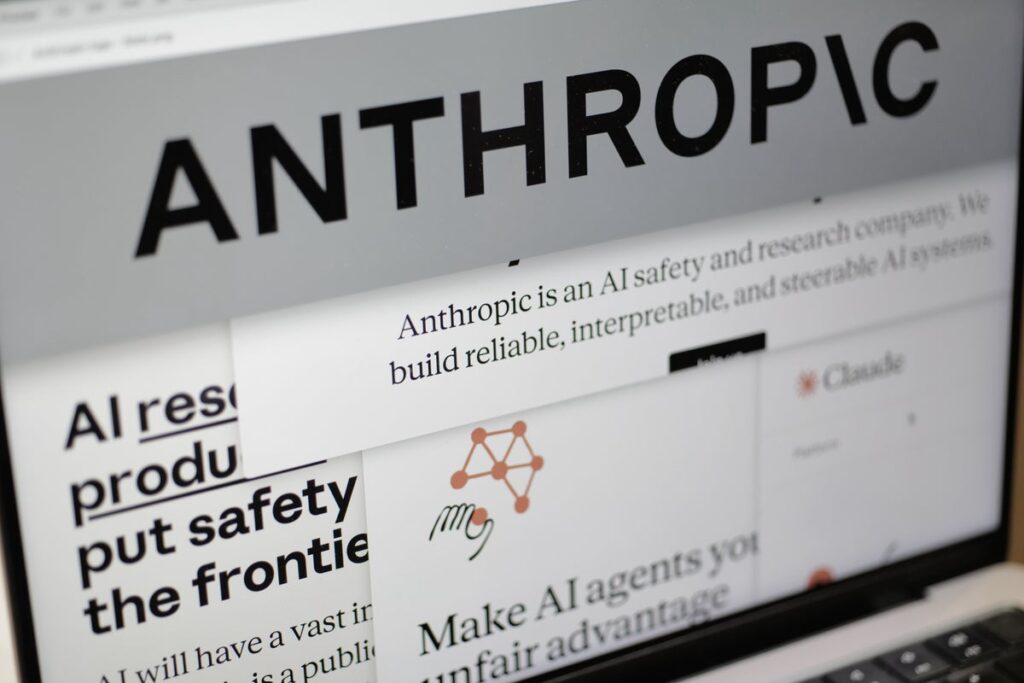
The rapid evolution of artificial intelligence (AI) and automation platforms presents leaders of small to medium-sized businesses (SMBs) with a unique opportunity to streamline operations, enhance productivity, and ultimately drive profitability. As organizations increasingly rely on AI-driven solutions, understanding the comparative strengths and limitations of different platforms becomes crucial. In this landscape, two prominent players, Anthropic and OpenAI, provide contrasting approaches to AI technology development, while automation platforms like Make and Zapier differentiate themselves through user experience and integration capabilities.
Anthropic, a company founded by ex-OpenAI employees, has garnered significant attention following its recent agreement with Amazon, committing to more than $100 billion in investment over the next decade. This partnership emphasizes the importance of advanced computing resources, as Anthropic will leverage Amazon’s AWS cloud platform and Trainium chips to train its Claude chatbot. The ability to access high-performance, custom silicon enables Anthropic to improve the efficiency of its AI models while offering its solutions to the broader AWS customer base. However, despite its impressive valuation of $380 billion, Anthropic has faced scrutiny regarding national security, particularly after the Trump administration imposed restrictions on its technology. This situation highlights a potential risk for investors and users alike: the ethical and regulatory implications surrounding AI deployment.
In contrast, OpenAI has positioned itself as a leader in the AI space with its flagship product, ChatGPT, which has captured significant market share since its release. OpenAI’s solutions are distinguished by their expansive training datasets and advanced generative capabilities, offering businesses a powerful tool for content generation, customer interaction, and tailored applications. The company’s strategic collaborations—like the one with Microsoft—ensure not only financial backing but also tighter integration within existing software ecosystems, ultimately enhancing user accessibility.
When comparing the cost structures of these platforms, Anthropic’s deep integration with AWS positions it favorably for enterprises already involved in Amazon’s ecosystem. However, the substantial commitment required for investment raises questions about liquidity and ROI timelines for SMBs. On the other hand, OpenAI’s ChatGPT offers flexible pricing models, allowing businesses to scale their usage and expenditure according to growth stages and immediate needs. This flexibility is particularly beneficial for SMBs, which typically require cost-effective solutions that yield swift returns on investment.
From a scalability perspective, both platforms exhibit impressive capabilities, but they cater to somewhat different segments of the market. Anthropic’s partnership with AWS significantly enhances the scalability of its offerings, positioning it as an attractive option for larger enterprises seeking to deploy AI across various departments at scale. Conversely, OpenAI’s ChatGPT is frequently favored for its user-friendly interface and straightforward implementation processes, making it particularly appealing for smaller organizations without extensive technical resources.
Automation platforms like Make and Zapier further complicate this landscape, as they provide crucial connectivity and workflow automation between disparate services. Make is often noted for its sophisticated features that allow deeper customization and a higher level of integration, while Zapier appeals to users looking for a simpler, more intuitive interface. Both tools enable organizations to automate repetitive tasks, enhancing operational efficiency without necessitating extensive programming knowledge. Nonetheless, businesses should weigh the long-term implications of each tool’s scalability; for instance, while Make may allow for more complex workflows, Zapier’s ease of use could result in lower friction during the employee onboarding process.
The choice between these automation platforms may also refer indirectly to the larger question of how closely an SMB wants to integrate its operations within a single ecosystem. A more integrated approach—choosing Anthropic with AWS or OpenAI with Microsoft—could yield a seamless experience across AI and automation, but this may come at the cost of flexibility compared with a multi-vendor strategy leveraging tools like Make or Zapier.
In summary, both Anthropic and OpenAI present compelling value propositions, but they cater to different organizational needs and risk appetites. While Anthropic’s substantial investment aligns its growth forecast closely with AWS, it also exposes users to regulatory uncertainties. OpenAI’s ChatGPT, conversely, offers a broader reach and more immediate integration opportunities for SMBs, making it suitable for those prioritizing rapid deployment and cost control. In automating workflows, the choice between Make and Zapier should be guided by specific operational requirements, with a clear understanding of potential costs and ease of integration.
Ultimately, as SMB leaders consider adopting AI and automation tools, carefully evaluating these factors—alongside ongoing market developments and potential regulatory changes—will be essential in forming a robust strategy capable of yielding long-term benefits. By aligning technology choices with business objectives and operational capabilities, organizations can effectively leverage AI and automation to drive innovation and efficiency.
FlowMind AI Insight: Navigating the complexities of AI and automation requires a disciplined, analytical approach. By prioritizing scalability, ROI, and integration capabilities, SMB leaders can position their organizations to not only adapt to changing market conditions but also capitalize on emerging technologies that redefine operational excellence.
Original article: Read here
2026-04-21 16:29:00