
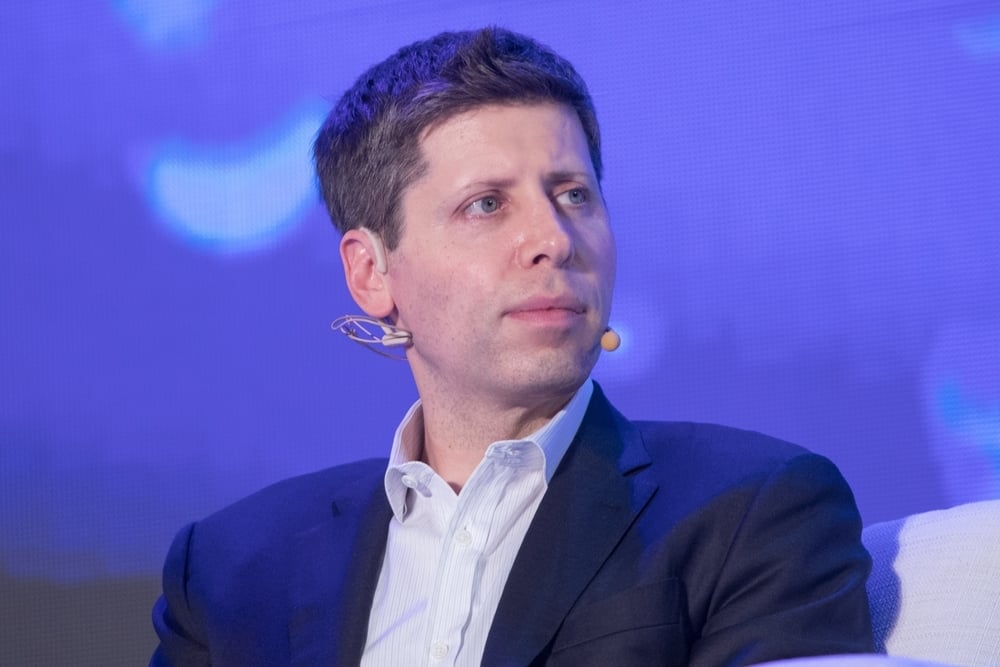
In the rapidly evolving landscape of artificial intelligence and automation, the strategies of market leaders can send ripples across the industry, influencing perceptions and applications of technology. A recent critique by OpenAI’s CEO, Sam Altman, aimed at Anthropic’s approach to cybersecurity with their new product, Claude Mythos, underscores the critical intersection of cybersecurity marketing and technological capabilities. Altman’s metaphorical framing of Anthropic’s strategy as akin to selling bomb shelters while threatening potential attacks raises questions about the ethical ramifications and market implications for both companies and the broader tech ecosystem.
The launch of Claude Mythos marks a significant moment in the AI space, with Anthropic positioning itself as a formidable player in cybersecurity. Altman’s comments suggest that even within competitive contexts, there exists a shared responsibility to communicate transparently about the risks associated with their technologies. This sentiment finds resonance in recent remarks from Barclays CEO, Venkatakrishnan, who identified Mythos as a potential catalyst for cyberattacks, emphasizing the urgency of safeguarding financial institutions. This highlights the dual-edged nature of AI capabilities that can both defend against and potentially amplify threats.
When evaluating the merits of platforms like OpenAI’s offerings versus Anthropic’s tools, a thorough comparison must consider their strengths, weaknesses, costs, return on investment (ROI), and scalability. OpenAI’s tools, driven by advanced natural language processing capabilities, exhibit a stronger ability to adapt across diverse applications—from automated customer support to data analysis. This flexibility is underpinned by a rich ecosystem of support, extensive integrations, and a user-friendly interface, making it conducive for small to medium-sized businesses (SMBs) that require both efficiency and scalability. However, the cost structure may present challenges for budget-conscious SMBs. OpenAI offers tiered pricing, which can lead to significant expenditures, especially for high-volume users.
In contrast, Anthropic’s Claude Mythos promises a specialized solution focused on cybersecurity, which may attract businesses seeking targeted features rather than general capabilities. While this specialization can be appealing, it also raises concerns about potential limitations in adaptability. A reliance on niche functionality might prove detrimental for companies that require a broader suite of tools. Moreover, the recent guidance on risks associated with Mythos amplifies the importance of considering not just the tool’s capabilities, but its broader implications in the operational landscape.
Scalability is another vital metric when comparing these platforms. OpenAI’s infrastructure is built to support extensive data loads, enabling companies to deploy solutions across multiple departments or regions without significant reconfiguration. This attribute makes it a more attractive investment for growing businesses. Alternatively, while Anthropic’s offering may initially meet specific needs, concerns about integration with existing systems and the pace of updates might hinder long-term scalability.
The ROI on these platforms hinges on how effectively they integrate into existing workflows. OpenAI’s ability to enhance productivity through diverse applications can lead to measurable gains in efficiency and cost savings, particularly in customer service and data management. For SMB leaders, understanding the potential returns of investing in these technologies requires a careful analysis of their operational needs and growth objectives.
In the burgeoning automation space, platforms like Make and Zapier further illustrate the nuances of tool adoption and comparison. Make offers robust integration capabilities that allow for customizable workflows, often favored by automation professionals who seek a comprehensive tool for building intricate automation sequences. This flexibility comes at a premium, positioning it as costlier than Zapier, which excels in user-friendliness and swift deployment for non-technical users. However, Zapier’s limitations in customization may hinder growth for businesses with more complex needs.
As leaders in the SMB sector assess these tools, it becomes imperative to adopt a data-driven approach. Metrics such as user adoption rates, operational efficiency gains, and overall impact on revenue should inform decisions on investment and implementation strategies. Customer feedback loops can also provide critical insights, helping to shape the direction of future upgrades and innovations.
In conclusion, the unfolding dialogue around AI and cybersecurity reveals the complex interplay of market strategies, ethical considerations, and technological capabilities. Businesses must carefully analyze the tools available, weighing their strengths against weaknesses to align with their unique operational demands. The competitive landscape will continue to shift, requiring ongoing assessment and agility in strategy.
FlowMind AI Insight: As the convergence of AI and cybersecurity intensifies, the need for businesses to choose tools that align ethical practices with technological capabilities becomes evident. Adopting a comprehensive evaluation framework will empower SMB leaders to make informed decisions that not only meet current needs but also support sustainable growth in a dynamic marketplace.
Original article: Read here
2026-04-22 08:58:00