
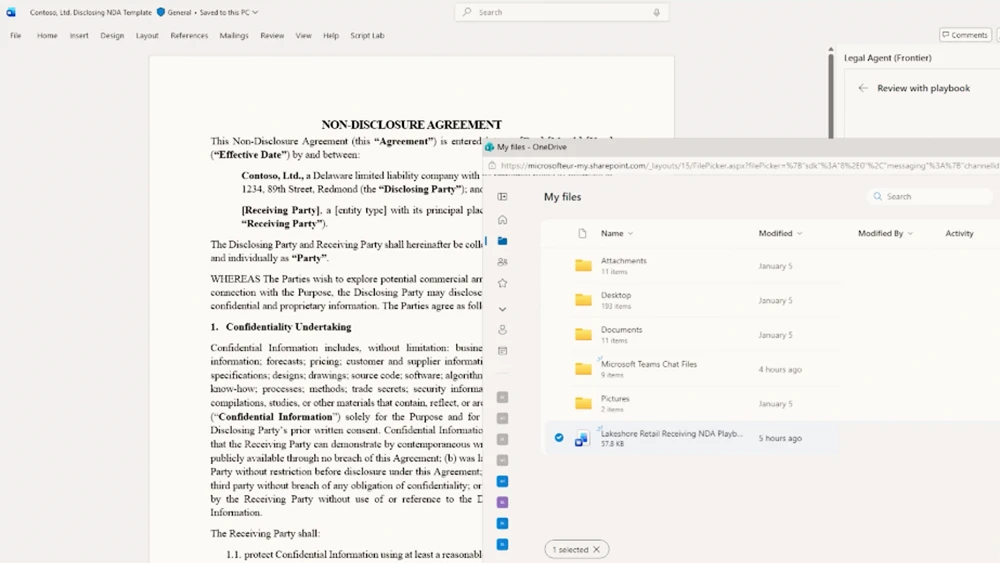
Recently, Microsoft has made a significant entry into the legal technology market by launching a contract review feature called “Legal Agent,” integrated directly within Word. This new offering allows legal professionals to conduct contract reviews, edits, and negotiations using structured workflows, facilitating clause-by-clause analysis against standardized internal playbooks. The feature enhances efficiency with automated redlining and citations to support suggested edits. The introduction of Legal Agent comes on the heels of Microsoft’s strategic hire of a team of product managers and legal engineers from Robin, a notable legal AI startup. This move reflects a keen understanding of the specific requirements within legal practice, marrying technology and legal expertise to yield more robust contract management solutions.
As Microsoft embraces innovation, the Legal Agent feature aligns closely with tools that legal AI companies have offered, particularly those focusing on contract review and Word integrations. Utilizing the established familiarity of Microsoft Word, this tool offers a seamless experience for lawyers engaged in drafting and negotiating contracts. It retains formatting and tracked changes, making the process smoother and removing the dependency on external tools, which can complicate workflows. The intent behind this development is to streamline legal document processes while enhancing the quality of outputs with advanced analytical capabilities.
For small and medium-sized businesses (SMBs), choosing the right legal tech tools can significantly impact operational efficiency. Solutions like Microsoft Legal Agent and specialized legal AI platforms such as Kira Systems or Luminance have distinct features that cater to different market needs. Microsoft Legal Agent stands out for its integration with a widely used word processor, making it a natural choice for businesses already embedded in the Microsoft ecosystem. Kira Systems, on the other hand, emphasizes its sophisticated machine learning algorithms tailored for document review automation, boasting a large training dataset derived from legal documents.
Reliability also varies among these tools. Microsoft benefits from the robustness of its established platform and dedicated support channels, ensuring that clients experience minimal downtime. Kira Systems, while reliable, may not offer the same level of support unless clients opt for premium packages. Pricing structures can be another differentiator. Microsoft typically uses a subscription model based on existing Microsoft 365 subscriptions, allowing users to access Legal Agent at no additional cost. Kira Systems, conversely, maintains a tiered pricing structure that can become costly as functionality increases, which can pose a barrier for budget-conscious SMBs.
Integration capabilities are critical for smooth operations, particularly for firms managing multiple software systems. Microsoft Legal Agent integrates seamlessly with other Microsoft applications, ensuring consistency and ease of information transfer. This can lead to reduced training times for staff and a lower likelihood of errors during transitions. Kira Systems offers API access for integration but may necessitate additional technical support, thus elongating the onboarding process. Firms may weigh the urgency of implementation against the level of customization required when considering these options.
In evaluating the limits of functionality, Microsoft might initially appear basic compared to dedicated legal tools like Kira Systems, which offer more specialized features for data extraction and insights. However, for SMBs focusing on contract review rather than complex due diligence, Microsoft’s Legal Agent could be entirely sufficient. It is essential that businesses assess their unique needs — those requiring advanced analysis might consider investing in Kira Systems, while others may find Microsoft’s integrated solution adequate.
Support and training are pivotal when migrating to any legal tech solution. Firms should contemplate a pilot program with a low-risk approach, implementing the new tool in a limited capacity. For instance, a firm could start using Legal Agent for reviewing non-disclosure agreements before expanding its use to more complex contracts. This gradual adaptation period allows the team to familiarize themselves with the tool while minimizing operational disruptions. Education and training sessions should be scheduled to ensure that all team members feel confident in using the new system.
When calculating the total cost of ownership, businesses should consider not just the pricing of the tools but also indirect costs, such as training time and potential productivity drops during the transition. Expected ROI within three to six months can be substantial, particularly for firms that achieve increased efficiency in contract management. Reduced contract lifecycles can free up legal resources for more strategic work, leading to better client outcomes and potentially higher revenues in the long run.
FlowMind AI Insight: As legal tech evolves, firms have an opportunity to capitalize on innovations such as Microsoft’s Legal Agent while balancing traditional tools against specialized platforms. The choice between these options will depend on an organization’s unique operational needs, growth aspirations, and resources available for deployment. By evaluating key factors like integration, support, and functional limits, legal professionals can smartly navigate their transition towards more advanced and efficient workflows.
Original article: Read here
2026-04-30 18:15:00