
In the rapidly evolving landscape of AI and automation, small and medium-sized businesses (SMBs) are increasingly turning to advanced tools like Tripo AI and alternative platforms such as Daz 3D or Blender. These tools enable the rapid creation of 3D models, which are essential in a variety of industries including gaming, e-commerce, and design. Understanding their unique offerings can help SMBs choose the right solution for their needs.
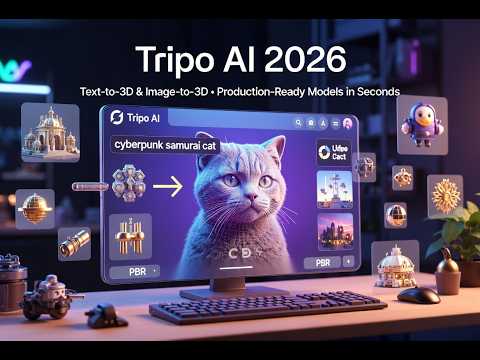
Tripo AI stands out for its ultra-fast generation capabilities, producing high-quality 3D models in as little as 3 to 10 seconds. Its focus on turning text prompts or single images into production-ready assets simplifies the workflow for creators, allowing even those without extensive design experience to generate sophisticated models. The platform supports both text-to-3D and image-to-3D functionality, making it versatile for different types of users. Furthermore, the clean topology and PBR (Physically-Based Rendering) textures ensure that the output is not just rapid but also professional-grade.
In contrast, Daz 3D offers a more artistic approach to 3D modeling that appeals primarily to illustrators and animators. The platform is renowned for its extensive library of characters and morphs, allowing for high levels of customization. However, Daz 3D may require more manual intervention for users to reach the desired quality, particularly when dealing with complex scenes or specific artistic styles. It can take considerably longer than Tripo AI to produce a high-quality output, which may hamper productivity for users needing quick results.
Blender is another alternative that offers robust features for 3D modeling, animation, and rendering. While it is powerful, with capabilities that rival professional software, the learning curve is steep. SMBs without dedicated design teams may find Blender overwhelming. Even so, it is open-source and free to use, which could be a deciding factor for small businesses looking to minimize costs while still accessing a comprehensive suite of tools.
When considering pricing, Tripo AI operates on a freemium model, allowing limited daily generations under its free tier. This makes it accessible for users wanting to test the platform before committing financially. However, its limitations may not suffice for businesses requiring daily high-volume output. On the other hand, Daz 3D also offers a “free” option but tends to have higher costs associated with purchasing premium assets. Blender, while free, may incur costs related to plugins or additional training resources.
Reliability is another critical factor. Tripo AI has received positive feedback for its speed and quality, with users noting it as a game-changer for rapid prototyping. Daz 3D has a strong community and support structure, which can be invaluable for troubleshooting, though not as immediate as the seamless experience Tripo AI provides. Blender’s community support is robust as well, but due to its complexity, initial issues may take longer to resolve.
A successful migration to one of these platforms typically starts with a pilot program. For SMBs, choosing a specific project to trial the new tool can help mitigate risk. For instance, using Tripo AI for a single e-commerce product model allows businesses to test the platform’s capabilities without a major investment. During this pilot, it’s advisable to gather feedback from team members on speed and output quality, adjusting usage or scaling accordingly before a larger rollout.
Total cost of ownership (TCO) is also an important consideration. While many tools may appear cost-effective at first glance, hidden costs can arise from training, maintenance, and potential upgrades. Over a period of three to six months, investing in Tripo AI, with its fast output and ease of use, could yield a strong return on investment (ROI). Businesses may realize savings in time and resources, enabling them to allocate budgets towards marketing or further development. For example, if a game development studio can reduce the time spent on asset creation, they may launch their products faster, capturing market opportunities more efficiently.
FlowMind AI Insight: The choice between Tripo AI, Daz 3D, and Blender ultimately depends on the specific needs of your business. For SMBs prioritizing speed and simplicity, Tripo AI emerges as the optimal choice. Conversely, for those focused on artistic expression or with the resources to navigate complex software, Daz 3D or Blender may serve them better in the long term. Investing the necessary time in a thorough evaluation of these tools can lead to significant advantages in both workflow and creativity, achieving a balance that ultimately drives business growth.
Original article: Read here
2026-06-08 08:59:00