
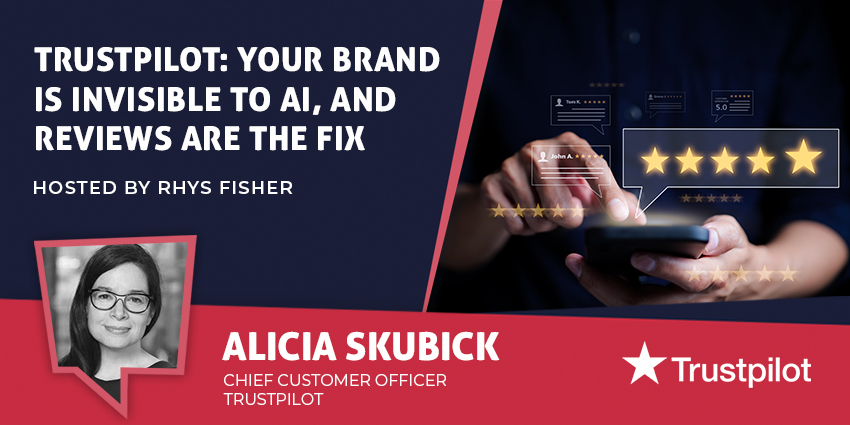
Brands have invested significant time and resources in optimizing their online presence for Google. However, the landscape has shifted with the rise of artificial intelligence, creating a new visibility challenge that many businesses are not yet aware of. A recent report by Trustpilot, titled “What AI Says About You,” reveals critical insights into how AI models interact with brand profiles and customer reviews across platforms like ChatGPT, Gemini, Perplexity, and Google AI Mode.
According to the report, brands lacking a Trustpilot profile appear in a mere 1% of AI-generated answers. In stark contrast, brands that actively solicit and respond to customer reviews have a staggering 75.3% appearance rate in these AI responses. This signaling indicates a growing dependence on social proof in the AI age, forcing brands to reconsider traditional marketing strategies that may no longer suffice.
The implications for customer experience (CX) teams are profound. During a recent interview with CX Today, Alicia Skubick, Chief Customer Officer at Trustpilot, emphasized that AI models, much like human consumers, rely on trust signals such as social proof and customer reviews. The core question remains: Is the business trustworthy? Brands that engage actively with customer feedback—both positive and negative—experience a significant increase in their visibility to AI systems.
Research shows that brands which respond to reviews regularly can see their citation rates spike from 53% to 75%. This upward trend sheds light on the importance of not only collecting reviews but also engaging with them. Effectively managing negative reviews provides an opportunity for brands to showcase their problem-solving capabilities, which can endear them to both AI systems and potential customers. In this digital age, specificity and authenticity in responses are rewarded, akin to how human consumers appreciate genuine engagement.
Skubick challenges businesses to reconsider traditional tools like Net Promoter Score (NPS) surveys. She posits that open-platform review systems are evolving to provide not only real-time customer insights but also improved visibility within AI-generated search results. This shift can enable businesses to streamline their customer feedback mechanisms while enhancing their online presence.
For small and medium-sized businesses (SMBs) grappling with bandwidth constraints, the initial investment in setting up a Trustpilot profile is relatively low. By simply inviting customers to share their experiences, brands can significantly enhance their AI citation rates from near-zero to over 53% in just a few weeks. This rapid improvement is crucial, especially considering that 58% of consumers now utilize AI tools for product discovery and evaluation. The gap between visible and invisible brands will only widen unless proactive measures are taken.
Numerous tools exist to support SMBs in this endeavor. When comparing review management platforms like Trustpilot and Podium, we see distinct features and pricing structures. Trustpilot offers extensive analytical tools that help brands understand customer sentiment over time. Its tiered pricing model allows businesses to choose a plan that fits their needs. In contrast, Podium predominantly focuses on messaging and customer engagement, which is critical for businesses eager to interact with customers in real-time. While Podium provides unique features like text messaging for immediate feedback collection, it might lack some advanced analytics offered by Trustpilot.
Integrations are another pivotal aspect where the two tools diverge. Trustpilot easily connects with various e-commerce platforms, enhancing its utility for businesses with an online sales focus. Podium, on the other hand, supports a broad range of third-party integrations, making it a versatile choice for SMBs that rely heavily on real-time customer communication through multiple channels, including SMS and email.
Pricing can also influence a business’s decision. Trustpilot operates on a subscription model, with costs scaling based on the number of features and users. For SMEs, the starting price can be lower than Podium, but Podium offers attractive packages tailored specifically for businesses seeking an all-in-one customer engagement solution. It is essential for businesses to evaluate their unique needs and existing systems when choosing between these tools.
For companies considering migrating to these platforms, a cautious approach can be beneficial. Starting with a low-risk pilot is advisable. Brands can begin by fostering engagement on a small scale, perhaps with one product line or service, before rolling out the platform company-wide. This phased approach enables businesses to gather insights and adapt to feedback quickly.
Understanding the total cost of ownership goes beyond just subscription fees. Expenses can accumulate from staff training, customer onboarding, and ongoing customer support. By carefully monitoring these costs alongside expected Return on Investment (ROI), businesses can make informed decisions. Over a three-to-six-month timeframe, companies may witness increased brand visibility on AI platforms, coupled with improved engagement rates, ultimately positioning them for long-term growth.
FlowMind AI Insight: The evolving landscape of AI demands that brands reassess their visibility strategies. Engaging with customer reviews not only enhances AI citation rates but builds trust and reliability in a rapidly changing digital ecosystem. It’s essential for businesses to adapt quickly and leverage these emerging tools for long-term success.
Original article: Read here
2026-06-17 15:19:00