
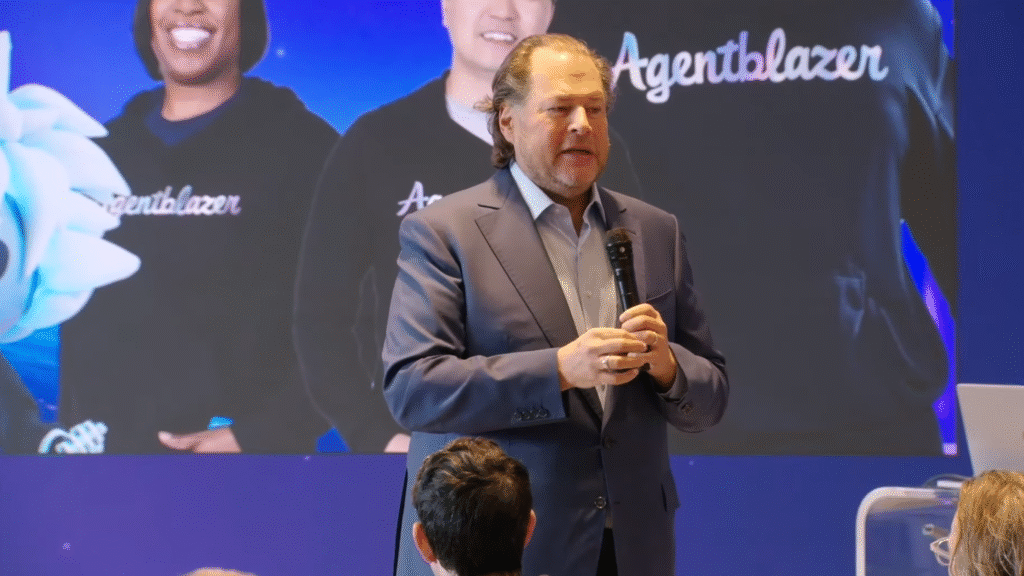
Salesforce’s deepening collaborations with leading AI innovators OpenAI and Anthropic mark a significant advancement in AI’s role within business operations. By integrating OpenAI’s advanced models, including the anticipated GPT-5, into its Agentforce 360 platform, Salesforce empowers its users to access sales data, facilitate conversational reviews, and generate analytical insights through Tableau directly within ChatGPT. This represents a substantial shift in how sales teams can leverage artificial intelligence for enhanced productivity and decision-making.
In parallel, Salesforce’s partnership with Anthropic aims to address the specific needs of regulated industries, a critical market segment where data security and compliance are paramount. The integration of Anthropic’s Claude model into Agentforce and Slack is particularly noteworthy; it operates within Salesforce’s established trust layer, ensuring that sensitive information is safeguarded while benefiting from AI capabilities. The global rollout of Agentforce 360 serves as a unifying platform that seamlessly blends human expertise, AI agents, and comprehensive data, creating an ecosystem that can significantly enhance business workflows.
When examining these platforms, it is essential to consider their strengths and weaknesses. OpenAI’s models are known for their versatility and robust capabilities in natural language processing, which can lead to increased user engagement and an improved customer experience. The integration of OpenAI’s technology in Salesforce provides an opportunity for SMB leaders to enhance their sales processes. However, this comes with costs associated with advanced licensing and integration complexities, particularly for businesses that may not have the necessary technical resources in place.
Conversely, Anthropic’s Claude has emerged as a formidable contender, especially regarding compliance-centric industries. The focus on transparency and safety aligns well with businesses in sectors such as finance and healthcare, where stringent regulations govern data handling. Therefore, while OpenAI offers a broad application spectrum, Anthropic focuses on regulatory adherence, which can considerably decrease risk levels for organizations operating in sensitive markets. A potential drawback for Anthropic’s offering might be perceived lesser flexibility compared to OpenAI’s models, which may limit scalability in rapidly evolving business environments.
In terms of cost and return on investment, both platforms demand careful evaluation. OpenAI’s robust infrastructure may require a more substantial upfront investment, but the resultant efficiencies could yield higher returns if effectively utilized. For businesses that can capitalize on these capabilities, the long-term ROI can justify initial expenditures. Meanwhile, Anthropic, with its security-first approach, might entail comparative affordability but demands operational changes and continuous compliance checks that could offset initial savings.
For automation specialists weighing the strengths of tools like Make and Zapier, it is also insightful to observe parallels with the AI integrations offered by Salesforce. Both Make and Zapier serve to automate workflows by connecting various applications; however, Make provides a more customizable and visual approach, appealing to businesses with unique needs requiring tailored solutions. Zapier, on the other hand, excels in its ease of use and extensive library of pre-built automations, making it highly accessible for SMBs that require rapid deployment. Consideration of organizational maturity, existing technical infrastructure, and the specific automation goals is critical in selecting the appropriate tool.
The scalability of AI and automation platforms should be a priority for SMB leaders as they strategize for future growth. OpenAI’s expansive model is continually evolving, offering enriched capabilities, while Anthropic’s Claude focuses on robust data security designed to endure in regulation-heavy landscapes. Opting for platforms that not only meet current needs but can also grow alongside the organization should be a guiding principle for investment decisions.
In conclusion, while Salesforce’s partnerships with OpenAI and Anthropic present distinct advantages, the choice between them will ultimately hinge on an organization’s specific priorities, whether that is maximizing productivity through versatile AI capabilities or navigating compliance hurdles with superior data security. Leaders should assess their long-term goals, weighing the costs, usability, and anticipated ROI against the backdrop of their unique operational requirements.
FlowMind AI Insight: As AI and automation technologies continue to transform the business landscape, leaders must adopt a strategic approach to integration, focusing on alignment with organizational goals and ensuring the scalability of chosen platforms. Thoughtful investment in these tools is not merely an operational improvement; it is essential for future readiness in an increasingly digital marketplace.
Original article: Read here
2025-10-15 13:40:00