
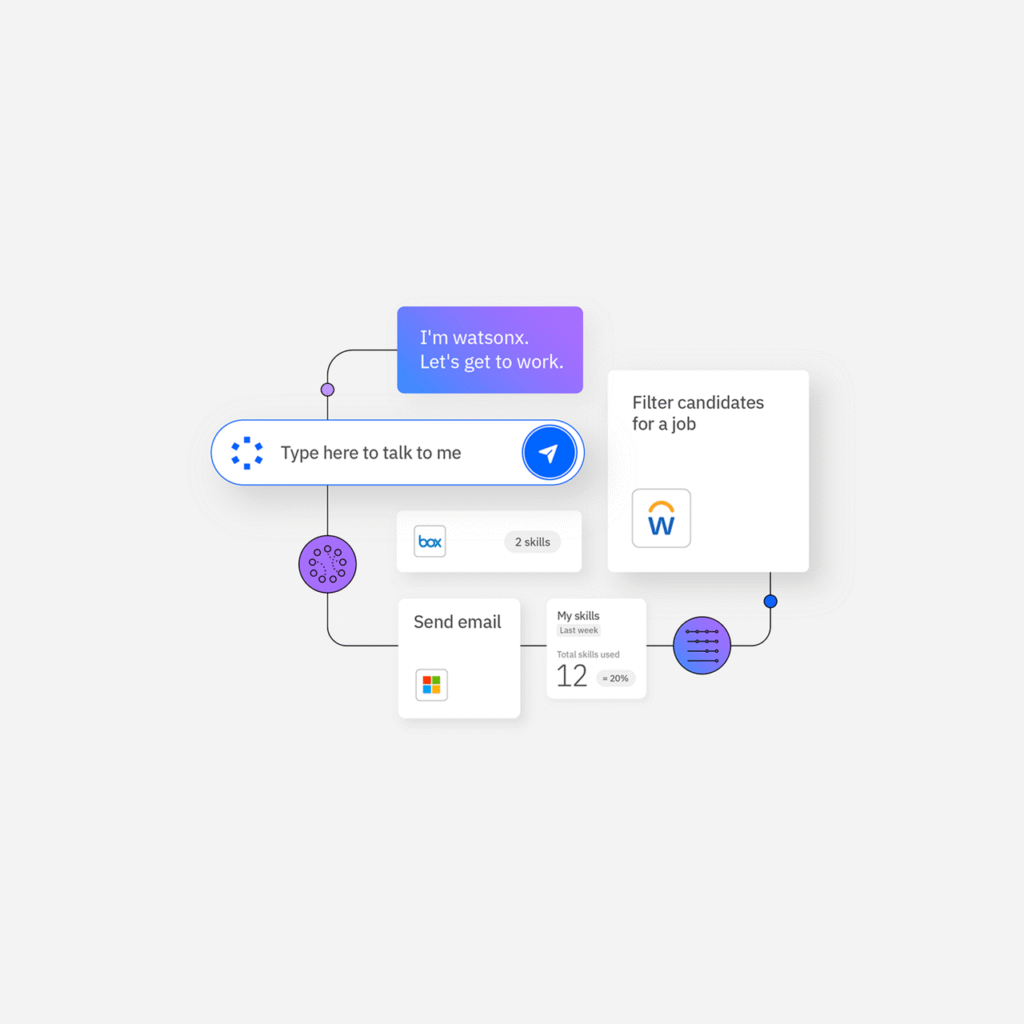
In today’s rapidly evolving digital landscape, small and medium-sized businesses (SMBs) are increasingly seeking automation solutions to streamline operations and enhance productivity. Among the numerous platforms available, IBM’s Watsonx Orchestrate stands out due to its unique features and multifaceted approach to multi-agent orchestration. This article will delve into the strengths and weaknesses of Watsonx Orchestrate compared to other automation platforms, such as Make and Zapier, while also examining the broader implications for ROI and scalability.
Watsonx Orchestrate’s openness is one of its hallmark characteristics. Unlike many traditional platforms that operate within closed ecosystems, it allows businesses to integrate AI agents across diverse technological environments. This flexibility is a significant advantage, especially for companies that have already invested in other automation tools. In contrast, tools like Zapier typically focus more on straightforward connectivity between applications but can impose limitations when workflows require more substantial customization or integration with complex AI systems. The ability to adapt prebuilt and custom agents efficiently can lead to reduced downtime and an expedited return on investment, which is critical for SMBs operating under tight resource constraints.
Hybrid adaptability is another defining trait of Watsonx Orchestrate. In contemporary business settings, environments often comprise combinations of open, private, and hybrid clouds. Watsonx Orchestrate excels in its capability to assimilate and interpret data from various sources, enhancing the quality of insights generated. Make offers a similar capability but may not provide the level of sophistication in AI-driven data handling that Watsonx Orchestrate achieves. Furthermore, while both platforms offer integration capabilities, Watsonx Orchestrate’s architecture facilitates a deeper understanding of complex data interactions, affording organizations a strategic edge in leveraging insights for decision-making.
The flexibility offered by Watsonx Orchestrate cannot be overstated. Unlike simpler solutions, Watsonx Orchestrate allows businesses to choose from a plethora of application integrations, customizing their environment to align closely with specific business objectives. While Zapier allows for a degree of customization, its primary strength lies in straightforward application automation, often at the expense of more tailored solutions that adapt to unique business needs. This level of customization can be crucial for SMBs, as it enables them to better cater to intricate workflows and strategically position themselves in their respective markets.
Cost considerations play an essential role in the decision-making process for SMB leaders. Watsonx Orchestrate tends to involve higher upfront investment due to its comprehensive features and capabilities. However, the long-term benefits of reduced operational bottlenecks, greater adaptability, and higher ROI may outweigh these initial costs. In contrast, platforms like Zapier and Make often present lower entry costs but may accrue hidden expenses in the form of inefficiencies as the business scales and processes become more complex. Therefore, SMBs must carefully evaluate the trade-offs between initial investment and prospective long-term gains when selecting an automation platform.
Scalability is a pivotal concern for growing businesses. Watsonx Orchestrate is designed to support organizations as they evolve, integrating seamlessly with expanded operational demands. Its low-code deployment model allows even those with minimal technical expertise to implement and adapt AI agents rapidly. While Make and Zapier are also user-friendly, they may not support the same breadth of complex workflows that Watsonx Orchestrate does, potentially stifling scalability once a business begins to encounter more sophisticated challenges. This agility is essential in today’s fast-paced environment, where adaptability and responsiveness are key to sustaining competitive advantages.
Ultimately, the efficacy of any automation tool, including Watsonx Orchestrate, will hinge on its ability to empower teams to automate not just tasks but entire processes. By fostering collaboration between custom and prebuilt agents, organizations can create a cohesive operational framework that evolves with their needs. This orchestration capability is increasingly vital in an era where workflows grow in complexity and interconnectedness.
In sum, while platforms like Make and Zapier offer user-friendly solutions with lower entry costs, Watsonx Orchestrate excels in areas that matter most to SMBs aiming to maintain a competitive edge—open integration, hybrid adaptability, flexibility, and scalable solutions. Decision-makers should weigh initial and long-term costs alongside the specific requirements of their operational environment when selecting an automation platform, ensuring that it aligns with their growth ambitions.
FlowMind AI Insight: As businesses navigate the intricacies of automation, it’s imperative to select tools that not only fit immediate needs but also allow for future growth and adaptation. By prioritizing platforms like Watsonx Orchestrate, SMB leaders can position themselves for sustainable success in a landscape that demands both agility and foresight.
Original article: Read here
2025-06-05 18:08:00