
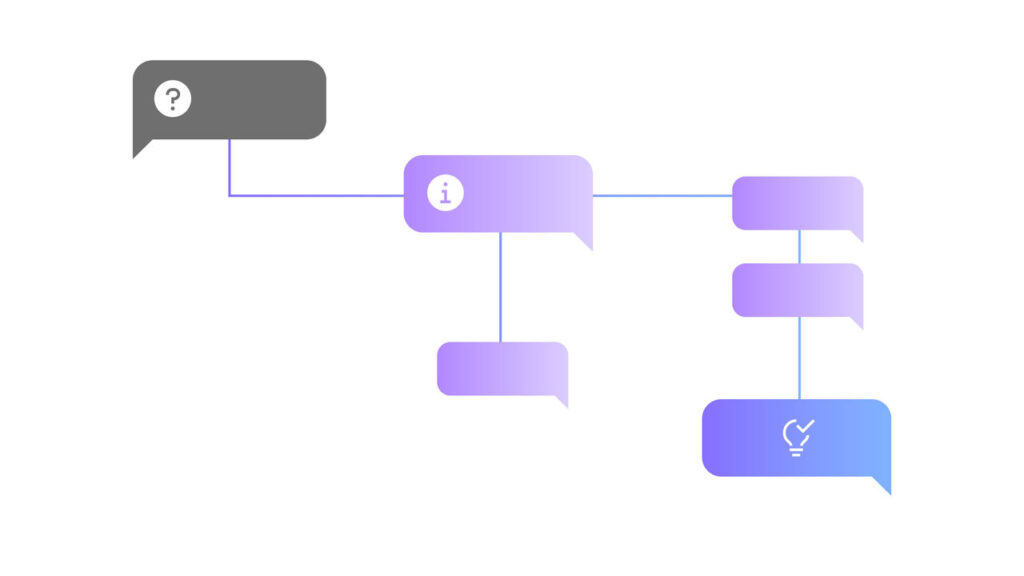
The landscape of artificial intelligence (AI) is rapidly evolving, presenting small and medium-sized business (SMB) leaders and automation specialists with numerous opportunities to optimize operations and enhance customer experiences. Among the innovations reshaping this landscape are AI agents, which offer distinct advantages over traditional non-agentic assistants, such as chatbots. Unlike chatbots that can respond to questions only one at a time with limited contextual awareness, AI agents are designed for a more integrated approach. They can maintain memory across multiple interactions, reason through complex queries, and take autonomous actions based on their analysis.
AI agents excel in understanding intent and context, which is critical in customer service and employee engagement. They can effectively process queries and, when needed, ask clarifying questions to enhance understanding. This functionality allows AI agents to tackle a wide range of tasks, from resolving customer service tickets to providing personalized service experiences. By utilizing external datasets and tools, AI agents can not only assist with routine inquiries but also engage in more complex interactions that traditionally required human involvement.
One of the most compelling applications for AI agents is their capacity to interact with multiple systems simultaneously. For instance, an AI agent could assist in vacation planning by analyzing user preferences and suggesting destinations, itinerary mapping, hotel options, and even real-time adjustments based on variables such as weather and traffic. This level of integration not only drives efficiency but also enriches the customer experience, making every interaction more meaningful.
When assessing various automation platforms, it is essential to analyze their strengths and weaknesses, especially in relation to costs, return on investment (ROI), and scalability. Platforms such as Make and Zapier have become popular choices for connecting disparate applications and automating workflows.
Make, known for its advanced automation capabilities, offers users robust tools for building complex workflows with multiple steps. It provides a visual interface that simplifies the automation process, allowing users to create intricate scenarios without needing extensive programming knowledge. However, this sophistication can lead to a steeper learning curve for new users, which may require additional time and investment in training. The pricing structure, while competitive, can escalate with additional features, making cost management an important consideration for SMBs with budget constraints.
Zapier, on the other hand, is often touted for its ease of use, making it appealing for SMBs looking to implement basic automation quickly. With thousands of integrations, it allows businesses to connect numerous applications with minimal effort. However, Zapier may fall short for organizations needing advanced automation capabilities or those requiring more customization in their workflows. The limitations in handling more complex processes can lead SMBs to outgrow proper functionality and necessitate a transition to more capable platforms later on.
OpenAI and Anthropic represent another critical comparison in the realm of AI tools focused on natural language processing and conversational AI. OpenAI offers powerful language models that cater to a wide range of applications, from chatbots to content creation. Its capacity for understanding nuanced queries and generating coherent responses makes it a strong candidate for businesses seeking sophisticated conversational agents. However, the complexity of ensuring alignment with organizational goals and ethical considerations can present challenges in implementation. Furthermore, pricing models based on usage may lead to unexpected costs as utilization scales, necessitating thorough forecasting to manage projected ROI.
On the other side, Anthropic brings a different approach to AI capabilities, prioritizing safety and alignments in AI interactions. While this focus can enhance consumer trust and safety in interactions, it may also result in constraints that impact the aggressiveness of automation and could lead to interactions that are less spontaneous compared to more general models offered by competitors. SMBs need to weigh this emphasis on safety against the immediate applicability and versatility of the tool in achieving strategic goals.
When evaluating automation platforms, SMB leaders must consider several essential factors such as scalability, adaptability, and total cost of ownership. Companies should assess their specific needs against the capabilities of these tools to determine the most fitting solution for their context. Furthermore, conducting a pilot program with a selected platform can yield valuable insights into its effectiveness, enabling informed decisions before a larger rollout.
Ultimately, the integration of AI and automation into business operations can result in significant efficiencies and enhanced service delivery. However, the selection of the right tools is critical to maximizing these benefits. It is essential for SMB leaders to adopt a strategic approach in measuring performance and aligning chosen tools with overarching business objectives.
In conclusion, as AI agents continue to evolve, businesses must remain vigilant in evaluating their tools and automation strategies. Making data-driven decisions about tool selection can significantly impact both performance and customer satisfaction. By understanding the unique strengths and weaknesses of various platforms, as well as their financial implications, SMB leaders can capitalize on the transformative potential of AI agents to drive sustainable growth and improve service delivery.
FlowMind AI Insight: The future of business automation lies not just in adopting new technologies, but in aligning them strategically with organizational goals. By carefully evaluating AI agents and automation platforms, SMB leaders can foster a culture of innovation that ultimately enhances efficiency and customer experiences.
Original article: Read here
2025-04-09 15:34:00