
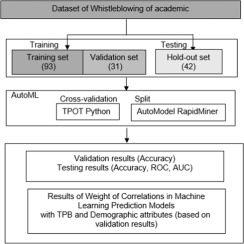
In recent years, the field of machine learning has demonstrated immense potential in addressing complex real-world challenges. However, many organizations have faced significant hurdles when it comes to implementing effective machine learning solutions, especially those lacking expertise in data science. The emergence of Automated Machine Learning (AutoML) has been a game changer, promising to streamline and hasten the modeling processes that can often be convoluted and time-consuming. This article delves into a comparative analysis of two prominent AutoML platforms—Tree-based Pipeline Optimization Tool (TPOT) and AutoModel—specifically in the context of predicting academic dishonesty whistleblowing among undergraduate students in Indonesia.
Both TPOT and AutoModel leverage Python’s robust data science ecosystem and provide tools to automate the tedious steps typically involved in machine learning workflows. Their effectiveness has been empirically evaluated based on prediction accuracy and the Area Under Curve (AUC) metric. Through this comparative analysis, we can glean insights that are beneficial for small to medium-sized business (SMB) leaders and automation specialists aiming to harness the power of machine learning in their operations.
One of the notable strengths of TPOT lies in its emphasis on genetic algorithms for model optimization. It employs a genetic programming approach that allows it to explore a wide array of possible models, optimizing not just the algorithms used but also hyperparameters. As a result, TPOT can deliver highly accurate models (AUC scores reaching as high as 93%) across various datasets with minimal human intervention. However, the intricate working mechanisms of TPOT may be daunting for those without a robust background in data science, potentially limiting its accessibility for SMBs. Notably, TPOT also requires a significant learning curve for users unfamiliar with Python, which could detract from its overall ROI for smaller businesses without dedicated data science staff.
On the other hand, AutoModel stands out for its user-friendly interface and focus on democratizing machine learning. It is designed with the non-expert in mind and facilitates quick and easy model creation. While this simplicity can lead to faster time-to-market, it may inadvertently limit the depth and flexibility in model development that TPOT provides. In the academic dishonesty whistleblowing classification case, AutoModel demonstrated competitive performance, achieving an AUC within the 70–90% range. This slight performance dip may be offset by its ease of use, making AutoModel a more economically viable option for SMBs that prioritize rapid deployment over extreme accuracy.
Cost considerations are essential for SMBs evaluating AutoML platforms. TPOT operates as an open-source tool, presenting an appealing zero-cost option for organizations willing to invest time in team training and skill development in Python. Conversely, AutoModel typically involves licensing fees, which could impact the budget of smaller organizations. When considering ROI, businesses must quantify the time and resources saved through simplified modeling processes against the initial investments made into software licensing and potential training programs.
Scalability remains a crucial aspect to assess when comparing these two platforms. TPOT’s capabilities are closely tied to the user’s familiarity with Python, as scaling its use across larger teams may necessitate ongoing training. However, once adequately adopted, TPOT could efficiently handle larger datasets and increasingly complex models. AutoModel, in contrast, is designed for ease of use, which may facilitate widespread adoption across departments, making it simpler to scale in varied environments. The trade-off here is that while AutoModel may facilitate broader organizational use, it might not yield the same level of performance gains as a more complex tool like TPOT when deployed effectively.
From a demographic perspective, the study in question revealed that demographic attributes played a more substantial role than the Theory of Planned Behavior (TPB) variables in predicting whistleblowing incidents. This finding underscores the necessity for organizations to consider the characteristics of their data when selecting the appropriate modeling tools. Both AutoML platforms are capable of identifying significant feature weights, but user understanding of these correlations could greatly enhance the decision-making process regarding which tool to employ.
In conclusion, while both TPOT and AutoModel present viable options for SMBs looking to leverage machine learning, the choice must align with the organization’s specific needs, resources, and strategic objectives. For businesses with limited data science capabilities, AutoModel offers user-friendly access to machine learning processes, enabling quick implementation and iterations. On the other hand, organizations with the resources to invest in training and an appetite for nuanced modeling may find TPOT’s advanced capabilities beneficial in the long run.
FlowMind AI Insight: The future of machine learning in SMBs hinges on selecting the right tool that aligns with the organization’s capabilities and objectives. Careful consideration of ease of use, cost implications, and scalability will enable leaders to unlock meaningful insights while optimizing operational efficiency.
Original article: Read here
2023-12-21 13:40:00