
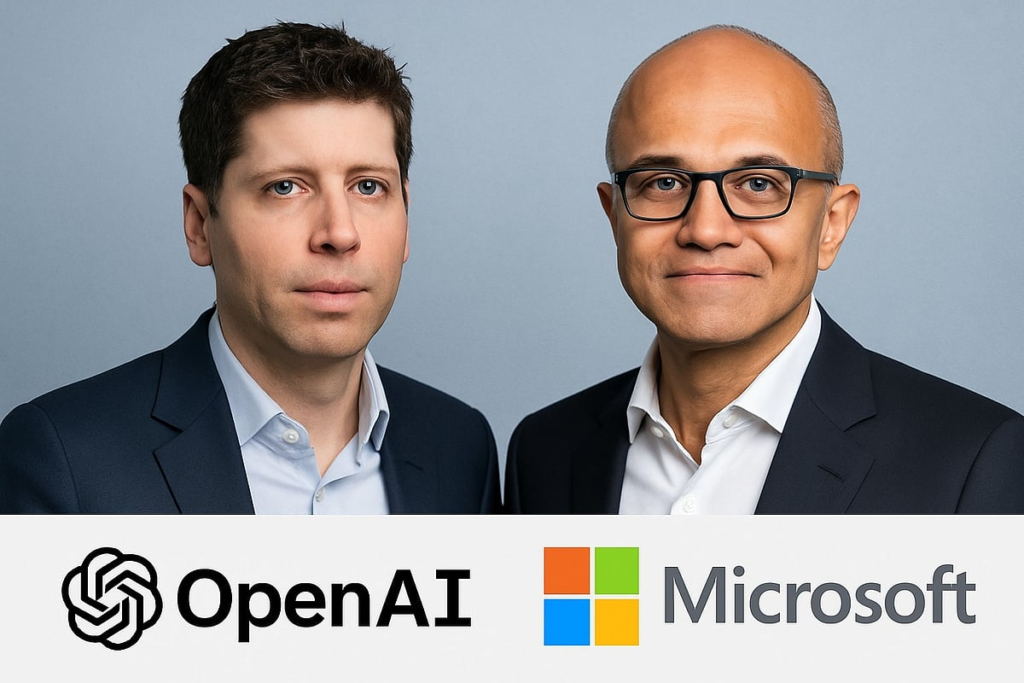
As the conversation surrounding artificial intelligence (AI) and automation technologies continues to deepen, critical distinctions have surfaced between competing platforms, fundamentally influencing decision-making for small and medium-sized business (SMB) leaders and automation specialists. The market is populated by powerful options like OpenAI and Anthropic on the AI front, while automation tools such as Make and Zapier vie for attention. In this analysis, we will dissect the strengths, weaknesses, costs, ROI, and scalability of these platforms, providing comprehensive insights to guide strategic choices.
OpenAI has established itself as a preeminent force in the AI landscape with its cutting-edge capabilities in natural language processing and understanding. Its offerings are typically robust, providing extensive training in complex tasks, which is advantageous for businesses seeking deep insights and automation in processes such as customer service or data analysis. However, access to OpenAI’s models can present challenges in terms of costs, particularly as usage scales and operational demands increase. For instance, a growing SMB must weigh the initial benefits against long-term expenditures, which can escalate quickly in high-volume environments.
On the landscape’s other side, Anthropic presents itself as a formidable alternative. Its emphasis on alignment and interpretability positions it uniquely to reduce risks related to AI. Businesses concerned with governance and ethical implications may find Anthropic’s approach appealing, particularly amidst regulatory uncertainty. However, while its models demonstrate promise, they may not yet match OpenAI’s performance in certain advanced applications, potentially limiting businesses that require immediate and expansive capabilities. This divergence may lead to increased deliberation among SMBs weighing immediate needs against long-term strategic alignment.
Turning to automation, the choice between Make and Zapier epitomizes a crucial decision-making juncture for SMBs. Zapier has long been renowned for its user-friendly interface and extensive library of app integrations, making it an attractive option for businesses transitioning to automation. With straightforward setup processes and features tailored to small businesses, its strengths lie in rapid deployment and adaptability. However, existing users frequently cite limitations in advanced branching processes as a setback, particularly for larger operations that may necessitate nuanced automation.
Conversely, Make offers a more complex and scalable solution for businesses with intricate workflows. Its capabilities extend beyond simple task automation, supporting more elaborate operations that can be customized to meet specific needs. Although it may demand a steeper learning curve than Zapier, businesses willing to invest in training stand to benefit from significant ROI through enhanced operational efficiency and decreased manual errors. The cost of onboarding and potential increases in workforce productivity should be critically evaluated against expected long-term savings.
When considering costs overall, businesses must analyze not just initial investments but also the ongoing price of scaling. OpenAI’s pricing model is usually consumption-based, which can result in unpredictably escalating costs relative to usage. In contrast, Anthropic’s models, while potentially offering safer and more ethical frameworks, may lead to higher complexity that could require increased human resources or specialist skills simply to operate effectively. This factor can amplify the total cost of ownership, undermining ROI as compared to a more established platform like OpenAI.
Conversely, both automation platforms generally follow a subscription-based model, making long-term planning more straightforward for budget-conscious SMBs. Zapier’s pricing is tiered and can accommodate different business needs as they grow. While users may have fewer features available compared to Make, the predictability in costs can make it a preferred choice for businesses that wish to avoid unforeseen future expenses. Make, on the other hand, may demand an initial investment in specialized skills but offers the flexibility to shape automation deeply suited to complex business workflows, potentially yielding better long-term outcomes if the upfront investment can be justified.
From a scalability perspective, the question revolves around which platform can not only support current needs but also adapt to future growth. A business employing OpenAI should consider whether its investment can be sustained if requirements evolve to necessitate more advanced services. Similarly, while Make may afford customization, a business must also envision its growth trajectory and whether the chosen process can flexibly accommodate wider integration as operations expand.
The synthesis of strengths, weaknesses, costs, ROI, and scalability ultimately underscores the imperative for SMB leaders to perform a thorough analysis before committing to one platform over another. Consulting industry benchmarks and conducting pilot tests can be helpful in assessing which tools meet individual business needs. It is essential for decision-makers to remain cognizant of the divergence between urgent governance demands and the race for competitive capabilities. As technologies advance rapidly, SMBs must navigate their responses with both innovation and caution, ensuring alignment with ethical practices while striving for operational excellence.
FlowMind AI Insight: The future of AI and automation holds immense promise, yet poses significant challenges. SMB leaders must prioritize strategic alignment of technology investments with organizational goals, maintaining vigilance on both efficiency and ethical considerations. Embracing a blended approach that incorporates robust tools while fostering innovative governance can ensure sustainable growth.
Original article: Read here
2025-11-09 10:12:00