
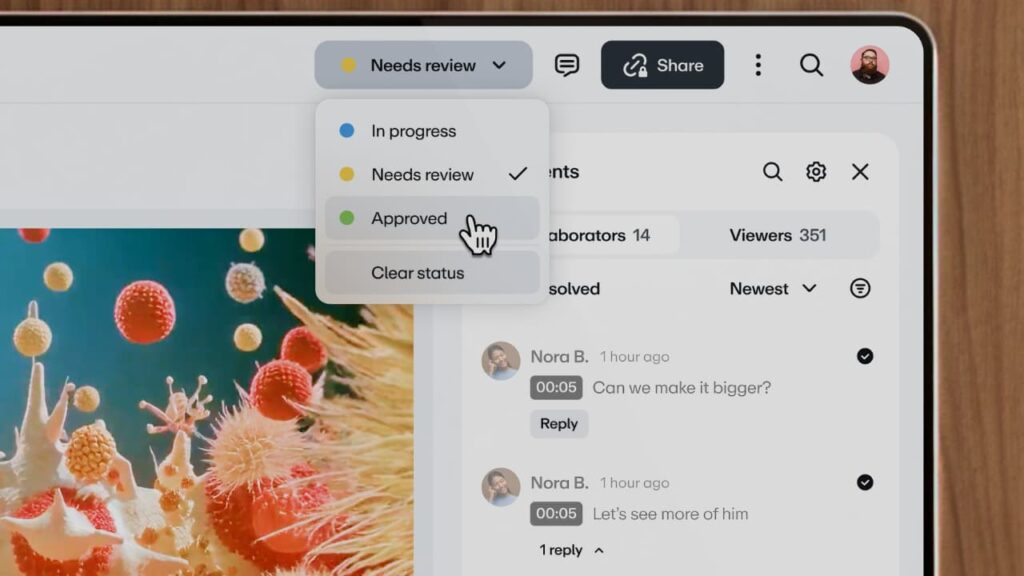
Vimeo has announced an extensive suite of new tools and features at its recent REFRAME conference in New York. This marks a significant evolution for the platform, now part of the Bending Spoons empire. The enhancements are designed to make content discovery streamlined, improve creative workflows, and prepare for new immersive formats. Among these features is a focus on leveraging artificial intelligence, specifically agentic video, which allows large language models (LLMs) and AI agents to access and interpret video content in innovative ways.
In today’s fast-paced business environment, small and medium-sized businesses (SMBs) must choose the right automation tools to optimize their operations. Two popular options worth comparing are Vimeo and another leading content management platform, Wistia. Each tool offers unique features suited to different business needs and goals. Both provide video hosting capabilities, but their approach and additional functionalities vary greatly.
Vimeo’s recent offerings focus on AI-driven metadata generation and enhanced creator tools. The platform’s “Ask Your Library” feature allows users to search through entire video libraries using natural language, making it ideal for teams with substantial video content. Further, Vimeo’s integration with tools like Adobe Premiere Pro enhances editing workflows. However, its pricing may be a hurdle for SMBs, especially those seeking extensive features beyond basic video hosting.
On the other hand, Wistia is tailored specifically for businesses looking to use video as a marketing tool. Known for its user-friendly interface, Wistia emphasizes marketing performance with robust analytics that allow users to track viewer engagement. Pricing for Wistia is competitive but quickly scales up for businesses needing more advanced features, potentially leading to increased costs for SMBs.
In terms of integrations, Vimeo offers a broader ecosystem due to its partnership network. This is beneficial for companies relying on various apps. Wistia, while providing fewer integrations, excels in nurturing leads through video content, thanks to its built-in call-to-action tools. If your primary focus is creating branded content and lead generation, Wistia might be the better choice.
Reliability is another important factor, particularly for businesses that rely heavily on video for communication or marketing. Both platforms have a solid uptime record. Vimeo’s recent enhancements also include improved streaming quality and analytics capabilities, allowing SMBs to receive meaningful data on viewer behavior. Wistia, known for its high-quality video playback, also offers a similar level of reliability, focusing more on user engagement metrics.
When it comes to support, Vimeo offers various resources including a knowledge base, community forums, and direct customer service. However, the response times can vary, and businesses may find the support lacking during peak hours. Wistia, by comparison, is often lauded for its superior customer service, with dedicated support that provides more personalized experiences for SMBs.
For a company considering a migration from one platform to another, it’s essential to plan the process carefully. A low-risk pilot may begin with migrating a small subset of videos to test the new platform’s functionalities. This phased approach allows businesses to gauge the user experience and integration capabilities before fully committing.
The total cost of ownership for each platform can vary significantly based on usage and feature needs. Vimeo’s higher-end pricing tier includes advanced functionalities that can be useful but may require a significant commitment from SMBs financially. Wistia’s pricing structure offers more flexibility for scaling but can increase costs rapidly as usage grows. SMBs should aim for a two to six-month period for an expected return on investment. Tracking analytics closely during this time will help measure effectiveness and guide future decisions.
FlowMind AI Insight: The selection of a video platform or automation tool for your SMB will depend primarily on your specific business needs and objectives. Understanding the unique features, costs, and potential integrations can provide a clearer path to optimizing your video strategy. The key is to engage in a thorough assessment before making a decision—testing capabilities in real-world scenarios will lead to informed choices that yield the best results.
Original article: Read here
2025-10-23 07:00:00