
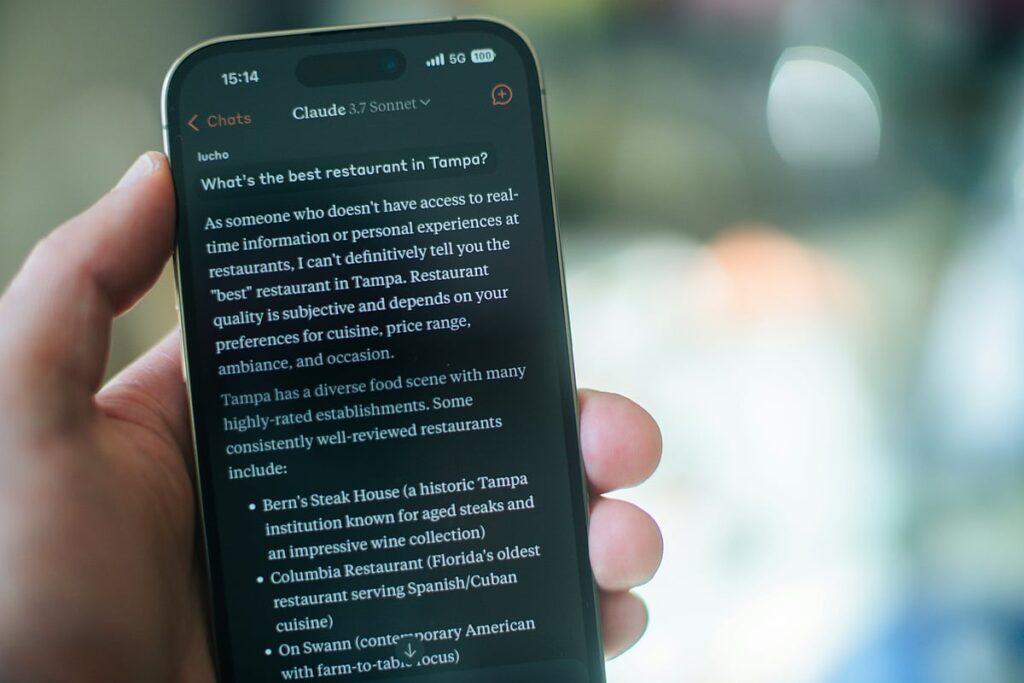
In the evolving landscape of artificial intelligence and automation, companies such as Anthropic and OpenAI are at the forefront, shaping how businesses leverage these technologies. Recent developments, particularly Anthropic’s preparations for a potential initial public offering (IPO), hint at an intensifying race for market dominance in AI solutions. For SMB leaders and automation specialists, understanding the implications of these corporate maneuvers is critical for making informed decisions about tools and platforms that can drive efficiency and innovation.
Anthropic, known for its Claude chatbot, appears to be positioning itself strategically by engaging the law firm Wilson Sonsini to facilitate its potential public listing. This firm’s track record, having previously guided tech giants like Google and LinkedIn through their IPOs, signals a serious commitment from Anthropic to establish itself as a key player in the AI market. With a reported valuation of $300 to $350 million bolstered by recent investments from major players like Microsoft and Nvidia, Anthropic is entering a critical phase that could redefine its operational capabilities and market reach.
In contrast, OpenAI, the creator of ChatGPT, is also reportedly exploring the dynamics of a public debut. However, the race appears close, with Anthropic’s investors eager to capitalize on the market’s momentum, potentially allowing them to secure a first-mover advantage. This sense of urgency highlights the competitive pressures facing these firms. Both entities are likely to offer scalable AI solutions that can significantly impact SMB operations, but nuances in their capabilities could dictate which platform best serves specific business needs.
When weighing the merits of OpenAI versus Anthropic, nuanced factors should guide one’s decision-making. OpenAI has positioned itself with a robust suite of AI tools through its GPT models, expanding applications across customer service, content generation, and data analysis. Businesses integrating OpenAI’s technology benefit from a proven track record and extensive community support. However, costs can escalate based on usage intensity, and concerns regarding data privacy and compliance might unduly affect some SMBs, especially those handling sensitive information.
Anthropic, with its focus on controllable and ethical AI, offers a different value proposition. Innovations like Claude emphasize transparency and user control, which resonate with businesses prioritizing ethical AI deployment. Anthropic’s current market strategies seem to attract investors who are enthusiastic about long-term growth, particularly in compliance-sensitive sectors. While its technology may still be maturing compared to OpenAI’s established offerings, this could present an opportunity for SMBs looking for a forward-thinking partner dedicated to ethical considerations in AI use.
Further comparisons can be drawn between automation platforms like Make and Zapier. Both serve as integration platforms that enable businesses to streamline workflows by connecting various applications. Zapier’s extensive library of integrations offers a wider selection but might come with a steeper learning curve for teams unfamiliar with advanced automation. Conversely, Make prides itself on a more visual approach to workflow creation, making it beginner-friendly. However, this simplicity might lead to limitations in complex automation scenarios.
The costs associated with these platforms also vary significantly. Zapier operates on a tiered pricing model, where added features and usage can escalate expenses, a crucial factor for SMBs operating with stringent budgets. Make, while potentially more cost-effective for certain use cases, may require investments in training and change management to maximize its value. It is important for business leaders to conduct a thorough ROI analysis, factoring in scalability, ease of integration, and team efficiency when selecting between these tools.
As Anthropic continues its preparatory work for a public offering, including strategic hires like Chief Financial Officer Krishna Rao, businesses should take note of the organizational maturity on display. Rao’s previous experience with Airbnb’s IPO underscores the serious intent behind Anthropic’s movements. While Anthropic publicly downplays the immediacy of its plans, the narrative signals a steady maturation process that can only propel it forward in the competitive landscape of AI technologies.
For SMBs, the ability to remain agile and adapt to emerging technologies is paramount. Platforms that offer both scalability and the ability to enhance operational efficiency can differentiate them in a crowded market. Understanding the strengths and weaknesses of AI solutions—be they from OpenAI or Anthropic, or automation platforms like Make versus Zapier—can significantly inform strategic planning. A systematic approach to assessing these technologies, paired with clear business objectives, will enable forward-thinking leaders to harness the full potential of automation and AI.
FlowMind AI Insight: As companies like Anthropic and OpenAI navigate their future trajectories, the choice of AI and automation platforms becomes increasingly critical for SMB leaders. An informed approach to technology adoption, grounded in meticulous cost-benefit analyses and scalability assessments, can drive competitive advantage in an evolving marketplace.
Original article: Read here
2025-12-03 03:59:00