
In recent years, workflow and pipeline automation tools have become essential for businesses looking to enhance operational efficiency and reduce costs. For organizations in sectors like visual effects (VFX) and animation, these tools can streamline the workflow significantly, thus catalyzing productivity. This article explores the comparative landscapes of tools such as Crossbow, Make, and Zapier, and evaluates their strengths, weaknesses, costs, return on investment (ROI), and scalability, while providing the audience with actionable insights.
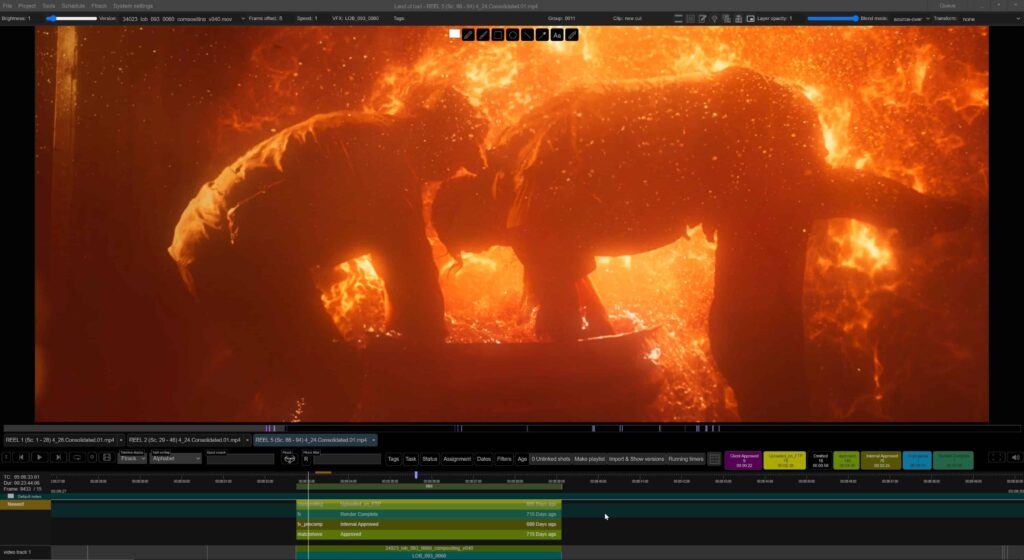
Crossbow is an automation tool expressly designed for the VFX and animation industries, effectively addressing the unique challenges these sectors face in workflow management. Its robust integration capabilities with platforms like Ftrack enable teams to automate shot breakdowns and bidding processes, mitigating redundancies typically encountered in traditional production workflows. Compared to other general automation tools like Make or Zapier, Crossbow’s specialization is both a strength and a limitation. While its focused feature set is tailored to VFX and animation projects, it may fall short for businesses that require a more generalized automation solution across diverse operations.
On the other hand, Make and Zapier offer broader automation capabilities that cater to various industries. Make is acclaimed for its visual automation interface, allowing users to design complex workflows with an intuitive drag-and-drop functionality. This feature can greatly appeal to those who may not possess advanced technical skills, effectively democratizing automation. However, Make can also become unwieldy if users need to manage overly intricate workflows, which may result in a steeper learning curve as complexity increases. Furthermore, the scalability of Make is commendable for SMBs as it can handle a substantial number of tasks and integrations, making it a viable option for organizations anticipating growth.
Zapier, in juxtaposition, pioneers the automation space by connecting over a thousand applications, enabling users to create workflows quickly and efficiently. Its straightforward interface and extensive application ecosystem are powerful benefits, allowing SMBs to automate tasks without needing extensive technical expertise. From an ROI perspective, Zapier often demonstrates a faster setup time and lower initial costs compared to its competitors. However, one of its weaknesses lies in scalability; for higher-tier plans, the cost escalates quickly as automation volume increases, which may strain budgets for small businesses as they expand.
When considering costs, it is critical to acknowledge the pricing structure unique to each tool. Crossbow operates on a subscription model tailored to the requirements of VFX studios, depending heavily on the number of users and specific functionalities leveraged. This pricing scheme is advantageous for organizations within the industry but could deter others due to costs that might not favor smaller firms or those with fluctuating needs. Make generally adopts a tiered pricing model, whereby users can assess their needs and only pay for what they require, allowing for cost efficiency. Zapier’s pricing similarly adapts to user needs but tends to offer a more budget-friendly solution at lower tiers; however, users may find that features become limited without advancing to higher tiers.
An additional consideration for businesses is the expected ROI from investing in these platforms. Organizations should rigorously analyze time saved versus the cost incurred. Crossbow may promise ROI in terms of reduced manual labor and enhanced production timelines in the VFX realm, while Make and Zapier may shine in a broader range of tasks, increasing value across varied departmental functions—albeit in a more scattered approach.
Scalability is yet another important factor when selecting an automation tool. Crossbow excels in scalability for VFX studios that have consistent needs, while businesses looking for a general-purpose automation tool with the capability to expand into new operational areas may find Make or Zapier more accommodating. Make offers advanced functionalities that can be configured as businesses grow, whereas Zapier’s simplicity is appealing but may limit complex workflows down the line.
In conclusion, the effectiveness and applicability of automation tools like Crossbow, Make, and Zapier hinge on factors such as industry specificity, cost-effectiveness, ease of use, and scalability. Organizations in the VFX and animation fields should consider Crossbow for its tailored offerings, while SMB leaders seeking agility and adaptability in broader contexts may benefit from exploring Make and Zapier. Such analysis enables businesses to make informed decisions that align with their unique workflows and operational demands.
FlowMind AI Insight: As automation continues to transform business landscapes, the choice of tools should be data-driven, focused on both immediate needs and long-term growth potential. SMB leaders must regularly reassess their automation strategies to ensure alignment with their evolving objectives and technological advancements.
Original article: Read here
2025-07-09 07:00:00