
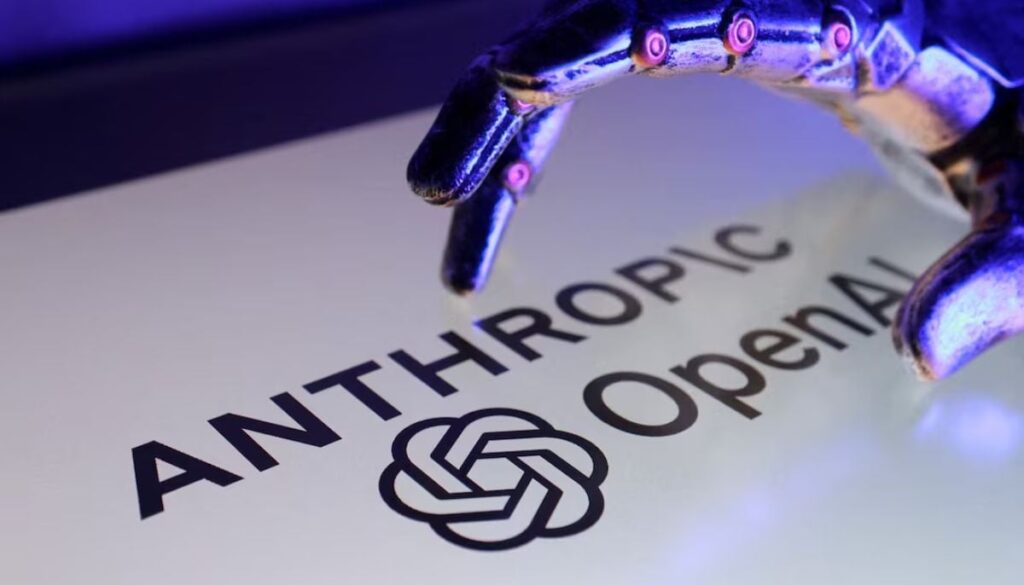
The recent advertisement skirmish between Anthropic and OpenAI during the Super Bowl brings to light not only the competitive landscape of artificial intelligence (AI) tools but the broader implications for businesses looking to leverage automation platforms. As AI technologies mature, Small and Medium Businesses (SMBs) must make informed decisions between competing services that offer distinct operational efficiencies, cost structures, and user experiences. This analysis focuses on two pivotal platforms: Make (formerly Integromat) versus Zapier and OpenAI versus Anthropic, examining their strengths, weaknesses, costs, ROI, and scalability to aid business leaders in making data-driven decisions.
Make and Zapier are leading players in the automation sector, designed to streamline repetitive tasks and enhance productivity for SMBs. Make is often praised for its powerful visual interface that allows users to design complex workflows with ease, featuring a modular approach that appeals to technically inclined users. This flexibility can lead to higher configurations and integrations than Zapier, especially in scenarios that demand intricate data manipulations or real-time processing.
Zapier, on the other hand, boasts a more user-friendly onboarding experience tailored for those less technically adept. With an extensive selection of over 6,000 app integrations, it is well-regarded for its straightforward, no-code automation capabilities, making it a popular choice for businesses relatively new to automation. However, for companies needing deep customization, Zapier might not provide the same level of nuanced control, often relegating users to simpler task automations.
On the cost front, Zapier operates under a tiered subscription model, which may become financially burdensome for extensive usage, especially as businesses scale. The free tier provides basic automation, but it comes with limitations that might hamper growth. Make’s pricing aligns more closely with its performance capabilities, offering various tiers that allow extensive integration at a relatively lower cost for similar automation scales. Analysis of ROI shows that a well-implemented Make setup can yield faster results for companies needing intricate workflows, thereby justifying the investment in the platform.
When considering scalability, both platforms exhibit strengths, but it leans slightly in favor of Make. Its capacity for complex task structures enables enterprises to tackle untraditional automation pathways that can evolve with the business. Contrarily, Zapier’s simpler automation structures benefit smaller users but can become restrictive for more established firms with growing demands. Therefore, businesses looking for more scalable solutions may find Make to be a better long-term investment.
On the AI front, OpenAI and Anthropic present compelling use cases for businesses looking toward generative and conversational AI models. OpenAI’s ChatGPT has become a staple for companies interested in harnessing natural language processing (NLP) for customer service, content generation, and more. Its robust model has a proven track record backed by extensive training data, making it a reliable choice. OpenAI’s approach includes both free and paid subscription plans for its services, although some limitations exist in free access.
Anthropic, emerging with its Claude chatbot, is positioning itself competitively in the generative AI arena. The recent marketing campaign suggests an ethos that emphasizes user experience without the chaotic approach of ad-driven AI interactions, a criticized feature in OpenAI’s early advertising messaging. The primary differentiator here lies in user trust and ethical AI use as underscored by Anthropic’s manifesto-oriented focus on responsible AI deployment. However, the platform is relatively new, and businesses may find fewer integrations and features compared to the more established OpenAI.
The costs for implementing either solution taper off as they scale. OpenAI’s potential addition of ad-support plans raises concerns about user experience, with a trade-off between free access and potential interruptions. Businesses frequently analyze metrics like user engagement and task completion rates to determine ROI, but OpenAI’s extensive functionality often leads to significant gains that therefore warrant the investment.
Overall, the competitive dynamic between these AI and automation platforms reflects a larger trend in the technology sector—the balance between innovation and user confidence. SMBs must carefully weigh user experience against long-term operational needs when deciding between Make and Zapier. Similarly, when considering their AI partner, businesses should evaluate the ethical implications of adopting OpenAI versus Anthropic’s offerings.
FlowMind AI Insight: In a rapidly evolving technological environment, integrating AI and automation solutions is not merely about choosing the latest tools; it’s about aligning them strategically with the company’s long-term vision and operational needs. Making informed, data-driven decisions can significantly enhance scalability and efficiency, positioning SMBs to thrive amid rising competition.
Original article: Read here
2026-02-07 12:39:00