
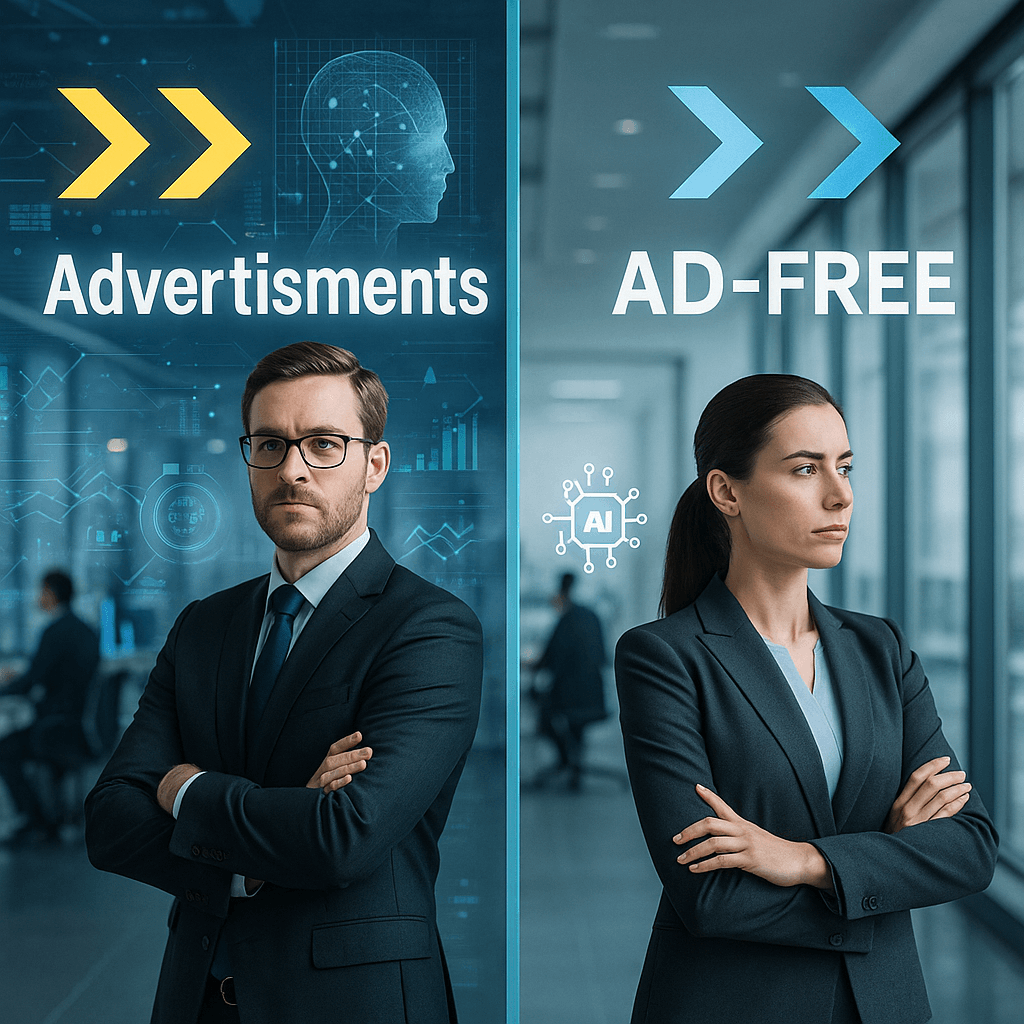
The recent spat between OpenAI and Anthropic over advertising strategies provides a timely lens through which to dissect the competitive landscape of AI platforms and automation tools. As providers in this rapidly evolving sector strive to capture market share, understanding the core differences, strengths, and weaknesses among them is paramount for leaders in small and medium-sized businesses (SMBs) and automation specialists.
OpenAI, known for its ChatGPT, has opted to introduce advertisements in its free tier, arguing that this approach is necessary for business sustainability in a competitive environment. This decision has not only drawn criticism but also sparked a public relations challenge, especially in light of Anthropic’s assertive counter-strategy. Anthropic’s Claude, which maintains a no-advertising policy, positions itself as the ethically superior alternative, betraying OpenAI’s move as a potential betrayal of user trust. Such narrative framing can influence perception significantly among potential users and decision-makers.
From a cost perspective, both platforms require different financial commitments. OpenAI’s tiered model offers a free version that many users appreciate, but the introduction of ads does create a possible friction point regarding user experience. In contrast, Anthropic’s strategy of offering an ad-free service may appeal initially, particularly for enterprises concerned about user retention and satisfaction. However, without a freemium model, its customer acquisition strategy may be limited, possibly resulting in reduced uptake among smaller businesses wary of initial commitments.
Moreover, the ROI associated with each platform varies significantly. OpenAI’s model allows users to leverage AI capabilities without incurring upfront costs, thus lowering barriers to entry. However, the long-term viability of sustaining a free tier with ads could deter users if their experience is diminished by intrusive marketing. In contrast, Anthropic’s commitment to providing an ad-free experience could foster loyalty and enhance brand differentiation, ultimately leading to stronger customer retention and potentially superior life-cycle value.
When evaluating scalability, OpenAI’s existing tools offer high adaptability across various business functions, supported by extensive documentation and community sharing for developers. This flexibility renders OpenAI a viable option for businesses seeking a broadly applicable automation platform. Conversely, Anthropic’s Claude, while still powerful, may not yet match OpenAI’s integration capabilities. For SMBs seeking to implement AI solutions into their operational workflows, the ability to easily scale remains a critical consideration.
Both companies occupy a pivotal role in shaping the future of AI and automation. OpenAI’s recent decision to monetize its user base through ads raised eyebrows and revealed deeper competitive anxieties. As noted, Sam Altman’s response to Anthropic’s ad campaign highlights the emotional stakes involved in the AI race; this is as much about maintaining user loyalty as it is about technological leadership. Anthropic’s marketing approach signifies a divergence in strategy—promoting ethical considerations over immediate financial gains—potentially appealing to a demographic increasingly concerned about the implications of their technological commitments.
In drawing conclusions, SMB leaders and automation specialists should consider how the current dynamics could affect their platform choice. OpenAI may be advantageous for enterprises prioritizing extensive capabilities and a large user base, while Anthropic may attract those favoring a principled, user-centric approach free from advertisements. As the landscape evolves, the competitive discourse will likely influence user preference accordingly.
FlowMind AI Insight: As AI and automation platforms continue to develop, the narrative surrounding ethical practices versus revenue generation will shape market dynamics significantly. SMB leaders must proactively assess not only the functional capabilities of these tools but also their brand ethos to align technology choices with company values and user expectations.
Original article: Read here
2026-02-05 01:57:00