
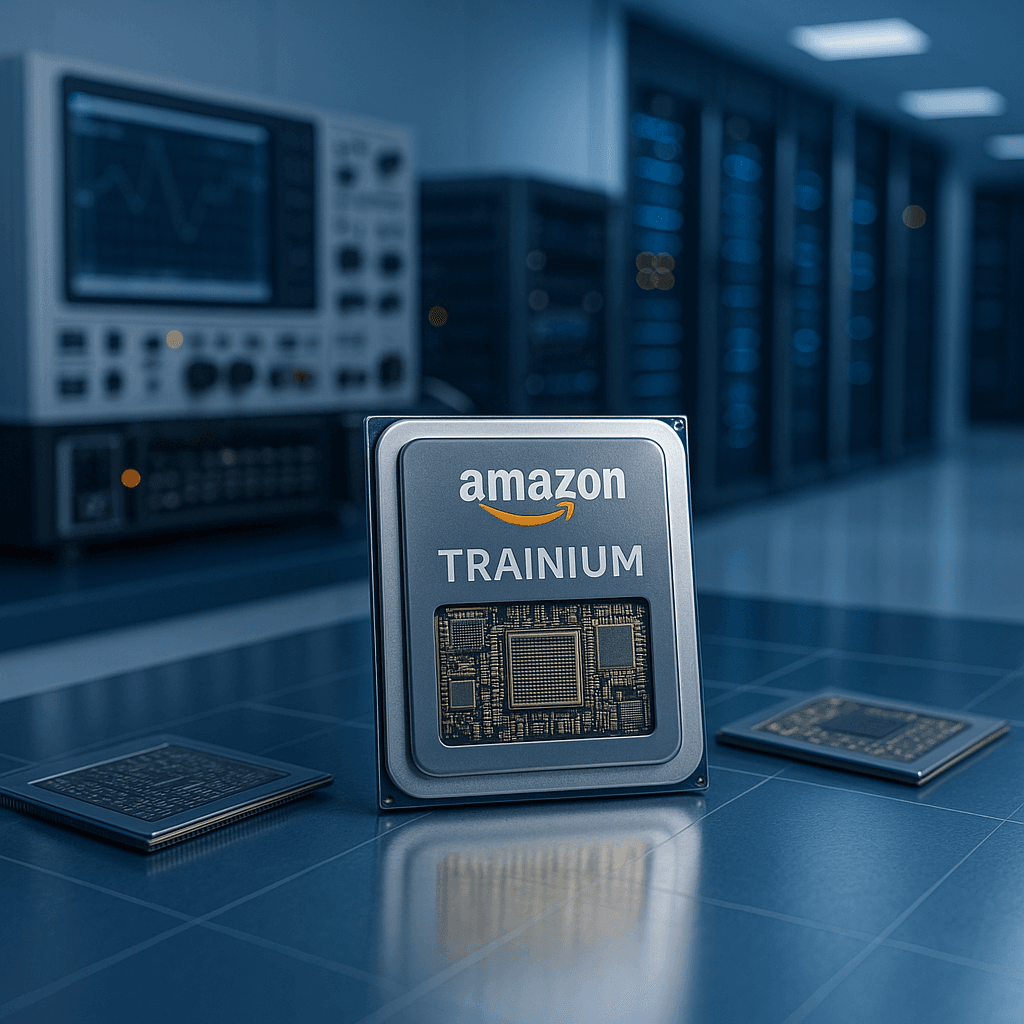
Amazon Web Services (AWS) has recently intensified its competitive edge in the AI infrastructure market with its exclusive access to the Trainium chip lab, coinciding with a monumental $50 billion investment in OpenAI. This unprecedented move not only signifies a financial commitment but also reflects a strategic pivot towards owning the entire AI ecosystem, encompassing everything from proprietary chips to extensive cloud services. In this analysis, we will explore AWS’s offerings compared to leading players like Nvidia, OpenAI, and Anthropic, while evaluating critical factors such as cost, scalability, and return on investment (ROI) for small and mid-sized businesses (SMBs).
At the core of this strategic maneuver is a challenge to Nvidia’s longstanding dominance in the AI training hardware space. With the introduction of its custom AI training chips, AWS aims to offer an attractive alternative to Nvidia’s high-cost GPUs. While Nvidia’s chips have carved out a reputation for exceptional performance, they come with premium price tags that may become prohibitive for many SMBs looking to adopt AI capabilities. AWS’s Trainium processors, designed explicitly for training large language models, promise not only to lower the upfront costs of AI infrastructure but also to enhance performance through optimization tailored to AWS’s cloud-based services.
AWS’s proprietary silicon strategy leads to significant strengths in the areas of integration and user experience. By designing custom chips, AWS can ensure that its hardware works seamlessly with its cloud platform’s existing architecture. This structural cohesion means enhanced performance metrics that generic GPUs from Nvidia cannot match, particularly for large-scale applications. In contrast, other platforms like OpenAI and Anthropic rely largely on Nvidia hardware, potentially limiting their scalability based on Nvidia’s pricing and availability. As SMBs increasingly seek to harness the power of AI, the choice becomes pivotal between the well-known quality associated with Nvidia and the more accessible, tailored offerings from AWS.
Cost structures heavily influence these decisions. AWS appears to be positioning itself as a more budget-friendly option for companies looking to adopt AI solutions. Lower prices for Trainium chips might attract SMBs trying to balance quality with budget constraints. Meanwhile, Nvidia’s GPU offerings often come with high total cost of ownership due to not only the hardware but also the associated ecosystem of licensing, maintenance, and updates. OpenAI and Anthropic, on the other hand, bring their models with different pricing dynamics, including pay-per-use models and subscription services that could lead to uncertain long-term costs for companies looking to use these platforms extensively. The key takeaway for SMB leaders is to estimate the total cost over time, factoring in both upfront investments and ongoing operational costs. This will be crucial when deciding between AWS, OpenAI, and Anthropic.
ROI also plays a significant role in the analysis of these platforms. AWS’s strategy to offer exclusive access to its Trainium technologies can yield higher long-term returns for businesses willing to commit to its ecosystem, especially if OpenAI’s next generation of models uses these technologies for training. Early adopters may enjoy competitive advantages in terms of service delivery and customer engagement. On the flip side, organizations using Nvidia hardware may recognize immediate performance benefits but could see diminishing ROI as they scale, especially if the market continues to evolve rapidly towards more accessible, cloud-integrated solutions like those offered by AWS. Businesses must critically assess what capabilities they prioritize for their AI applications, weighing immediate performance against long-term scalability.
When it comes to scalability, AWS appears to have the upper hand by providing integrated solutions that are prebuilt to adapt to organizational growth. The tightly coupled nature of Trainium processors and the AWS cloud services environment can facilitate swift scaling. In contrast, organizations leveraging Nvidia’s offerings may find themselves navigating complex integration challenges, particularly if their usage demands outstrip the hardware’s capabilities. OpenAI and Anthropic’s cloud solutions offer flexibility; however, the reliance on Nvidia may constrict their scalability options based on external hardware costs and limitations. Therefore, SMBs must align their growth forecasts with the platforms’ scalability features to ensure they select a solution that anticipates their future needs.
In conclusion, the landscape for AI infrastructure and automation solutions is rapidly evolving, with AWS positioning itself as a formidable contender against established players like Nvidia, OpenAI, and Anthropic. A robust evaluation of strengths, weaknesses, costs, and ROI is essential for SMB leaders. Companies should consider not only the immediate benefits but also the strategic implications of their platform choices to support sustainable growth.
FlowMind AI Insight: Embracing AWS’s Trainium technology may provide a unique opportunity for businesses looking to integrate AI efficiently and cost-effectively. Companies must remain agile and adaptable, choosing platforms that not only meet current needs but can also evolve with future advancements in AI capabilities.
Original article: Read here
2026-03-22 12:41:00