
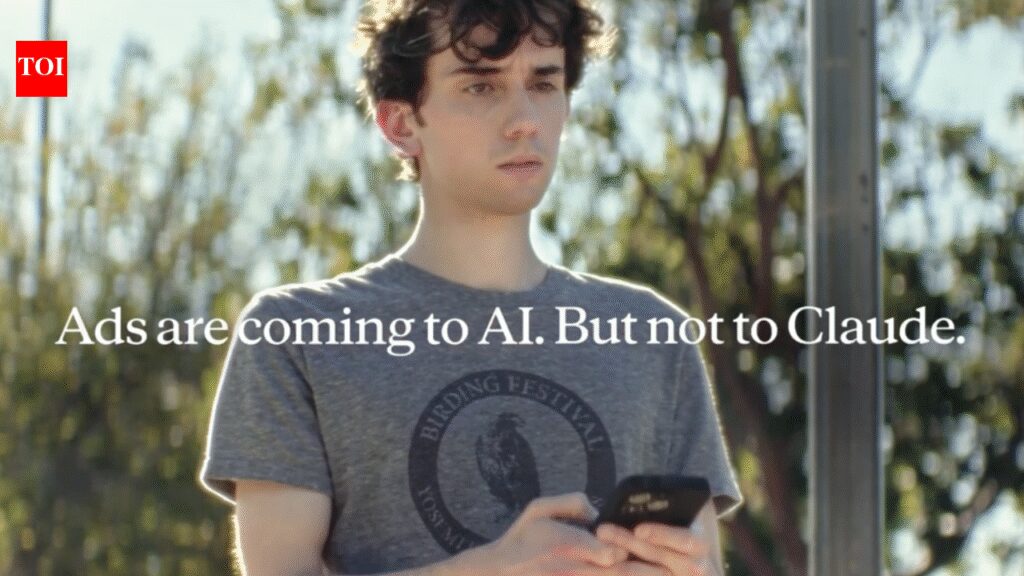
In the rapidly evolving landscape of artificial intelligence and automation, the recent public exchanges between OpenAI and Anthropic during Super Bowl LX signal that the competition extends beyond mere algorithms and models; it delves deeply into market positioning and the narratives that companies want to promote about their respective outlooks on AI technology. OpenAI’s president, Greg Brockman, emphasized the contrasting philosophies that underpin each company’s approach to AI, especially highlighted by Anthropic’s satirical advertisements targeting OpenAI’s decision to incorporate advertising into its ChatGPT platform. This divergence presents an opportunity for SMB leaders and automation specialists to critically evaluate the strengths, weaknesses, costs, returns on investment (ROI), and scalability of these AI platforms.
Let us begin by comparing OpenAI’s offerings, particularly the Codex tool, with Anthropic’s Claude. OpenAI has positioned itself as a frontrunner in the generative AI space, leveraging a robust model that provides high proficiency in coding and creativity. The Codex tool, featured during OpenAI’s Super Bowl advertisement, showcases the platform’s ability to transform ideas into executable code, thus appealing to developers and enterprises focused on innovation. Conversely, Anthropic’s Claude is purposefully designed with an emphasis on safety and ethical considerations, catering to enterprises that prioritize governance frameworks over mere execution speed.
This difference in focus can be a decisive factor for SMB leaders. Companies that prioritize rapid prototyping and market agility might find OpenAI’s offerings more compelling due to their ease of integration and powerful capabilities. Codex has demonstrated a high ROI for users seeking to optimize workflows, enabling them to reduce development times and improve productivity. The access to OpenAI’s platform through flexible pricing models further enhances its appeal, as it allows firms to scale usage according to their growth trajectories.
On the other hand, for organizations that place a higher value on the ethical implications of AI, Anthropic’s Claude tool could be more attractive. The strong emphasis on safety in AI means that developers are less likely to encounter issues arising from unpredictable model outputs or biases in data, which can lead to reputational damage and financial losses. However, the trade-off here may be a potentially higher total cost of ownership, as businesses will need to invest in training and compliance measures to effectively integrate Claude into their existing ecosystems.
Evaluating these tools raises pertinent questions about scalability. OpenAI has already established a significant user base, reported to be around 800 million, due to its versatility and integration capabilities. The ongoing investment to advance the capabilities of its models suggests a commitment to staying ahead of the curve. With OpenAI also introducing complementary tools like Frontier, which aims to compete with Anthropic’s Claude Code and Cowork tools, scalability appears to be a core strategy in OpenAI’s growth plans.
In contrast, while Anthropic’s valuation is expected to reach around $350 billion, its enterprise-focused offerings indicate a strategy targeting specific market segments rather than a mass-market approach. Companies considering AI investments must take into account not only the functional capabilities of an AI solution but also its projected growth and adaptability to evolving business needs.
A critical aspect to consider is how these platforms affect productivity and efficiency in concrete terms. OpenAI’s Codex has exhibited substantial improvements in workflow efficiency, eliminating mundane coding tasks and allowing engineers to focus on higher-level problem-solving. The average ROI from implementing such tools stands at a reported 30-40% increase in productivity among users. On the contrary, Anthropic’s Claude, while still proving effective, may not deliver the same immediate ROI due to its stringent safety protocols that require additional oversight.
In summary, both OpenAI and Anthropic provide valuable AI solutions, but their very different philosophies and strategies will resonate differently with SMB leaders and automation specialists. OpenAI’s Codex appeals more to organizations focused on innovation and rapid implementation, while Anthropic’s Claude caters to those concerned about ethical AI use and safety protocols. A nuanced understanding of these differences can provide organizations with the insight needed to select the more appropriate platform based on their operational demands, cultural ethos, and financial feasibility.
FlowMind AI Insight: As the AI landscape evolves, it is crucial for companies to align their technology choices with strategic business objectives. Adopting a platform that resonates with a firm’s values and workflows can significantly enhance the ROI of AI investments, driving both efficiency and innovation. Conducting thorough comparisons based on functional and ethical grounds will enable organizations to navigate this complex market more effectively.
Original article: Read here
2026-02-09 14:31:00