
In today’s fast-paced digital landscape, small and medium-sized businesses (SMBs) are increasingly adopting artificial intelligence (AI) and automation tools to enhance productivity and security. Among several options available, Anthropic’s Claude Code Security and Microsoft’s Azure Security Center have emerged as strong contenders. Each tool offers distinct features, reliability, pricing structures, and integrations, making them suitable for varying business needs.
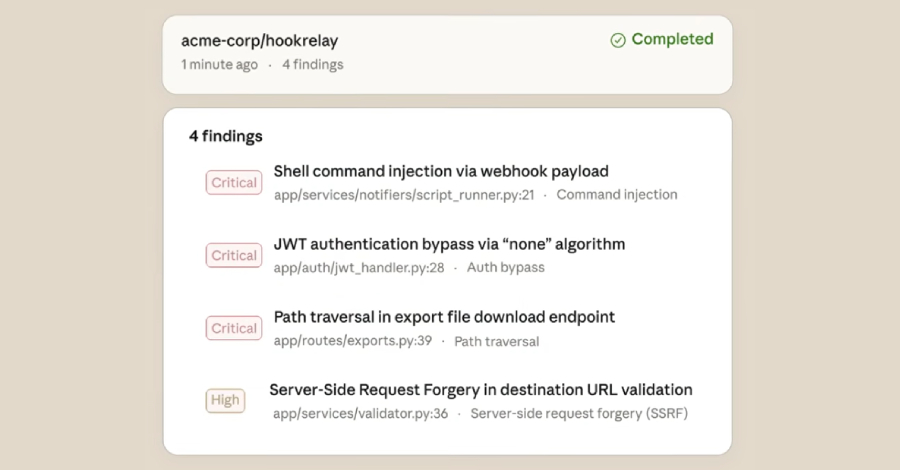
Anthropic’s Claude Code Security serves as an advanced security feature that scans software codebases for vulnerabilities and suggests patches. Currently available to enterprise and team customers in a limited research preview, it is designed to combat sophisticated threats that can exploit software bugs. The tool uses an approach similar to human reasoning, evaluating how various components within code interact and tracing data flows throughout an application. This capability is crucial because it identifies vulnerabilities that traditional, rule-based scanners might overlook. Reliability stems from its multi-stage verification process, which re-analyzes findings to minimize false positives and assigns severity ratings to help teams prioritize fixes.
In contrast, Microsoft’s Azure Security Center offers a broader security management solution. It focuses not only on vulnerability scanning but also on compliance, threat protection, and security management for cloud-based and on-premises resources. Azure Security Center is known for its integration within the Microsoft ecosystem, offering seamless support for those already using Azure services. The tool emphasizes cost-effectiveness with its pricing model, enabling businesses to pay for what they use without incurring substantial upfront costs. While it may not possess the depth in vulnerability management that Claude Code Security offers, it provides a more comprehensive security overview applicable to diverse IT environments.
Pricing structures also differ significantly. Anthropic has yet to publish detailed pricing, as the tool is still in a limited phase. However, it is expected to follow a tiered model similar to other enterprise-focused solutions. Conversely, Azure Security Center operates on a pay-as-you-go basis, making it flexible for SMBs to manage their budgets effectively. This pricing model not only reduces initial investment barriers but also allows companies to scale their usage and costs according to their evolving needs.
Integration capabilities further differentiate these tools. Claude Code Security is primarily designed for specific codebases, focusing on security insights relevant to software developers. It may lack support for broader IT management functions, making it less suitable for companies that seek an all-in-one security tool. Azure Security Center, on the other hand, seamlessly integrates with a wide range of Microsoft services, enhancing its utility for organizations already embedded in the Microsoft ecosystem. This can foster increased collaboration among departments and streamline security efforts.
Both tools provide robust support options, though they approach customer service differently. Anthropic’s approach centers around a human-in-the-loop (HITL) model, ensuring that findings require human approval before implementation. This feature is advantageous for teams focusing on quality and accuracy but may slow down the remediation process. In contrast, Azure Security Center provides more direct support through Microsoft’s established customer service infrastructure, which includes extensive online documentation and community forums. This can be especially beneficial for teams needing quick answers or troubleshooting assistance.
When considering migration steps, both tools should be evaluated based on the existing IT environment. For Claude Code Security, a typical pilot phase may involve using the tool within a controlled environment on a smaller codebase. This approach minimizes risk while allowing teams to gauge the tool’s effectiveness. Anthropic recommends a stepwise integration—first by identifying and scanning a limited codebase for vulnerabilities, progressively expanding its use as confidence in the tool grows.
Azure Security Center may better fit businesses already utilizing Azure services; migrating to this platform can involve straightforward configuration changes. A low-risk pilot here can consist of applying Azure Security Center to a single project or department to test its threat protection capabilities before a wider rollout. This gradual approach helps mitigate potential disruptions during the adoption period.
Analyzing the total cost of ownership (TCO) and expected ROI is crucial for decision-making. For Claude Code Security, while specifics remain undisclosed, SMBs must account for the operational and human resource costs of adopting a new tool. The expected ROI can materialize over three to six months, particularly as identified vulnerabilities lead to fewer security incidents and reduced remediation costs.
On the other hand, Azure Security Center’s total cost is more tangible due to its pay-as-you-go pricing, which can lower the financial risks associated with initial investments. SMBs utilizing Azure Security Center can anticipate returns through operational efficiencies, compliance adherence, and reduced threat exposure within a similar timeframe. Ultimately, the choice between these tools should align with a company’s existing infrastructure, specific security needs, and operational requirements.
FlowMind AI Insight: The right AI-driven security tool for an SMB depends significantly on its unique technology landscape and security objectives. By carefully assessing features, integration capabilities, and projected ROI, businesses can enhance their security posture while optimizing resource allocation.
Original article: Read here
2026-02-21 07:58:00