
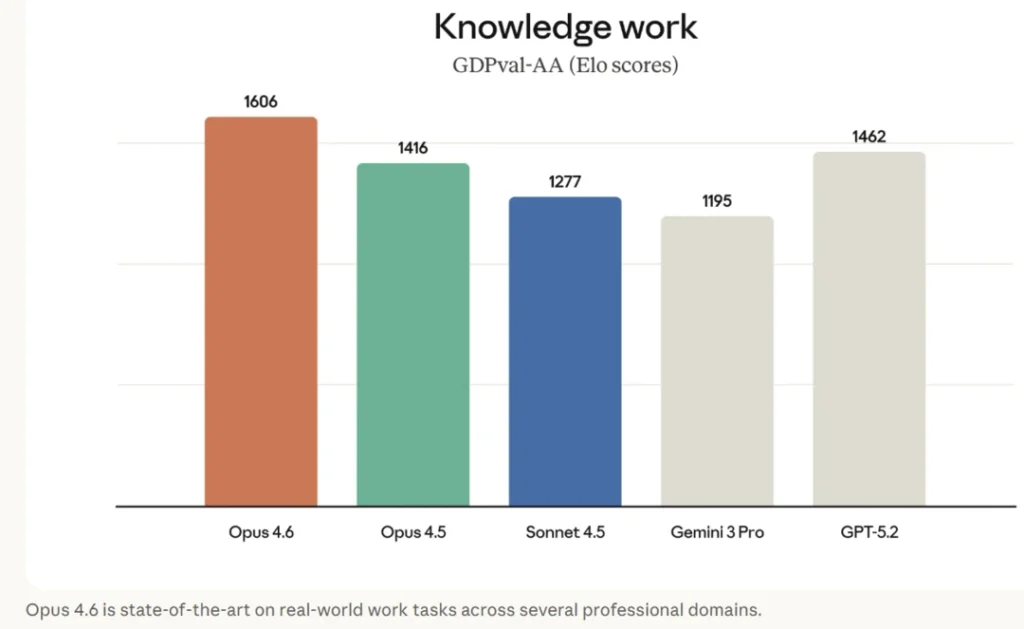
The recent competition between leading AI model providers Anthropic and OpenAI signifies a pivotal moment for the enterprise software landscape as they strive to serve an expanding array of professional tasks. Anthropic’s Claude Opus 4.6 has emerged as a key contender, promoting enhanced skills in coding alongside capabilities for executing comprehensive work tasks including financial analyses, research, and document creation. This development resonates with a growing demand for AI systems that can multitask effectively in professional environments, particularly as Wall Street expresses uncertainty about the future of enterprise software.
In contrast, OpenAI’s GPT-5.3-Codex brings forth a notable evolutionary leap, leveraging advancements in coding abilities while offering enhanced speed and contextual awareness for longer tasks. This model builds upon its predecessors, claiming a 25% increase in efficiency. Furthermore, OpenAI has introduced self-debugging capabilities that allow the Codex to engage in a form of self-improvement, thus providing potentially reduced dependency on human oversight. These features raise questions about the overall reliability and autonomy of AI systems in business contexts.
When comparing Claude Opus 4.6 and GPT-5.3-Codex, it is essential to recognize their respective strengths and weaknesses. The strength of Claude lies in its versatility across various work functions. The upgraded Excel capabilities and the preliminary release of Claude in PowerPoint suggest a focused effort to provide a toolkit that integrates seamlessly with tasks commonly found in office settings. This parlay into productivity tools is particularly relevant for small-to-medium-sized business (SMB) leaders looking for immediate and practical applications of AI without needing to undertake extensive training or restructuring.
Conversely, GPT-5.3-Codex demonstrates impressive advancements in coding capabilities, suggesting a compelling choice for organizations needing robust software development support. The notion that Codex was instrumental in its own creation provides an intriguing perspective on the future scalability of AI systems. In environments that require rapid adaptation or where different programming languages and frameworks are utilized, GPT-5.3-Codex may prove to be a more powerful ally due to its heightened capabilities in managing complex coding tasks and its broader role in the software development lifecycle.
In terms of implementation costs and return on investment (ROI), both systems reflect a mixture of direct expenses and longer-term benefits. Deploying AI solutions demands significant upfront investment in research, training, and integration. Therefore, SMB leaders must meticulously assess their specific needs—distinguishing between immediate productivity challenges and long-term strategic goals. Both these AI platforms show promise; however, the decision should be grounded in an understanding of the organization’s operational requirements.
Furthermore, the scalability of either system poses noteworthy implications. Anthropic’s Claude, with its emphasis on multitasking within typical business applications, can be readily scaled to various departmental needs. For instance, a small marketing team might utilize Claude for social media content generation while simultaneously leveraging its financial analysis features. This multifunctional capability presents a less daunting integration process compared to implementing a new tool for each departmental function.
On the other hand, OpenAI’s offering, while powerful in alleviating coding burdens, may necessitate more extensive implementation strategies across different teams. SMBs seeking to adopt GPT-5.3-Codex should consider the integration complexity, particularly if their business relies on a diverse array of technical environments. Each additional layer of complication may introduce unforeseen expenses and incite longer adaptation timelines.
Recommendations for SMB stakeholders considering these platforms should focus on aligning AI capabilities with operational priorities. For businesses heavily reliant on documentation, collaboration, and financial metrics, prioritizing Claude Opus 4.6 could offer immediate enhancements in productivity. Alternatively, those with stronger coding needs should evaluate the potential of GPT-5.3-Codex, particularly in recruiting skilled software developers who can effectively harness its abilities and thus catalyze broader organizational enhancements.
In conclusion, the dueling advancements from Anthropic and OpenAI present diverse pathways for SMB leaders and automation specialists. With each platform offering distinct advantages shaped by their respective design philosophies, the choice between Claude Opus 4.6 and GPT-5.3-Codex will depend largely on an organization’s immediate requirements, budgetary considerations, and long-term ambition for automation and AI integration.
FlowMind AI Insight: As the enterprise software landscape evolves, SMB leaders must choose AI platforms that not only enhance current workflows but also possess the flexibility to scale with future demands. Conducting thorough analyses of each tool’s strengths and weaknesses will be crucial to realizing a sustainable ROI in an increasingly automation-driven world.
Original article: Read here
2026-02-05 18:57:00