
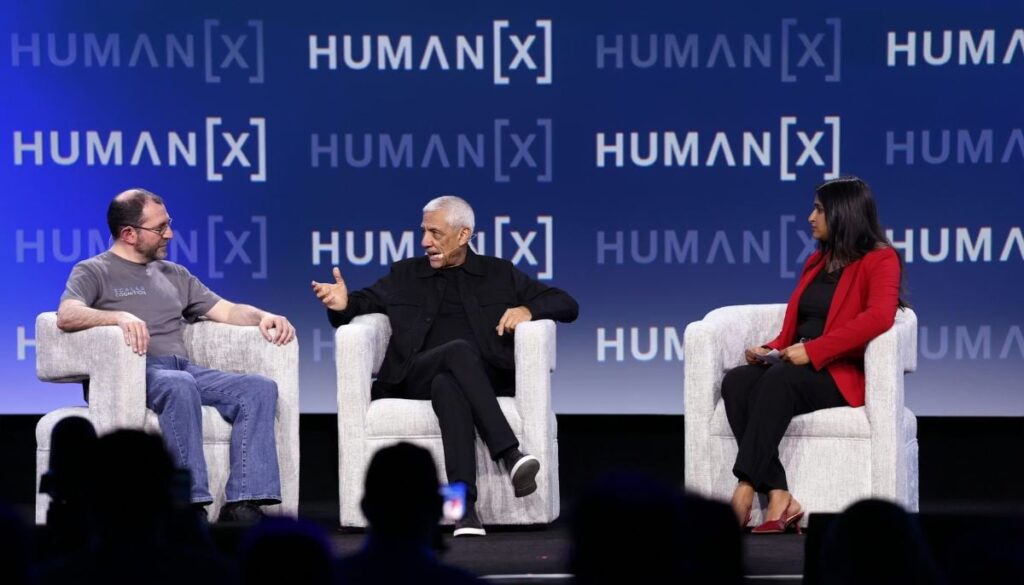
The recent HumanX conference in San Francisco revealed a significant shift in the artificial intelligence landscape, particularly as Anthropic AI emerged as a formidable contender against established players like OpenAI. As 6,500 executives and investors convened to discuss the trajectory of AI, the spotlight was notably directed toward Anthropic’s Claude Code. This focus draws attention to the growing demand among businesses for sophisticated AI tools that enhance productivity and software development capabilities.
The allure of Claude Code lies in its advanced coding support, which facilitates code generation, editing, and review. This tool has not only captured the interest of industry leaders but has also quickly become integrated into the workflows of numerous companies, suggesting strong adoption rates among enterprises seeking efficient coding solutions. The enthusiasm surrounding Claude Code has even been referred to as “Claude mania,” signaling a potential sea change in industry preferences for AI-driven coding tools.
The emergence of Anthropic, founded in 2021 by former OpenAI scientists, exemplifies how agile startups can disrupt established norms. Despite facing legal challenges, including restrictions related to the Pentagon, Anthropic has secured multiple federal partnerships, bolstering its credibility and market position. In contrast, OpenAI, while a pioneer in conversational AI and natural language processing, may find its growth trajectory challenged by this dynamic competition.
An analysis of the tools reveals a divergence in capabilities and focus. OpenAI’s offerings excel in natural language processing, enabling applications that range from customer service chatbots to sophisticated content generation. Conversely, Claude Code has honed in on the specific needs of software development, focusing on streamlining complex coding workflows. According to industry experts, this concentrated approach could yield higher ROI for businesses that prioritize software efficiency, as coding-related tasks account for a significant portion of engineering efforts.
However, the choice between these platforms is not solely dictated by feature sets. Cost considerations also play a crucial role. OpenAI’s pricing model varies based on usage, which could lead to variable costs for companies with fluctuating workloads. On the contrary, Claude Code’s pricing structure appears to appeal to businesses seeking stability in their budgeting for AI tools. By providing predictable costs, it may attract SMB leaders who prefer avoiding the unpredictability of usage-based models.
Scalability remains a focal point in tool selection, particularly for SMBs. As companies grow, their operational demands evolve, often necessitating the adaptation of automation solutions. Tools like Zapier and Make, which serve as middleware for integrating diverse applications, allow for scalable automation that can be tailored to a business’s changing requirements. A comparative analysis shows that while Zapier offers robust integrations with a user-friendly interface, Make provides a more flexible, modular approach, catering to businesses that seek complex workflows. The choice between them may boil down to the specific use cases envisioned by SMB leaders.
Moreover, the enterprise AI landscape is not static. Companies are increasingly organizing their engineering teams around AI systems, with some adopting new practices that treat these tools as “digital coworkers.” This paradigm shift has implications for team dynamics and overall productivity. Cisco’s president noted that with AI assistance, smaller teams can achieve greater output, reshaping organizational structures.
In concluding the analysis, executives are encouraged to scrutinize not only the tools themselves but the broader integration strategies that align with organizational goals. An understanding of the particular strengths and weaknesses of each platform can inform data-driven choices, ensuring that the selected tool complements existing systems while addressing current needs. The excitement surrounding Claude Code illustrates the industry’s willingness to explore new avenues in pursuit of enhanced productivity, yet it raises questions regarding whether the market can sustain this level of fervor as competition escalates.
As businesses navigate these choices, it’s imperative to weigh the trade-offs thoughtfully. Decisions must align with long-term objectives and incorporate flexibility to pivot as technology evolves.
FlowMind AI Insight: The rise of competitive AI platforms like Anthropic signifies a critical juncture in the automation landscape, compelling SMB leaders to evaluate their tool choices with a focus on efficiency, cost-effectiveness, and scalability. In a rapidly changing environment, informed decision-making will distinguish the forward-thinking enterprises from those stuck with legacy systems.
Original article: Read here
2026-04-11 17:16:00