
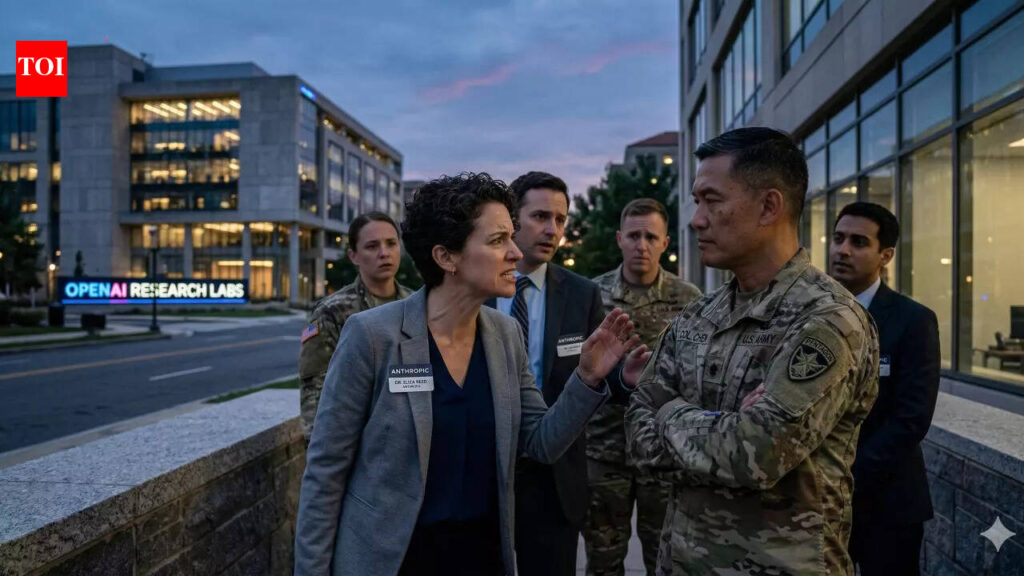
The recent confrontation between Anthropic and the Pentagon underscores a shifting dynamic within the relationship between Silicon Valley and government entities, particularly in the sphere of artificial intelligence (AI). President Donald Trump’s administration initially maintained a measured approach to engagement with tech leaders, leading to significant financial backing from major tech companies during his inauguration and subsequent visits to the White House. However, emerging tensions, highlighted by the Pentagon’s designation of Anthropic as a “supply chain risk,” appear to signify a potential fracture in this alliance. Anthropic’s refusal to grant the U.S. military unrestricted access to its AI models, specifically for applications related to domestic surveillance and automated military capabilities, has placed it in the same category as adversaries such as China and Russia, thus raising eyebrows in the tech industry.
The swift backlash from Silicon Valley indicates a serious reconsideration of the implications surrounding governmental AI regulations. Former Trump administration official Dean Ball articulated his concerns about the Pentagon’s decision, calling it “the most damaging policy move” observed during his tenure. This reaction reflects a growing sentiment among tech executives that government actions could stall innovation and harm competitive positioning in global markets. Influential tech companies—Apple, Google, Microsoft, and Meta—have collaborated in openly denouncing the Pentagon’s classification, with Microsoft even imploring a presidential reversal of the decision. Such a high-profile collective response illustrates a heightened level of solidarity across the tech landscape, suggesting that the industry is beginning to acknowledge the potential ripple effects of prioritizing security concerns over innovation.
Anthropic and its rivals, particularly OpenAI, have navigated their competitive landscapes through unique strategies and technological advancements that highlight their strengths and weaknesses in the marketplace. OpenAI’s position as a leading AI innovator has allowed it to carve out a niche for itself, focusing on versatility and powerful capabilities, particularly in natural language processing. Such strengths lend themselves well to integration with small- to medium-sized businesses (SMBs) that seek affordable and scalable automation solutions. The public support from OpenAI for Anthropic further underscores the collaborative ethos that has emerged among these enterprises, representing a desire to promote responsible AI development rather than merely engage in cutthroat competition.
However, as companies like Microsoft advocate for Anthropic, the dialogue surrounding AI’s implications for safety, governance, and corporate responsibility becomes particularly relevant. The tech ecosystem has realized that failure to establish boundaries risks reverting to monopolistic tendencies or exacerbating unethical applications of AI. SMBs, in pursuit of automation tools, must navigate platforms that not only promise efficiency but also adhere to ethical standards. Compare OpenAI to Anthropic, for instance. OpenAI provides robust tools for developers looking for solutions that can scale quickly with customer demand. In contrast, Anthropic emphasizes safety and alignment in AI models, fostering a responsible innovation environment that resonates with many forward-thinking organizations.
When looking at other automation tools, a comparison between Make and Zapier illustrates different approaches to efficiency and integration. Make, known for its visual scenario builder, offers extensive customization opportunities, attracting tech-savvy users and offering a greater ROI through tailored automation workflows. Zapier, however, maintains a broader customer base with easy-to-use integrations across more applications, although this may result in less flexibility for advanced users. The decision on which to employ often comes down to the specific needs and capabilities of the SMB; organizations looking for out-of-the-box efficiency might prefer Zapier, while those who need deliberate custom workflows would benefit more from Make.
A critical aspect for SMBs dealing with AI and automation tools lies in evaluating cost structure, scalability, and potential ROI. Tools like OpenAI and Make may seem expensive initially, but when positioned against the benefits of increased productivity and reduced operational overhead, the investment can yield significant returns through enhanced efficiency. As AI models evolve, companies must anticipate regulatory changes that could potentially alter their cost structures and market viability. Scalability remains a pivotal factor, as businesses must ensure that their technology investments can grow with them, adapting to increasing demands without necessitating complete overhauls.
The lessons learned from the ongoing Anthropic-Pentagon saga emphasize the need for tech leaders to remain vigilant about potential regulatory frameworks that could impact technology development and integration. As SMBs move toward greater automation and AI integration, it becomes crucial to align with partners who share a commitment to ethical innovation and responsible governance. This involvement will extend beyond mere compliance, ensuring a proactive stance in addressing ethical concerns while fostering sustained innovation.
In conclusion, navigating the complexities of AI and automation platforms requires a careful assessment of each tool’s capabilities, ethical considerations, and market positioning. With the fast-evolving landscape of technology, industry leaders must adopt a strategic approach that balances operational efficiency with the moral imperatives of responsible AI usage.
FlowMind AI Insight: The intersection of technology and ethics is becoming increasingly critical in the AI landscape. As SMBs invest in automation solutions, they must prioritize partnerships with companies committed to ethical standards and innovative safety practices to ensure sustainable growth and competitive advantage.
Original article: Read here
2026-03-21 02:03:00