
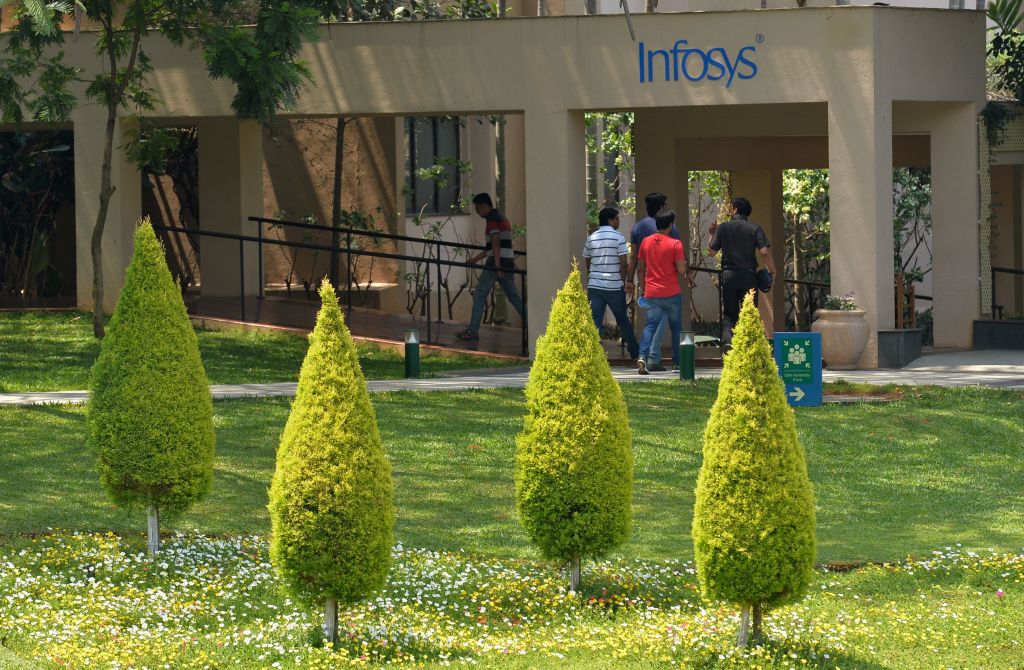
The recent partnership between Infosys and Anthropic marks a significant milestone in the evolution of AI in enterprise settings. This collaboration aims to integrate Anthropic’s Claude models into Infosys’ Topaz AI platform, enabling the development of autonomous “agentic” systems capable of managing complex workflows across sectors such as banking, telecommunications, and manufacturing. Such developments hint at an imminent transformation within the global IT services landscape, driven by the capabilities of large language models.
As interest in AI automation continues to surge, leaders in small to medium-sized businesses (SMBs) must consider how these technologies fit into their operational strategies. The introduction of AI agents into established enterprise workflows presents both significant opportunities and unavoidable challenges. For instance, while Infosys will leverage Claude’s capabilities for tasks like code generation, testing, and debugging, the broader implications of such capabilities raise pertinent questions regarding workforce displacement, operational efficiency, and long-term ROI.
Let’s delve into some comparative insights between major AI platforms—specifically Anthropic’s Claude and OpenAI’s offerings. Both platforms promise advanced automation capabilities, yet they approach AI implementation from different strategies and strengths. OpenAI, well-known for its GPT models, boasts a versatile integration ecosystem with extensive applications across various industries. The user-friendly interface has attracted numerous businesses looking to enhance functionalities like customer service automation or content generation. However, OpenAI’s models can become cost-prohibitive at scale, particularly for SMBs relying on constant usage and large-scale operations.
Conversely, Anthropic’s Claude focuses on safety and governance, establishing rigorous ethical guardrails around AI deployment. For industries requiring high levels of compliance, such as finance and healthcare, Claude’s emphasis on scalable model governance can be decisive. However, the trade-off may be that its usability and breadth of applications aren’t as expansive as OpenAI’s offerings at this stage. For instance, programming capabilities with Claude might be superior in regulatory environments due to its targeted approaches, yet it might not match OpenAI in terms of general marketing applications or diverse task handling.
Another important factor for SMB leaders to consider is the infrastructure costs associated with these tools. Implementing automation solutions often incurs significant initial investments in both time and resources. For instance, deploying a solution like Zapier, which is designed for workflow automation across various applications, can initially seem more accessible than setting up comprehensive AI infrastructure. Yet, the ROI from building out custom AI solutions—where scalability and ongoing maintenance are factored—can provide a much higher long-term return. Companies like Make offer a different approach to automation, allowing for intricate design and process modeling, which can indeed increase productivity but may lack the adaptive learning that AI offers.
Evaluating cost versus scalability becomes a crucial decision point. For instance, while a basic Zapier setup may be lower in initial investment, businesses must also consider how processes could evolve. With AI platforms like Claude or OpenAI, the costs can be justified through efficiency gains and the capacity for ongoing adaptations to changing market needs. As hyperscalers emerge in the AI landscape, those entities that embrace transformative strategies experience enhanced competitive advantages.
In terms of industry-specific applications, the Infosys-Anthropic partnership exemplifies the potential for AI to take on more significant roles within traditional, labor-intensive sectors. The involvement of AI in these sectors is not only about replacing human labor but enhancing productivity and decision-making through intelligent insights. Similarly, Tata Consultancy Services demonstrates that AI-related services can already constitute a meaningful portion of overall revenue, suggesting that early adopters may yield considerable financial advantages.
Nonetheless, there are always risks associated with the rapid integration of AI technologies. As evidenced by recent market reactions to AI deployments, there is skepticism about the potential for intelligent systems to disrupt the established order in India’s $280 billion IT services industry. A measured approach to AI adoption, underscored by sensitivity to labor dynamics and market needs, is paramount. Thus, it is essential for SMB leaders to not only evaluate these tools based on their operational merits but also through the lens of sustainability within their workforce and the larger economic landscape.
In conclusion, while organizations seek to augment their operations through AI, they must critically assess their technology choices and recognize the nuanced strengths and weaknesses of each platform. Balancing cost with scalability, efficiency with ethical considerations, and competitive advantage with workforce stability will form the backbone of successful AI integration strategies.
FlowMind AI Insight: As organizations navigate the evolving AI landscape, understanding the context and implications of technology partnerships can provide significant leverage. Prioritize automation tools that not only meet immediate business needs but also allow adaptability and growth in a rapidly changing market environment.
Original article: Read here
2026-02-17 12:55:00