
Automating business processes is increasingly essential for small and mid-sized businesses seeking efficiency and scalability. Implementing AI-driven automation can streamline workflows, enhance decision-making, and unlock valuable insights. This step-by-step guide walks you through designing, deploying, and monitoring an AI-powered automation solution and is tailored for operations managers, with a focus on simplicity.
To begin, it’s crucial to establish the prerequisites necessary for implementing AI automation. First, identify the specific business process you wish to automate. Common examples include invoice processing, customer support ticket management, or data extraction from documents. The clarity of purpose will allow you to define key performance indicators (KPIs) and measure success. Next, ensure your existing infrastructure can support AI integration. This typically includes having a stable cloud storage solution, like Box, that can hold your data securely and possibly integrate with AI tools for processing.
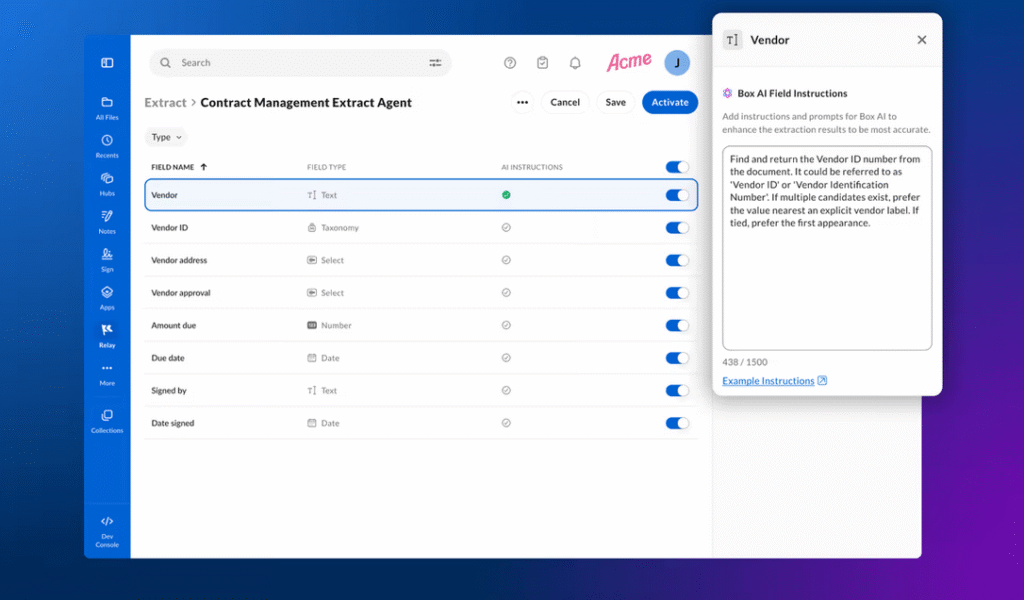
Once you have a clear objective and necessary infrastructure, the next step is to configure your AI automation environment. Depending on the tools you select, you may need to create an account with a cloud service provider like Google Cloud or Microsoft Azure. Choose an easy-to-use AI tool or platform that provides a no-code interface, such as Box Extract. This tool can utilize pre-trained AI models to analyze and extract meaningful data from documents.
Configuration often involves connecting your source data, such as documents or databases, with the AI tool. To illustrate, let’s say you are automating document classification. You would upload sample documents to Box and link them to your AI extraction tool. Carefully map out the data fields you wish to extract, like names, dates, or terms. Documentation and user guides provided by the service are valuable resources to navigate this step effectively.
Following configuration, testing the automation is vital. Utilize a subset of real data or simulated entries to confirm that the AI accurately extracts and processes the intended information. For instance, if you’re extracting invoice data, ensure that key figures like totals, due dates, or items purchased are correctly identified. The expected outcome should reflect high accuracy, with a minimal number of misleading results. If discrepancies occur, adjust the mapping or provide the AI system with additional training data to improve results.
Once the system is tested and functioning satisfactorily, monitoring becomes imperative. Set up a monitoring system to track how well the AI automation performs. Look for metrics that reflect your initial KPIs, like time savings or increase in data accuracy. Regularly review performance reports generated by your chosen platform, which should provide insights into the efficiency and reliability of the automation.
Error handling is also a critical component of any AI automation. Design strategies and implementations to catch errors. If, for example, the AI encounters an unsupported file format or fails to identify crucial data, automated alerts should be triggered to notify you. Moreover, build a feedback loop where users can flag issues, feeding this information back into the system to continually enhance the AI model.
Cost control cannot be overlooked as you adopt AI solutions. Evaluate the financial implications, particularly recurring costs associated with cloud services or AI subscriptions. Break down your monthly or annual expenses versus expected savings through time efficiency and reduced manpower. Always keep an eye on usage metrics; going beyond your established limits may incur additional charges.
As you implement AI automation, it’s essential to consider privacy, security, and data retention. Ensure that any third-party service you choose complies with data protection regulations, such as GDPR or CCPA. Implement strong security measures, including encryption for data in transit and at rest. Define clear data retention policies, determining how long you will hold onto the extracted data and under what circumstances it will be deleted.
Vendor lock-in is another factor to consider. Using proprietary systems may limit your flexibility in the future. Select solutions that allow for easy data export or integration with other platforms, thus ensuring your data remains accessible and manageable. This makes it simpler to pivot to alternate solutions if your needs change over time.
Estimating the return on investment (ROI) from your automation effort is crucial for measuring success. Begin by quantifying the time saved through automation, then translate these hours into financial outcomes. Additionally, consider enhanced data accuracy leading to better decision-making as part of your ROI calculations. Frequent reviews should be conducted to refine processes and continue capturing the benefits of continuous improvement.
Ongoing maintenance is vital for sustained success. Like any tech solution, AI tools require periodic retraining, updates, and troubleshooting. Schedule regular system checks to assess performance and apply necessary updates provided by the vendor. Engage with the provider’s customer support for training sessions or webinars that can enhance operational knowledge of the tools being used.
FlowMind AI Insight: Embracing AI-driven automation can significantly transform how small and mid-sized businesses operate, leading to improved efficiency, decision-making, and overall competitive edge. By following a structured approach to design, configure, and monitor your automation processes, you can effectively manage risk while ensuring a positive return on investment in AI technologies. With the right strategies in place, your organization can not only unlock valuable data but also realize tangible improvements across its operations.
Original article: Read here
2026-01-15 16:59:00